



 Google reviews

Bell House and the listed villas of College Road
College Road was where 18th century City merchants built country villas within reach of their work. Southwark's appraisal picks out Bell House, built in 1767 by Thomas Wright, later Lord Mayor of London, with later additions by Sir Edwin Lutyens, and notes that many of the villas along the road are listed. Large listed Georgian houses also line the north side of Dulwich Common, among them the Old Blew House and, from around 1810, The Willows and Northcroft.
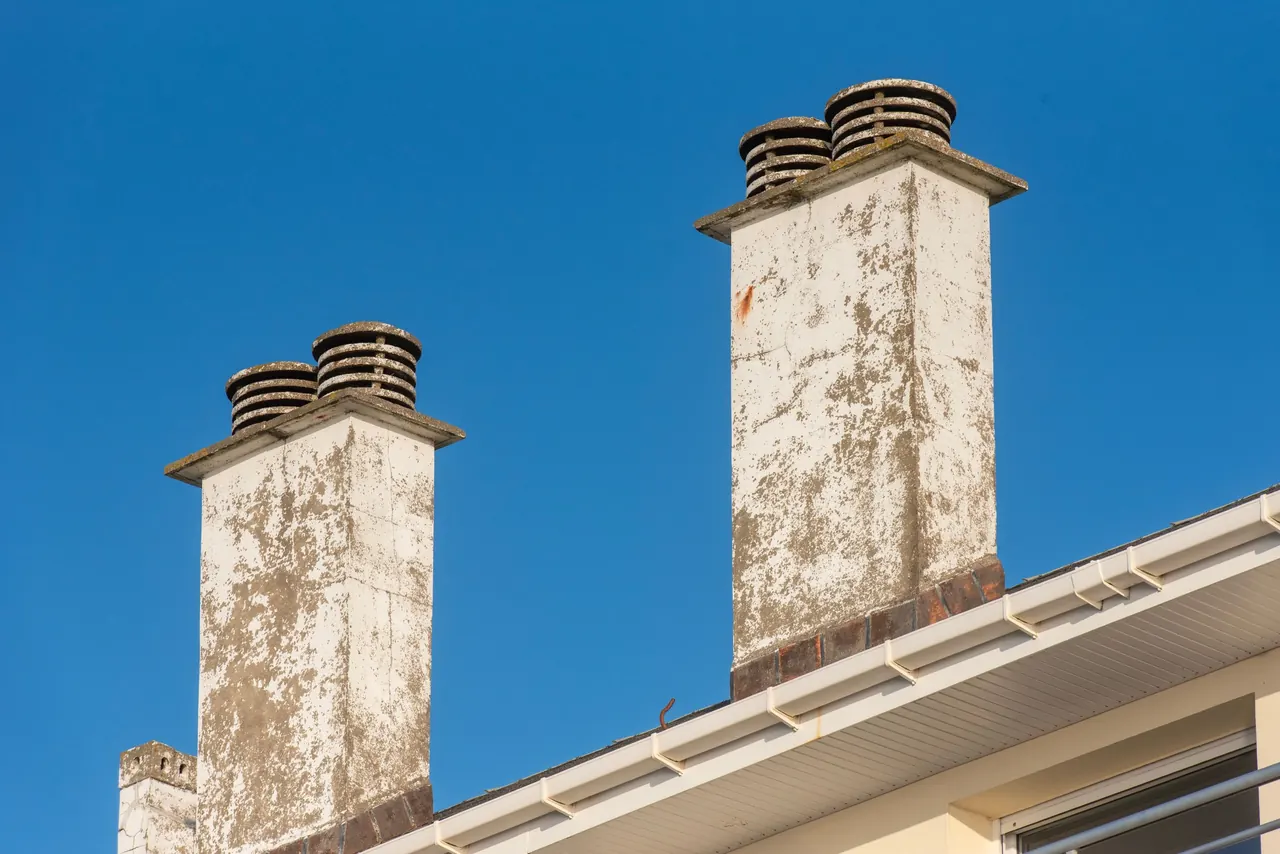
Houses of this age were heated by open fires in almost every room, so their stacks are tall and carry several pots. Many fireplaces are no longer used, but the stacks are still part of how these houses look, and the rules treat them that way. Southwark says original chimneystacks and pots should always be kept and repaired where needed, and encourages putting back lost pots. The Estate's guideline goes as far as saying that removal of a significant stack that would change the character of a house or a group of houses will not be approved.
A stack the Estate will not let go
Because the stacks stay, the work is upkeep. On a tall Georgian or Victorian stack the faults tend to be the same few:
- Lead flashing lifted, split or pulled out of its joint, often patched years ago with mastic or cement that lets water in during heavy rain.
- Pointing washed out on the weather side, so rain soaks into the brick.
- Flaunching, the mortar bed around the pots, cracked so water runs straight down beside them.
- Pots loose, cracked or missing, and open flues letting rain and birds in.
On a stack that cannot be seen properly from the ground, the drone gives close photos of the pots, flaunching and lead before anyone goes up. Small jobs can often be done from roof ladders. A full rebuild of flaunching or new leadwork on a tall stack usually needs scaffolding, and on a three-storey villa that is a real part of the cost.
For a guide, MyJobQuote's September 2026 figures put full chimney leadwork replacement at £350 to £460 without scaffolding and £700 to £920 with it. On a tall Dulwich stack, plan on the second figure.
Lime mortar on Dulwich brick before the 1930s
The mortar needs the most care. The Estate's guideline points out that until the 1930s most brickwork was laid in lime mortar, flush with the face of the brick, and that hard cement mortar sitting proud of the face spoils the look and can damage the bricks over time. It asks for repointing to match the original colour and character. The Georgian houses here are well inside that date, and so are the Victorian and Edwardian ones.
So when we repoint a stack, the old mortar is raked out and the new pointing is finished flush, to suit the brick around it, and where an earlier repair used hard cement we point it out. New lead is cut into a mortar joint and dressed to the slope. Flaunching is renewed so water runs off the top of the stack rather than into it. On a listed villa, check with Southwark's conservation team whether consent applies before work starts; we give you a written description of the work for that.
For unused flues, the Estate suggests ventilated caps or cowls that keep rain out while letting the flue breathe, and says a permit is generally not needed, though you can check the product with the Scheme of Management office. Where a fire or stove is still in use, it needs a cowl made for a working flue, so we check each one first. If the slates around the stack are part of the problem, a roof repair in Dulwich can be done on the same visit. The Estate's wider rules are on our Dulwich roofing page, and our chimney maintenance guide lists what to look for each year. Cowls, pots and stack rebuilds are explained on the chimney repairs service page.
Frequently asked questions
Does a listed villa on College Road need consent for chimney repairs?
Like-for-like repairs are usually treated as maintenance, but listed buildings have their own consent rules, and anything that changes the look of the stack may need listed building consent from Southwark as well as the Estate's approval. Ask the council's conservation team if in doubt.
The pots on my Dulwich Common house were taken off years ago. Should they go back?
Southwark encourages it. Its guidance for the conservation area says the reinstatement of suitably designed replacement pots, where originals have been lost, will be encouraged. New pots in a suitable style can be bedded in when the flaunching is renewed.
Can a new boiler flue be hidden inside an old Dulwich chimney?
The Estate's guideline makes the point that original or replacement chimneys can be used to disguise vents for modern heating or ventilation. The flue itself is a job for your heating engineer; we make sure the stack, pots and lead are sound around it.





