



 Google reviews

High stacks on Josephine Avenue and Elm Park
Josephine Avenue was planned in the late 1860s around the land the 1806 Act kept clear, and it was built big. Lambeth's Rush Common and Brixton Hill appraisal describes large three storey terraced houses with two storey bay windows. On a house that tall, the chimney stack starts a long way up and stands proud of the ridge, exposed to wind and rain from every side.
The same is true at the eastern end of Elm Park, where the 1870s terraces have four storey gabled sections. A stack on top of a four storey gable is about as exposed as a domestic chimney gets.
That height changes the job. Repointing, re-leading or rebuilding the top courses of a stack like this almost always needs a scaffold, and the scaffold is often the biggest part of the price. Before we quote, we photograph the stack by drone so we can see the flashing, the flaunching and the pots close up, and so you know exactly what the scaffold is for. Near HMP Brixton on Jebb Avenue, where drone flights are restricted by law, we look from roof ladders instead. If the pots and flaunching are sound and only one side of the lead has lifted, roof ladders may be enough.
Party-wall stacks on the bay-fronted roads
On the two storey terraces of Arodene Road, Leander Road and the streets around them, the main stacks rise from the party walls, with each house responsible for its own side. Some houses also have a smaller stack at the back. These stacks are lower and easier to reach, but they have had well over a century of repairs. On stacks this age, the lead is often found patched with mastic or cement at some point, and those patches crack and let water run down behind the flashing.
The signs usually show indoors first: staining around the base of the stack in the loft, a damp mark high on a wall beside the chimney breast, or bits of mortar and pot in the gutter. A stain near the chimney does not always mean the chimney, because water can run along a valley or rafter before it shows. We check the stack, the flashing and the slates around it together. If the slates turn out to be the cause, our Brixton Hill roof repairs page covers those.
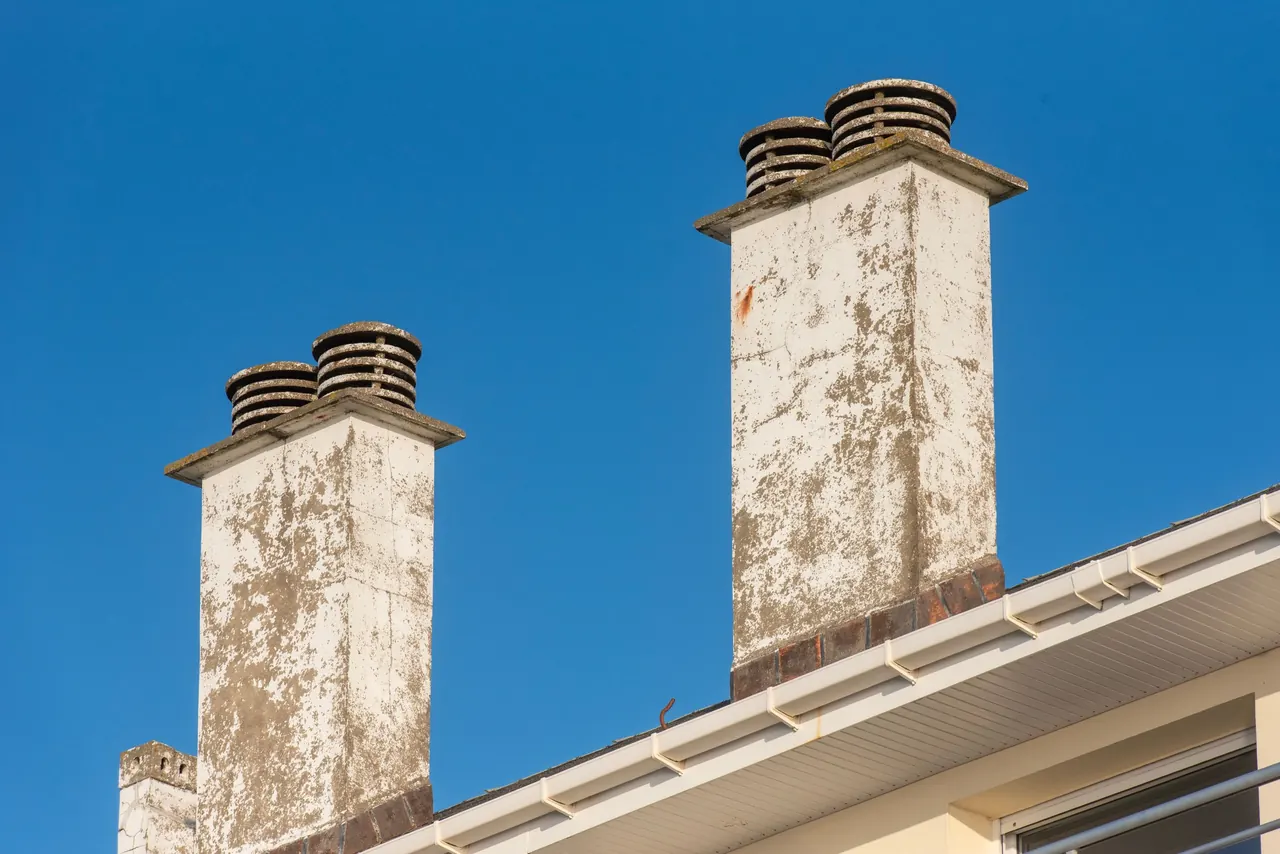
Decorative chimneys in the conservation area
Chimneys are part of the look of the conservation area. Lambeth's 1997 appraisal picked out the former King of Sardinia pub on Somers Road, now housing, for its barley-sugar and ziggurat style chimneys, as an example of how much character a stack can carry. Ordinary terraced stacks matter too, because a row of matching chimneys is part of what makes the streets read as a set.
Repairs here are expected to match: the same brick, a mortar that suits the old work, lead rather than a plastic substitute and pots of a similar shape. On an unlisted house, like-for-like repairs need no permission. Taking a stack down or changing how it looks on a visible roofline is worth checking with Lambeth first.
Where the cost goes on a Josephine Avenue stack
The work itself falls into four parts. We refit or replace lead flashing that has lifted or split, and rake out and renew loose pointing so water stops soaking into the brick. We renew the flaunching, the mortar bed around the pots that cracks with frost. And we reset loose pots and fit caps or ventilated cowls on flues that are no longer used, keeping air moving so the flue does not trap damp, or a cowl or bird guard made for a working flue where there is still a fire or stove below.
MyJobQuote's chimney leadwork guide puts a patch repair to flashing at £150 to £250 and full leadwork at £350 to £460 without scaffold, rising to £700 to £920 where scaffold is needed, which is the likelier case on Josephine Avenue. Our chimney maintenance guide lists what to check each year, and the main chimney repairs page explains each repair in detail.
Frequently asked questions
Do I need a scaffold to re-lead a stack on a three storey Josephine Avenue house?
For full re-leading or repointing, usually yes, because of the height and the slope it sits on. A small lead repair on one side can sometimes be done from roof ladders. The photos taken before quoting let us tell you which before you pay for anything.
My Leander Road stack has mastic smeared round the lead. Is that a proper repair?
No. Mastic or cement over lead holds for a while, then cracks and traps water behind it. The lasting fix is to cut out the old seal and re-dress or replace the lead into a fresh mortar joint.
Can you match the brick on a stack in the Rush Common and Brixton Hill conservation area?
We use closely matched brick and a mortar that suits the original, so a rebuilt top looks like the rest of the stack. If the stack has decorative brickwork, we photograph it before taking anything down so it goes back the same way.





