



 Google reviews

Stacks Lambeth names one by one
Two sets of stacks on Coldharbour Lane are picked out by address in Lambeth's Loughborough Park appraisal: the strikingly broad stacks at Nos. 261 to 267, and the quirky front stack shared between Nos. 297 and 299. The appraisal calls that pair Tudor-style houses, a style rare in Lambeth, and the Survey of London recorded their central chimney stack corbelled out from the wall face.
Across the town centre the message is the same. Lambeth's 2012 statement for the Brixton conservation area says the roofs, towers and chimneys of many 19th and early 20th-century buildings contribute particularly well to Brixton's character, and that removing chimneys should be avoided where they matter to the building or the street. So repair, not removal, is the normal starting point here.
Why a broad stack leaks differently
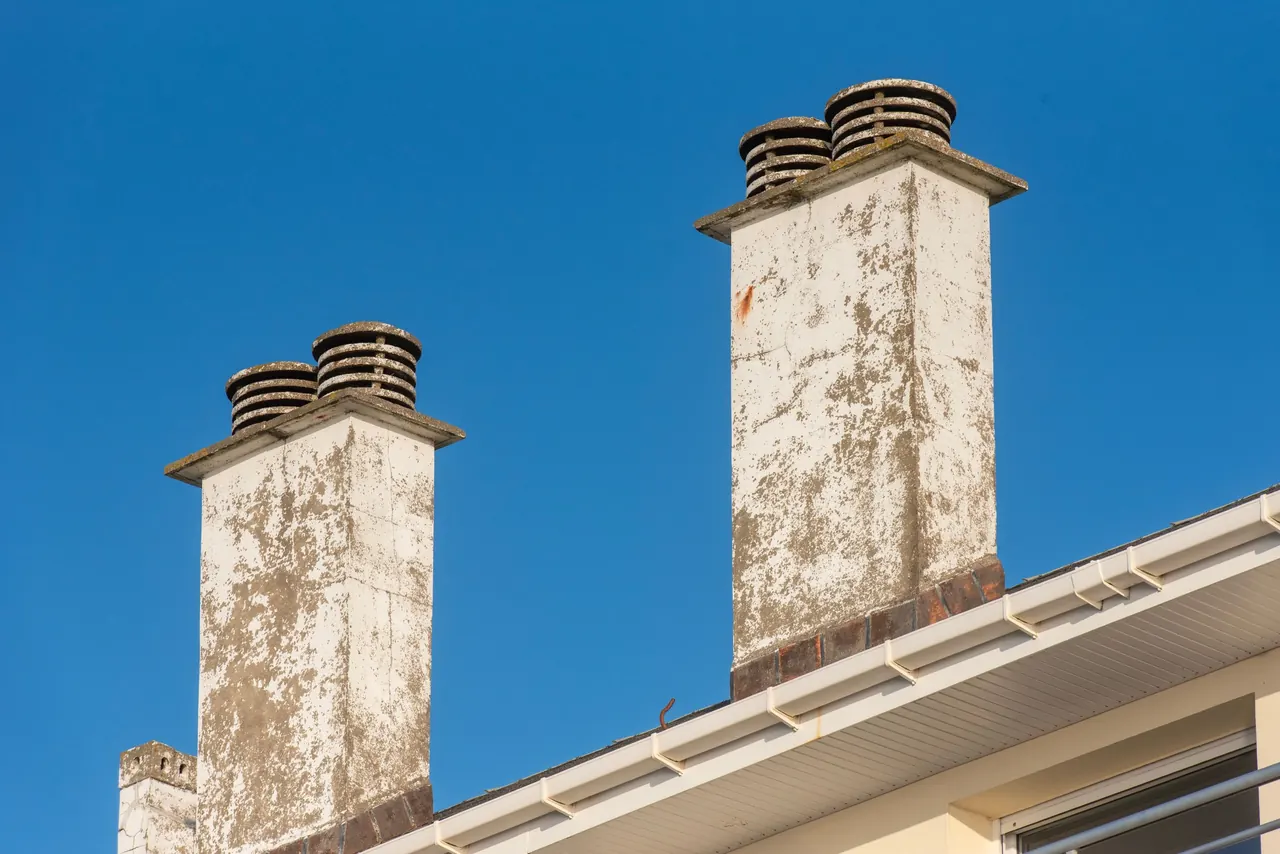
A wide stack carries more flues, which means more pots, a bigger area of flaunching on top and a longer run of lead where it meets the slate. On the uphill side it holds back a wider strip of roof, so the back gutter behind it has more water and more debris to deal with. When leaves and moss build up there, water backs up under the slates and appears inside on the chimney breast or the ceiling beside it.
The other weak points are the same as on any old stack, only bigger: lead flashings pulled away where the mortar holding them in the brick joints has crumbled, open joints in the brickwork, cracked flaunching round the pots, and flues left open to the rain. A corbelled stack like the one at 297 and 299 adds one more. The brickwork steps out from the wall, and the top of each step is a ledge that holds water against the joints.
Old repairs made with mastic or flashing tape instead of lead are common on houses that have changed hands many times. They look fine from the pavement and fail in the first long spell of rain.
What a repair here involves
Before anyone prices access, we fly the drone round the stack and take close-up photos of the lead, pointing, flaunching and pots. Many of these houses are two or three storeys over a semi-basement, so the stack is high and scaffolding is often the biggest single cost. The photos show whether the job is small enough for a ladder or tower or needs a scaffold, and you see the problem before you pay for access.
The work itself covers new or refixed lead flashings and back gutters, repointing the stack in a mortar to suit the brick, renewing flaunching, resetting loose pots, and fitting caps, cowls or bird guards to suit how each flue is used. A disused flue is capped with ventilation so the breast below does not get damp. The main chimney repairs page explains each of these, and our chimney maintenance guide covers what to keep an eye on from year to year.
As a rough guide, MyJobQuote's chimney flashing cost guide gives £150 to £250 for a patch repair to the lead and £700 to £920 for full replacement with scaffolding. A broad stack has more lead than the guide assumes, so expect the upper end or above.
Acre Lane and the Angell Town stacks
Outside Loughborough Park, the oldest stacks in this part of Brixton are on the listed early 19th-century houses of Acre Lane, where the Survey of London dated No. 46 to about 1808. On the 1850s villas of St John's Crescent, a stack on the party wall can serve both houses. Where the lead on one side fails, the water can come into either house, so we photograph both faces and share the pictures with both owners. If the slates round the stack have slipped as well, our page on roof repair in Brixton covers that side of the job.
Frequently asked questions
Our house is one of the Tudor-style pair on Coldharbour Lane. Can the corbelled front stack be repaired without changing its look?
Yes. Repointing, new lead and new flaunching can all be done to match. We would keep the corbelling and pots as they are, and agree the mortar colour with you before we start. Any change to its appearance is a question for Lambeth first.
Our Coldharbour Lane stack is one of the broad ones. Why does it keep leaking after rain?
Most often it is the back gutter on the uphill side, which on a wide stack holds a lot of water. If that lead is cracked or full of debris, water gets under the slates. We check it first, then the side flashings and the pointing.
Can the drone show whether the flaunching on top of a tall Wiltshire Road stack has cracked?
Yes. It photographs the top of the stack from above, which is the one view nobody gets from the street or the loft. Cracked flaunching and loose pots show clearly.





