



 Google reviews

Rodenhurst Road and the site of Lincoln House
Thomas Cubitt, who laid out Clapham Park in the 1820s, lived there himself, at Lincoln House. It was demolished in 1905, and Rodenhurst Road was laid out on the site as a street of large, double-fronted, semi-detached Edwardian houses.
Houses of that size and date were built with a fireplace in most rooms, so their stacks are substantial, with several flues and a row of pots. On a semi-detached pair, a stack on the shared wall serves both houses, and there may be others on the outer walls. Most of those flues are long out of use, but the brickwork is still exposed to wind and rain on every side, a hundred and more years on.
What wears out first on stacks of this age is predictable. The mortar bed around the pots, called flaunching, cracks and lets water into the top of the stack. The pointing between the bricks erodes, so rain soaks into the brickwork. And the lead flashing where the stack meets the roof lifts or splits, which is the most common route for water into the room below.
Party-wall stacks on the 1880s terraces
On Hambalt Road and the other 1880s streets off Abbeville Road, the main stacks sit on the party walls and are shared with the house next door. The flashing on your side and theirs works as one piece, so repointing or re-leading only half can leave water a way in at the join. It helps to talk to your neighbour before work starts, and if a stack ever needs taking down rather than repairing, the Party Wall etc. Act 1996 may apply.
Many of these terraces also have a smaller stack on the back addition, beside a valley or tucked against the main wall. It is out of sight from the street and easy to forget, and it is a frequent source of damp in a back bedroom. A drone roof inspection shows both stacks close up, so you can see whether scaffolding is needed before you pay for it.
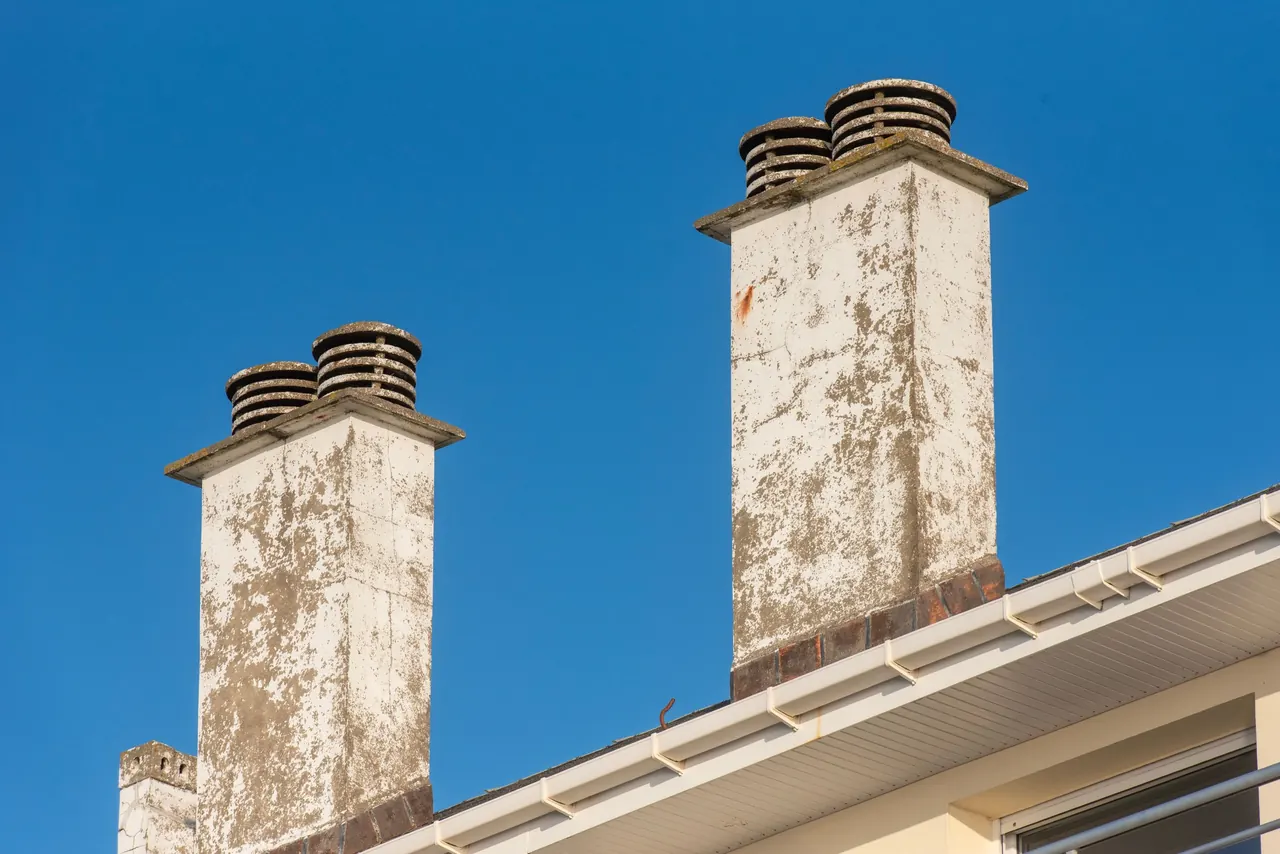
Tall stacks over the parades
The parades on Abbeville Road stand three storeys, so their stacks rise well above the pavement and the café tables below. A loose pot or a lump of failed flaunching at that height is a risk to people in the street, not just a leak waiting to happen.
Small jobs such as refixing a flashing or resetting a pot can sometimes be reached from roof ladders. Re-leading a whole stack or repointing it top to bottom on a building this tall usually needs scaffolding, and scaffold on a public pavement needs a licence from Lambeth, which is part of the planning for the job. MyJobQuote's chimney leadwork cost guide gives a published guide figure of £150 to £250 for a patch repair to flashing, with more once scaffolding is involved.
Our main chimney repairs page explains each repair, and the chimney maintenance guide covers what to keep an eye on between visits.
Frequently asked questions
Does scaffolding for the stack on my Rodenhurst Road semi need a council licence?
Only if it stands on the public pavement or road. Scaffold kept within your own front garden or side path does not need a highway licence. Whether it can stay off the pavement depends on the depth of the front garden, and we check that before planning the job.
Can you match the old clay pots on a villa at the north end of Kings Avenue?
Usually, yes, with a reclaimed or new pot of the same pattern. Lambeth's appraisal for the Clapham Park and Northbourne Road Conservation Area says chimneys and clay pots are an important part of the roofscape there even when the flue is unused, so like-for-like is the right approach.
The pots on my Shandon Road stack are leaning. Is that urgent?
It is worth dealing with soon. A leaning pot usually means the flaunching around it has cracked or broken away. We reset the pot and renew the flaunching so it is held firmly again.





