



 Google reviews

What yellow stock brick shows
Lambeth's character statement for the Abbeville Road Conservation Area notes that all of its buildings are built of yellow stock brick. It is a soft, pale, slightly porous brick, and it records water. A joint that has been dripping for a winter leaves a dark vertical stripe beneath it. A gutter that tips over the front edge in heavy rain leaves a wide wet band below the eaves. A cracked downpipe leaves a patch that stays dark long after the rest of the wall has dried.
That makes a first look at a gutter fault here unusually easy: the brickwork points at the problem. Read upwards from the mark and you usually find a joint seal that has perished, a bracket that has rusted thin and let the run drop, or a section that has cracked. The same reading works on any pale brick wall, including the backs of the terraces off Abbeville Road.
The stain itself is the lesser worry. Brickwork that stays wet for months can lose its pointing, grow moss, and pass damp through to the inside wall, and the timber fascia behind a leaking gutter softens. Fixing the gutter early stops all of that.
Joints and brackets on the Abbeville parades
The parades are three storeys tall, so their front gutters are a long way above the pavement and the shopfronts. On a run that height, a failed joint or a bracket that has let go is not something to leave, because the next stage is a section falling. Where the original cast iron survives, rust starts at the joints and brackets. Where it has been replaced in plastic, the rubber seals in the joints perish with age and sun, and the clips work loose.
Most repairs on these runs are local: resealing or remaking a joint, replacing a bracket, refixing a section that has dropped, or swapping one cracked length. Where cast iron meets plastic partway along a run, that joint often relies on sealant, and replacing a short length so the run is one material is a more lasting fix.
Access is the larger part of the job, and it is what moves the price. A two-storey back addition can usually be reached from a ladder in the garden, but a three-storey frontage over a shop can need a tower, and working above a shop entrance has to be timed around the business. The repair itself, a joint or a bracket, is often the smaller part of the cost.
Hoppers and downpipes behind the terraces
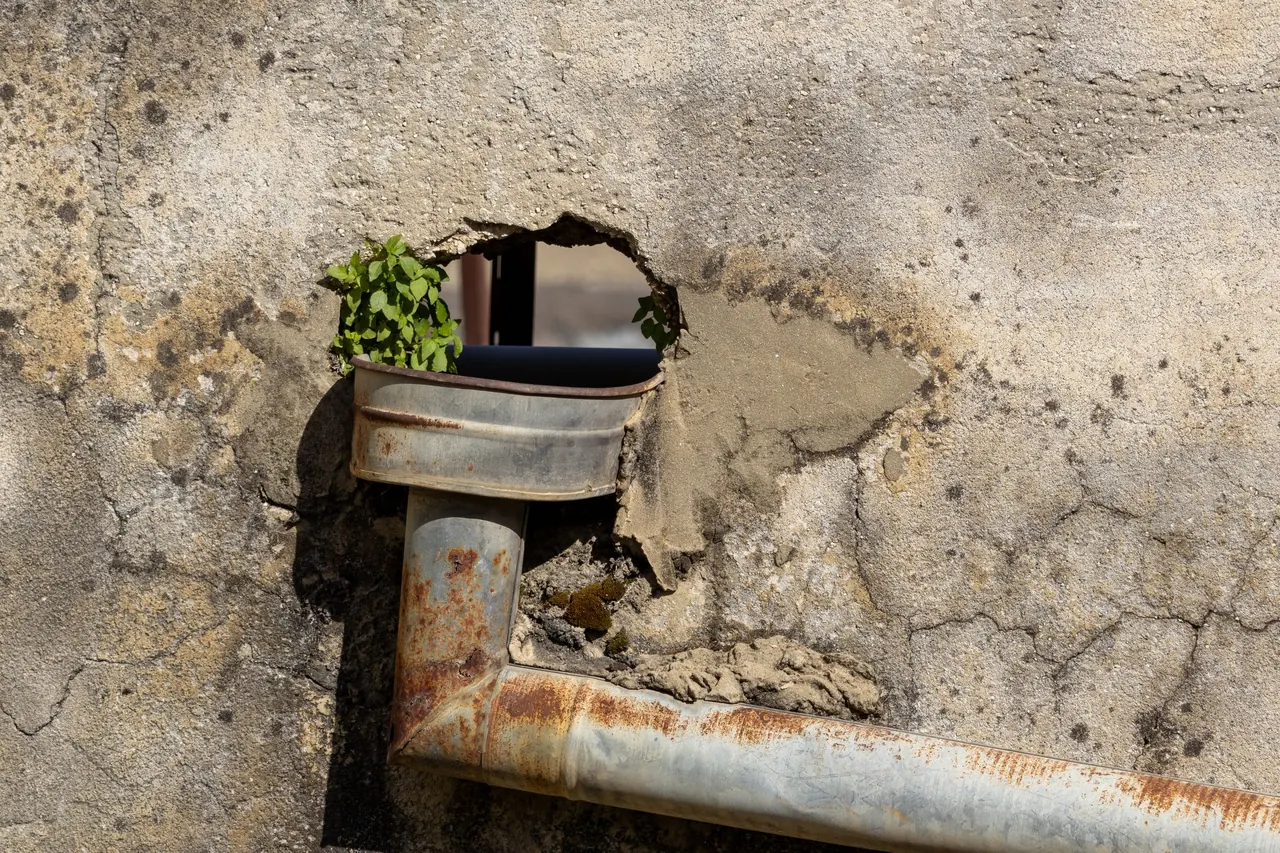
At the back of the Shandon Road terraces and their neighbours, the rainwater often runs from small gutters on the back addition into a hopper head and down a single pipe. Hoppers are open at the top, collect silt and leaves, and spill down the wall when they fill. Their joints to the pipe below rust or crack, and a cracked downpipe on the wall facing next door can go unnoticed for years.
We clear and reseal hoppers, replace cracked pipe sections and refix loose clips. A hopper that keeps filling with grit off the slate is a cleaning job as much as a repair, and regular clearing behind the terraces keeps it running. Where a whole run is rusted through or patched at every joint, new gutters may be the better spend; the gutter repairs service page covers repair against replacement.
Frequently asked questions
My flat is on the top floor of an Abbeville Road parade. How do you reach the front gutter?
We look first, from the ground and by drone if needed, to see what the repair is. Then we choose the access to suit the height and the shopfront below, and agree a time with the shop so the entrance stays safe.
The hopper on the back of my Shandon Road terrace spills in heavy rain. Can it be repaired?
Usually, yes. Most spill because they are full of silt or the outlet into the downpipe is partly blocked. If the hopper itself has cracked or rusted through, we replace it with a matching one.
Will the dark stain on my yellow brick go once the gutter is fixed?
Most of it fades as the brick dries out over a few months. Moss or green growth may need gentle cleaning. Avoid pressure washing soft stock brick, which can damage its face and the pointing.





