


 Google reviews

Below the view from Richmond Hill
Houses on The Terrace at the top of Richmond Hill have looked out over the Thames since the 1760s, and the view from the top is protected by an Act of Parliament passed in 1902. Most of what matters on the roofs below it sits out of sight from the pavement.
The council's Richmond Hill conservation area appraisal describes the terrace at 3 to 17 Hill Rise as having parapeted mansard roofs. Number 146 Richmond Hill has a slate mansard set behind a brick parapet, and The Wick, a Grade I listed house from the late 18th century, has a slate mansard with rounded dormers behind a balustraded parapet. Slate roofs over stock brick run through the whole area.
A parapet changes how a roof drains. Instead of an open gutter on brackets at the eaves, rain runs into a lead-lined channel behind the wall and leaves by an outlet, either through the parapet to a hopper or back through the roof space to a downpipe at the rear. On a mansard there is also the joint between the steep lower slope and the shallow upper section, usually lead or a flat covering, and that is where water tends to get in once the lead has split or crept.
When a parapet gutter blocks, it fills and spills over the lead upstand into the wall head, not down the front of the house. The usual first sign is a brown stain along the top-floor ceiling by the front wall, or damp plaster in a top-floor corner.
From the street you can see none of this. A drone flight shows the parapet gutters, the mansard joints, the dormer cheeks and the backs of the chimney stacks before anyone pays for scaffolding or a tower. Our roof inspection page sets out what that survey covers and what you get afterwards.
Chimney stacks around Richmond Green
Richmond Green is its own conservation area, first designated in 1969. Its appraisal singles out the four chimney stacks of monumental scale on Maids of Honour Row, the brick terrace of the 1720s facing the Green, and notes the large stacks on the south-east side that break up the eaves and ridge line. On houses like these the stacks are part of the listed character, so a repair has to keep their shape, brick and pots.
Big Georgian stacks carry a lot of lead. There are aprons at the front, soakers and stepped flashings down the sides and a back gutter behind, and each piece is chased into the brickwork with mortar that weathers out over time. Once the joints open, rain runs behind the lead and shows as a damp patch on the chimney breast in the top room.
Most of this is like-for-like work: rake out and repoint in lime where the stack was built in lime, renew the lead to the same detail, and reset pots and flaunching. Where a house is listed, anything beyond that, such as taking a stack down or changing its look, normally needs listed building consent first. Our chimney repairs page covers flashing, repointing, flaunching and cowls.
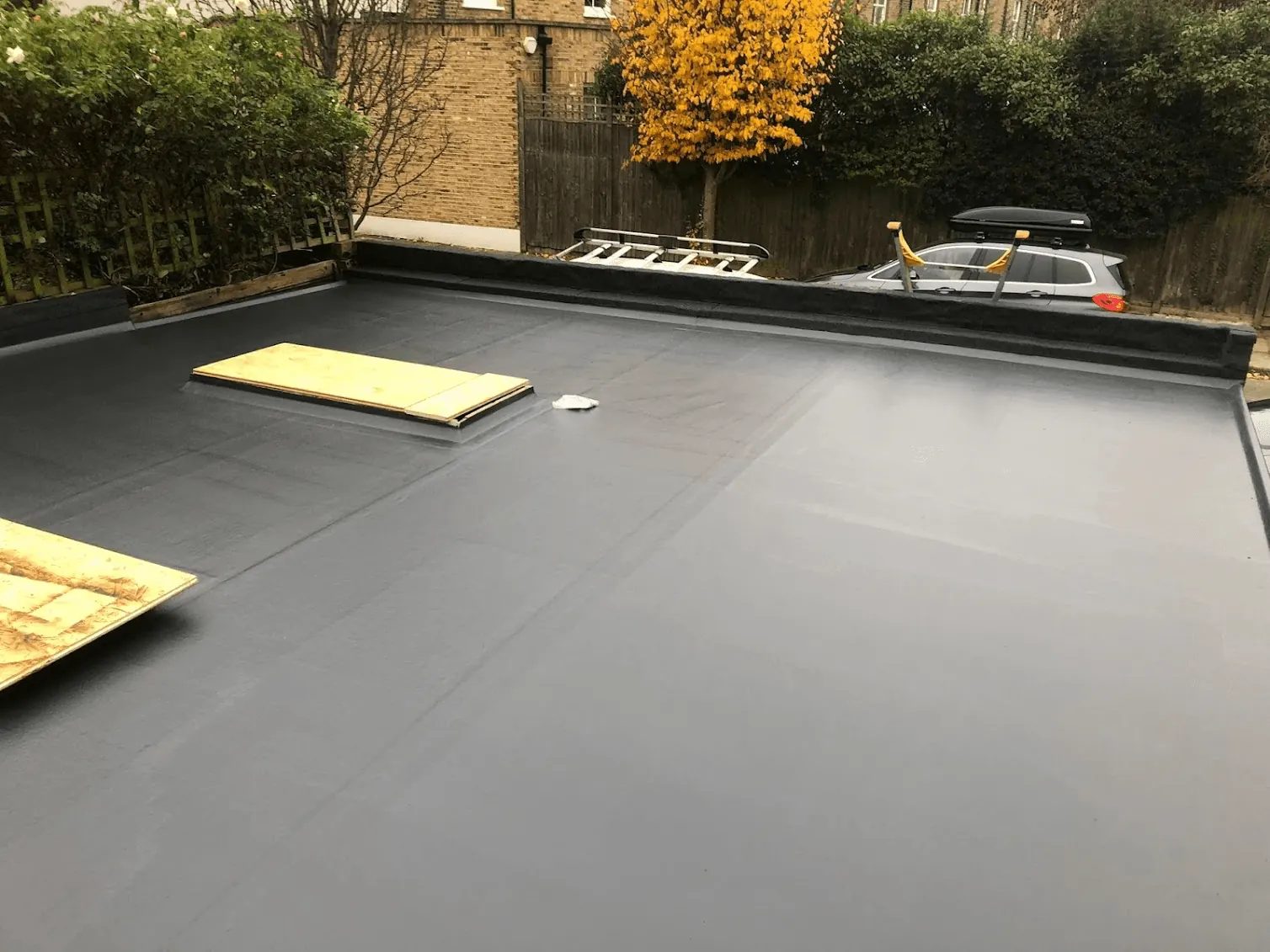
The Green's appraisal also lists roofing felt and GRP among the poor-quality materials that harm the area, and says roof extensions there are uncommon, with rear dormers the usual form. If you have a visible flat roof or a rear dormer on one of these streets, it is worth checking with the council's conservation team before choosing a new covering. For a rear extension out of sight, the choice is more open, and our flat roofing page compares the options.
Sheen Road and the slate streets up to the railway
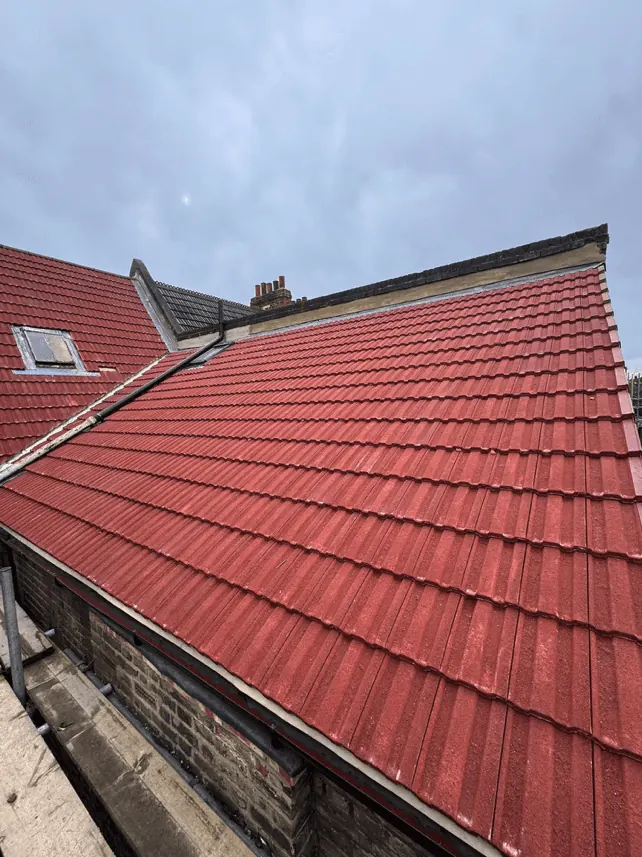
Sheen Road is the historic route from Richmond to London, with some 18th century houses and two sets of almshouses, Hickey's and Houblon's, set back in their own courtyards. North of it, the streets up to the railway were built after the line arrived in 1846. The council's Sheen Road appraisal describes them as rows of large late Victorian terraced and semi-detached houses, sometimes with detailed brickwork and slate roofs, and many are Buildings of Townscape Merit.
These roofs are a different job from the Hill. Slates are open to view, gutters hang at the eaves, and the trouble tends to be slipped or cracked slates, ridge mortar that has crumbled, and valleys between the main roof and the back addition that have worn thin. Many still have their cast iron gutters and downpipes.
Cast iron is often worth keeping. Joints that leak can be cleaned and resealed, rusted brackets replaced and a cracked length swapped out, and a run that is kept painted and clear can go on for many decades. For a sense of scale, MyJobQuote's 2026 cost guide puts an average gutter repair at around £215 (MyJobQuote gutter repair costs). Our gutter repairs page explains how we deal with cast iron and plastic systems.
Leaves from the Park, the Old Deer Park and the street trees
Richmond Park, the largest of London's Royal Parks, sits at the top of the Hill, the Old Deer Park runs along the river side of town, and the Sheen Road appraisal notes that the streets north of the road are mostly well planted with trees. Gutters on all of these houses take leaf, seed and moss through the autumn, and a parapet gutter or a valley behind a chimney tends to hold what lands in it, because the wall around it keeps the wind from clearing it.
For a parapet house, cleaning means getting to the lead channel and the outlet behind the wall, not only the eaves gutter at the back. Our gutter cleaning covers both.
A hidden gutter that has stood full for a few winters may have rotted the boarding under the lead.
Quotes are free and often given the same day, and we take emergency calls at any hour. Call 0330 133 4111 or use our contact form.
Frequently asked questions
Our top-floor ceiling stains along the front wall of a Hill Rise house. Is it the parapet gutter?
That is the most likely place to start. A blocked outlet, a split in the lead lining or failed flashing where the roof meets the back of the parapet will all show up there. Clearing the gutter often stops the leak straight away, and then the lead can be checked properly and patched or renewed.
Can the felt flat roof on our rear extension near Richmond Green be redone in GRP?
On a rear roof that cannot be seen from the Green, usually yes. The Richmond Green appraisal names felt and GRP as poor materials where they affect the area's look, so if the roof is visible or the house is listed, ask the council's conservation team first and we can price whichever covering they accept.
Are the cast iron gutters on our terrace north of Sheen Road worth keeping?
Usually. If the metal is sound, leaking joints can be resealed, brackets renewed and a cracked section replaced on its own. Where a house is a Building of Townscape Merit, keeping the original cast iron also keeps one of the details the council values.
The flat top of our Hill Rise mansard is leaking. Does the whole roof need doing?
Usually not. The shallow upper section of a mansard is a small roof of its own, often lead or a flat covering, and the leak is most often at its joint with the steep slate slope below. That top section can be relined and the joint renewed without stripping the slate. The new lining sits hidden behind the parapet, as the old one did.





