


 Google reviews

Three hundred years of building on the edge of the heath
The houses and flats around the top of Putney Hill, Wildcroft Road, Telegraph Road and Portsmouth Road were built in short bursts over about three hundred years, often on the plot of a single large house that had been knocked down. North House became Manor Fields. Highlands became Highlands Heath. Wildcroft became Wildcroft Manor. Bristol House gave way to the Edwardian houses of Heathview Gardens and Bristol Gardens, and Bowling Green House, where William Pitt died in 1806, gave way to Bowling Green Close.
The result is a corner of SW15 where an eighteenth century mews, a Victorian villa, a 1930s mansion block and a 1960s bungalow can all sit within a few minutes' walk. Wandsworth Council's Putney Heath conservation area appraisal lists clay tiles, interlocking tiles, pantiles and natural slate as the roof coverings, and the flat-roofed Modernist houses add a fifth type of roof to look after.
We are Precise Roofing & Guttering, a family run firm on Kenley Rd in Morden, about 3 miles from the top of the heath. Simranjeet, our Roofing Surveyor, can make the first visit, and on the taller buildings a drone inspection of the roof shows every slope, stack and gutter before anyone talks about scaffolding.
Manor Fields, Highlands Heath and Wildcroft Manor
Three large estates of mansion flats replaced the old houses in the 1930s, and between them they hold a large share of the homes in the area.
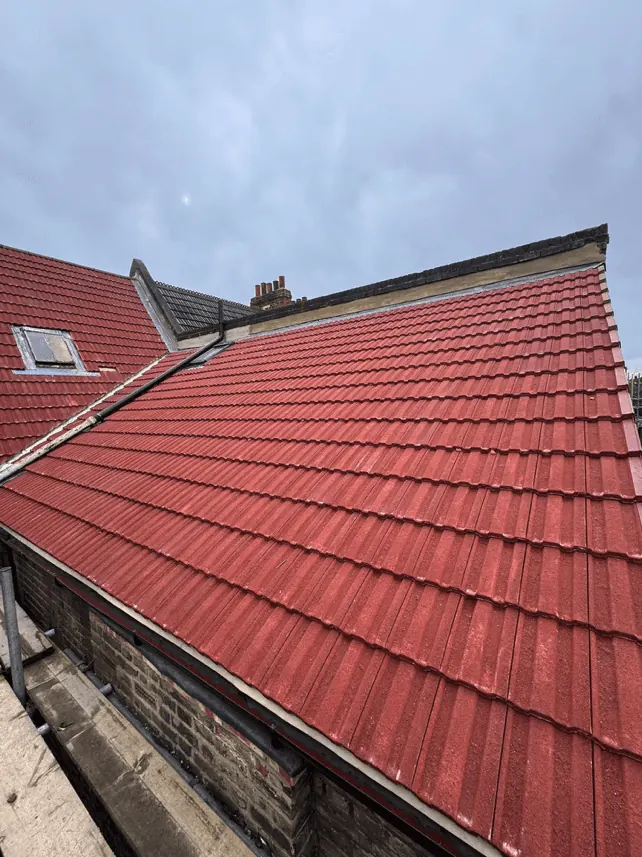
Manor Fields was built by John Laing and Son in 1932 to 1933. Its four-storey blocks stand around a landscaped garden with a miniature wood and an ornamental pond, and they are topped by clay-tiled mansard roofs and tall chimney stacks. The steep lower slope of a mansard behaves almost like a tiled wall, and the change of angle where it meets the upper slope, along with the junctions round the stacks, is where leaks usually begin.
Highlands Heath followed in 1936 on Portsmouth Road. The blocks are also four storeys, but the roofs are shallow and squared off, with ridge tiles predominant. Many of these blocks took blast damage from V1 flying bombs in the Second World War, so some roofs may carry repairs from the 1940s alongside original work.
Wildcroft Manor, also from 1936, is the most picturesque of the three: render, brick and weatherboarding, half-timbered gabled bays and heavy mansards with dormer windows. The gables and boards at its roof edges are part of its Tudor look, which matters when fascias or gutters are renewed.
On all three estates the roof is shared, so the work goes through a managing agent or residents' company. When a whole roof is due, our roof replacement page for Putney Heath sets out how a block re-roof is planned here.
From Bensbury Close mews to Bowling Green Close
Around the estates sit smaller groups of buildings.
- Bensbury Close and Bowling Green Cottage. The mews was once the stables of Bowling Green House and dates from the eighteenth century. Bowling Green Cottage has a shallow-pitched slate roof, and low slopes like that need careful slating to stay watertight.
- Heathview Gardens and Bristol Gardens. Three-storey Edwardian houses in yellow stock brick, with half-timbered gables, side porches and tall chimneys. Bristol Gardens is known for its mock timber-framed fronts.
- Putney Hill. The gault brick villas at 55, 65, 73 and 75 carry tall, detailed stacks. Lyle Park at no. 57, now flats, has a slated mansard and a copper-roofed verandah, and Ullswater at no. 53 is a 1935 group of flats with hipped roofs and tile-hung panels. Our chimney repairs around the heath cover the villa stacks in detail.
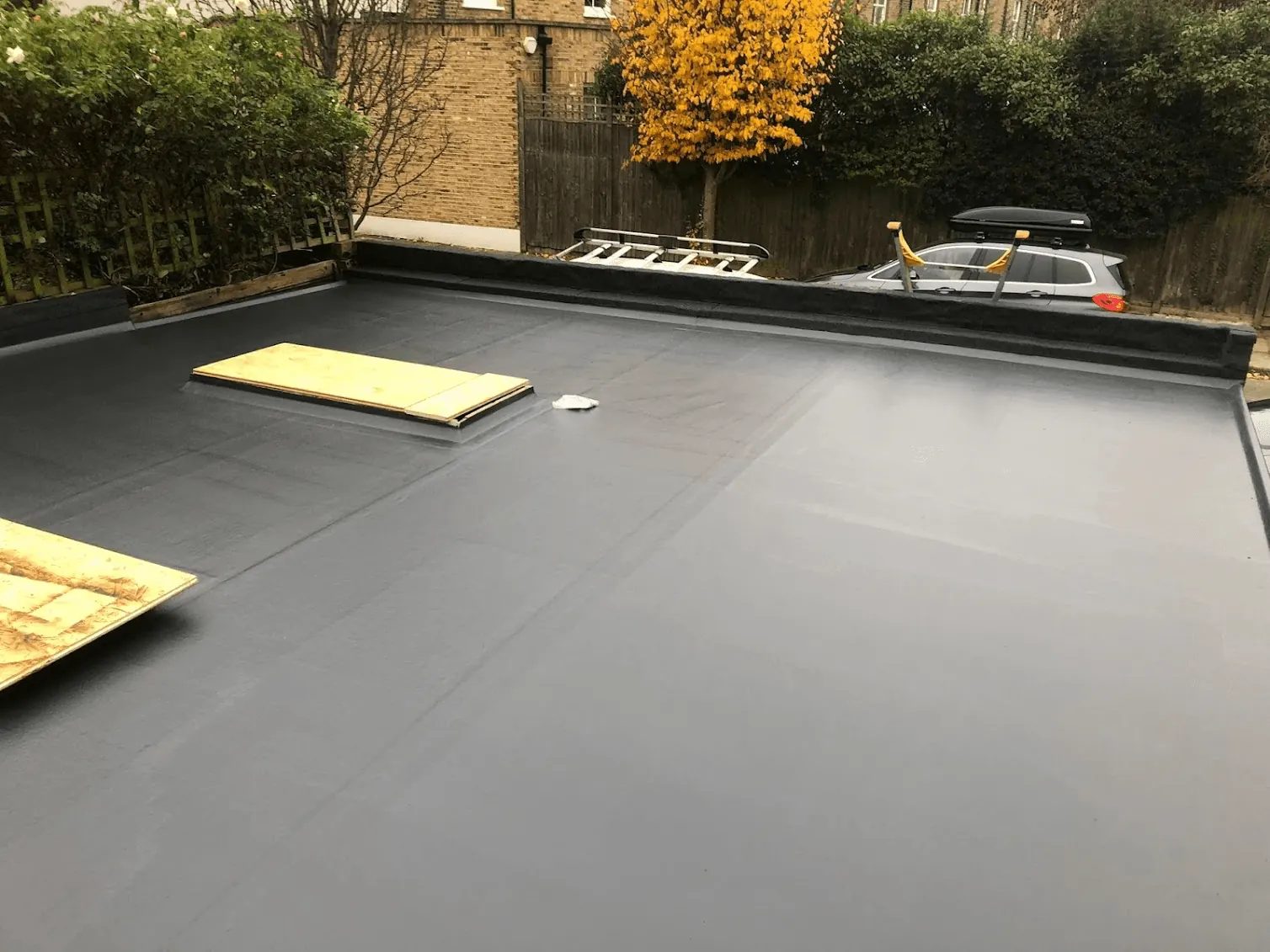
- Bowling Green Close. Detached 1930s houses, including Pitts Walk and Ridings, flat-roofed Modernist designs by Wallis, Gilbert and Partners with sun decks on top. These need a flat roofer's eye, and our flat roofing page for Putney Heath goes through them house by house.
- Telegraph Road. The most rural road in the conservation area, with the heath along one side, a scattering of cottages, the three-storey Hazel Croft and the Telegraph pub. Roofs here face the common directly.
- Wimbledon Parkside. The Grade II listed Fairlawns, the locally listed Elmley House and two blocks from the early 1950s Ackroydon Estate: the 11-storey Oatlands Court and the flat-roofed Chilworth Court.
- Garden Close and Paddock Way. Off Portsmouth Road, low 1960s bungalows with green-coloured roofs sit beside four three-storey houses built in 2000.
Trees run through all of it. The front gardens on Wimbledon Parkside, the wood at Manor Fields and the line of trees along the Highlands Heath boundary all drop leaves and seed into gutters, which is why our gutter cleaning around the heath is planned around the autumn fall.
Conservation area rules for flats and houses
Almost everything named above sits in the Putney Heath Conservation Area, designated in 1987. The council's management guidance for roofs is short: clay tile and slate roofs should be re-covered in a similar material, good slates should be kept for re-use, and chimneys should always be retained and rebuilt if they become unstable. The 2009 appraisal recorded no Article 4 directions in the area.
The rule that most affects roofing is the one for flats. Maisonettes, blocks of flats and houses converted into flats have no permitted development rights here, so most external alterations need planning permission, and the appraisal names reroofing and altering chimneys among them. That covers the mansion estates, Ullswater, Chilworth Court and converted villas such as Lyle Park. A like-for-like repair is a different matter from a change, but if a block is planning a full re-roof, the managing agent should talk to Wandsworth's planning team before the specification is fixed.
For houses, changing a roof covering or adding a dormer is judged against the same guidance. The council suggests that a small hipped dormer can suit an Edwardian Arts and Crafts house, and that dormers covering a whole slope are less welcome.
When something cannot wait, such as a slipped section of mansard letting water into a top-floor flat, our emergency roof repair service for Putney Heath makes the roof safe first and plans the matching repair afterwards.
Frequently asked questions
Are Garden Close and Paddock Way really in the conservation area?
Yes. In 2008 and 2009 the council suggested taking them out, as it felt they did not add to the area's historic character. The idea was not supported in consultation, so the boundary stayed. Roof work there is treated like work anywhere else in the conservation area.
Which buildings around the heath are listed, not just in the conservation area?
The appraisal names Fairlawns on Wimbledon Parkside, the Wildcroft Manor entrance gates and the village pound opposite the Green Man as Grade II listed. Work on a listed building can need listed building consent even when it is like-for-like. Several others, including Elmley House, the Green Man, Lyle Park and Bowling Green Cottage, are locally listed, which needs no separate consent, though the council takes it into account in any planning application.
Could wartime repairs still show on the Highlands Heath roofs?
Possibly. The appraisal records that many Highlands Heath blocks were damaged by V1 blasts, and roofs repaired in the 1940s can have tiles, battens or timbers of different ages side by side. A close look shows whether that is the case on your block and whether it changes the advice.
Do you look after the original stepped garages at Manor Fields?
Yes. The appraisal calls them a rare survival, so the aim is to repair their roofs in a way that keeps their plain, uniform look rather than changing the outline.





