


 Google reviews

The roof jobs that come up in SW18
Ask what goes wrong on a Wandsworth roof and the answer depends on which slope of the valley the house stands on. Along lower West Hill and in the cottage rows off Putney Bridge Road, the terraces are mostly butterfly or gabled, and a butterfly roof drains to one central valley. When that valley fails, the leak lands in the middle of a top-floor ceiling. Our Wandsworth roof repair page explains how those valleys are put right.
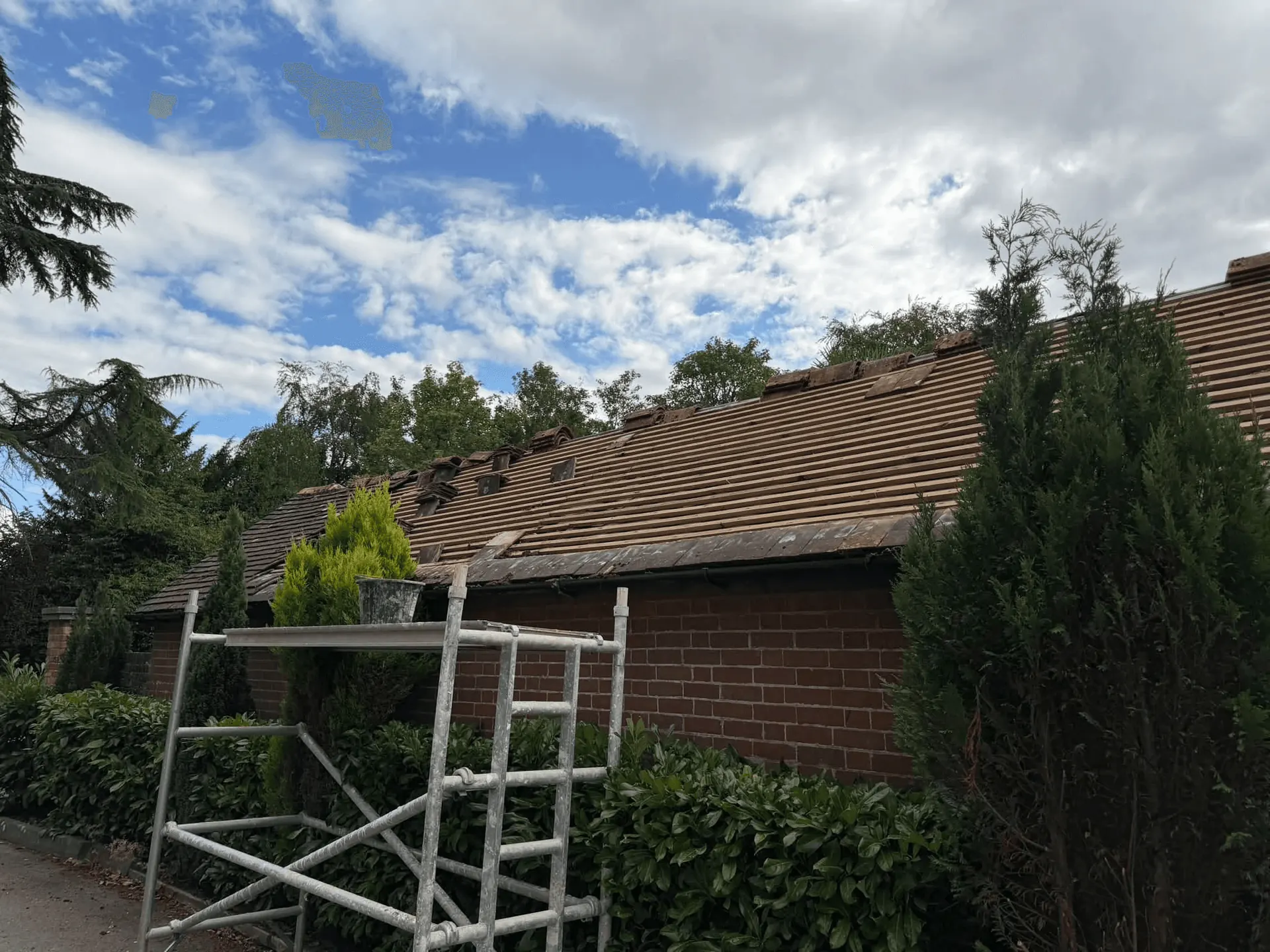
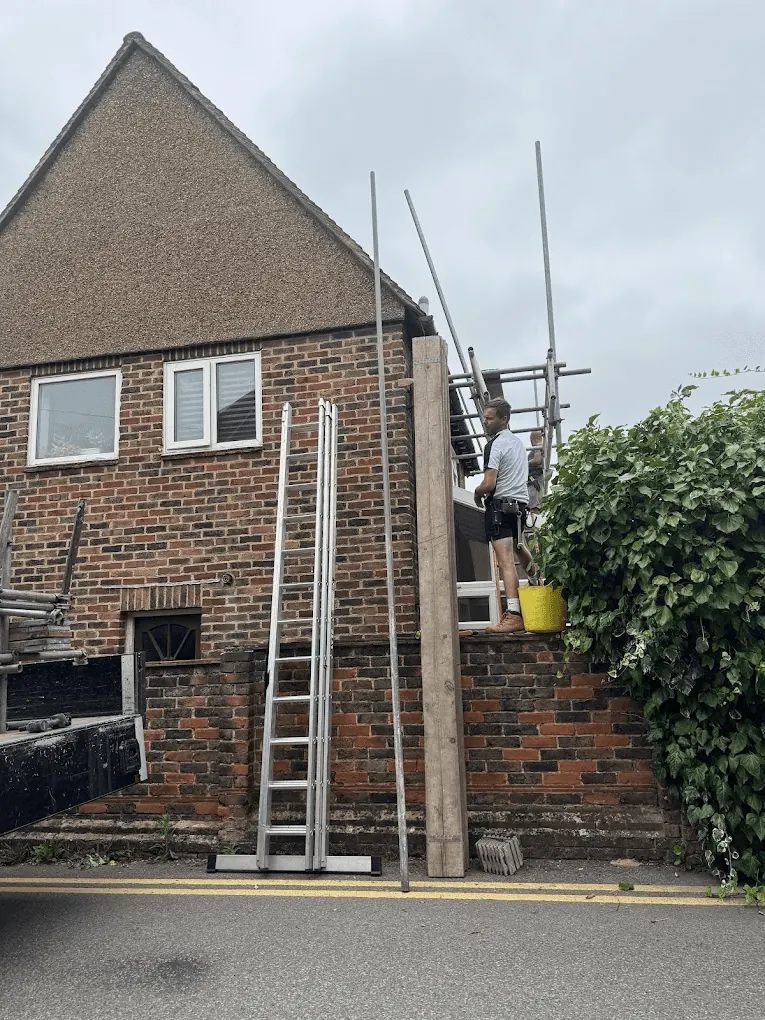
On East Hill the terraces keep a fairly steady three storeys, so even a small repair at the back can need a tower or scaffold. Above the High Street, homes and offices sit over shops, with gutters and small flat roofs hidden behind parapets. Up the hill on the West Hill Road estate, big villas of three and four storeys, the earliest of them slate-roofed, stand in rear gardens are ringed by mature trees that fill the gutters every autumn.
That spread of house types is why our Wandsworth service pages each start from a different street. We are a family-run firm on Kenley Road in Morden, about 3.4 miles from the town centre.
An old town between two hills
Wandsworth Council's appraisal of the Wandsworth Town Conservation Area describes old Wandsworth as sitting in a shallow valley where the River Wandle runs out to the Thames, with West Hill one of the highest points in the Wandle Valley and East Hill rising eastward from the river. The A3 climbs both sides along the line of the ancient main road.
The oldest buildings are 18th-century and early Victorian survivors: the townhouses of Church Row, the group of The Elms, Wandsworth House and 178 East Hill, and the Quaker Meeting House of 1778, the oldest surviving one in Greater London. Workers' cottages followed in the second quarter of the 19th century, such as Victoria Place of 1839, built in mirrored pairs that share chimney stacks, and Prospect Cottages by Point Pleasant, where a flat parapet hides butterfly roofs. The High Street was widened around 1913, and much of its southern side, Nos. 107 to 209, was rebuilt one building at a time.
North of East Hill lies a grid of late Victorian terraces laid out by two or three local builders, and the front gardens of 152 to 162 East Hill were lost when the road was widened in the 1920s, so any work at the front of those houses is planned around a busy pavement.
Homes above the High Street shops
Most of the High Street is two to four storeys, typically three, with the top storey often set back behind the frontage with dormers. Where commercial buildings have been extended upwards, the appraisal says it has usually been with lead or zinc mansard-style storeys set back from the parapet. That leaves narrow strips of flat roof, parapet gutters and outlets that nobody sees from the pavement until one leaks into a flat or a shop. Access usually comes from the back or through the flat above, so the shop can keep trading.
The West Hill Road estate
Above the town, the West Hill Road Conservation Area was laid out from the middle of the 19th century as a speculative estate of large villas, built slowly on old fields. Its first houses, from the 1850s and 1860s on Merton Road and Wimbledon Park Road, are late Regency style villas of stock or gault brick under slate. Italianate, Jacobethan and Grecian houses of three or four storeys followed, then red brick Gothic and Queen Anne groups, interwar houses on Seymour Road and later blocks of flats such as Lime Gardens.
The pair at 31 and 33 Wimbledon Park Road is Grade II listed, under a hipped slate roof, and George Eliot wrote The Mill on the Floss at No. 31. Several houses on West Hill Road, Melrose Road, Seymour Road and Wimbledon Park Road are locally listed. Planning works differently for flats here than for single houses, and our Wandsworth roof replacement page sets out where that line falls.
Where our neighbouring pages take over
Wandsworth is surrounded by areas with their own pages. The workers' cottages around Old York Road, the Tonsleys and the riverside blocks are on our Wandsworth Town page. The villas and the Toast Rack around the open common are on our Wandsworth Common page. The Grid and the long run of Wimbledon Park Road towards Wimbledon Park belong to our Southfields page, and the terraces along Garratt Lane to Earlsfield. If your house sits near one of those boundaries, the page for your street will be the more useful read.
Frequently asked questions
Is a butterfly roof on West Hill harder to look after than an ordinary pitched roof?
The slopes are short and sheltered, so they rarely give much trouble. Everything drains to one central valley and one rear outlet, and keeping those clear and the lining sound does most of the work.
Are any houses in the West Hill Road estate listed?
Yes. The pair at 31 and 33 Wimbledon Park Road is Grade II listed. Locally listed houses on West Hill Road, Melrose Road, Seymour Road and Wimbledon Park Road are recorded for their interest, but local listing adds no extra planning controls.
We live in one of the Victoria Place pairs. Whose job is the shared chimney stack?
A stack shared between a mirrored pair is normally a shared responsibility, so it is worth agreeing the work with next door before it starts. Each side's flashings can be checked at the same visit.
Why does a drone look at a Wandsworth roof need booking ahead?
Central Wandsworth lies inside London Heliport's flight restriction zone, so every flight needs the heliport's permission first. Our Wandsworth roof inspection page explains the notice involved.





