



 Google reviews

Behind the parapet at 55 to 71 Abbeville Road
Lambeth's character statement for the Abbeville Road Conservation Area records parapets and concealed roofs on the parade at Nos. 55 to 71, one of the 1890s shop parades. From the pavement you see a brick parapet and strong brick pilasters, and no roof at all.
Behind a parapet like that, rain runs off the slopes into a lined gutter along the inside of the wall, and from there to an outlet. On many parapet roofs the outlet goes through the wall to a hopper head and a downpipe. The arrangement works until the outlet chokes. Then the gutter fills, the water rises above the top edge of the lining, and it runs into the building, usually showing first as a stain on the top-floor ceiling.
Because nobody can see the gutter from below, the first sign of a blockage is often the damage. A drone inspection shows the gutter, the lining and the outlet before anyone goes up, so we know what access the job needs.
Outlets too small for the roof
A parapet or valley gutter that blocks again soon after clearing is often not dirty so much as undersized at the outlet. A small outlet catches a few leaves and a little silt and closes up, while a larger one lets the same debris pass. On older roofs, outlets have sometimes been narrowed by repairs, or partly sealed over by layers of patching on the lining.
After clearing, we look at the size of the outlet against the area of roof draining to it, at whether the lining around it has been built up, and at whether a guard or grille is sitting in a way that traps debris instead of letting water through. Enlarging or renewing an outlet is a lining repair, and on a lead or asphalt gutter it needs dry weather. We show you the photos and explain the options before any of that work is priced.
Hopper-fed downpipes behind the terraces
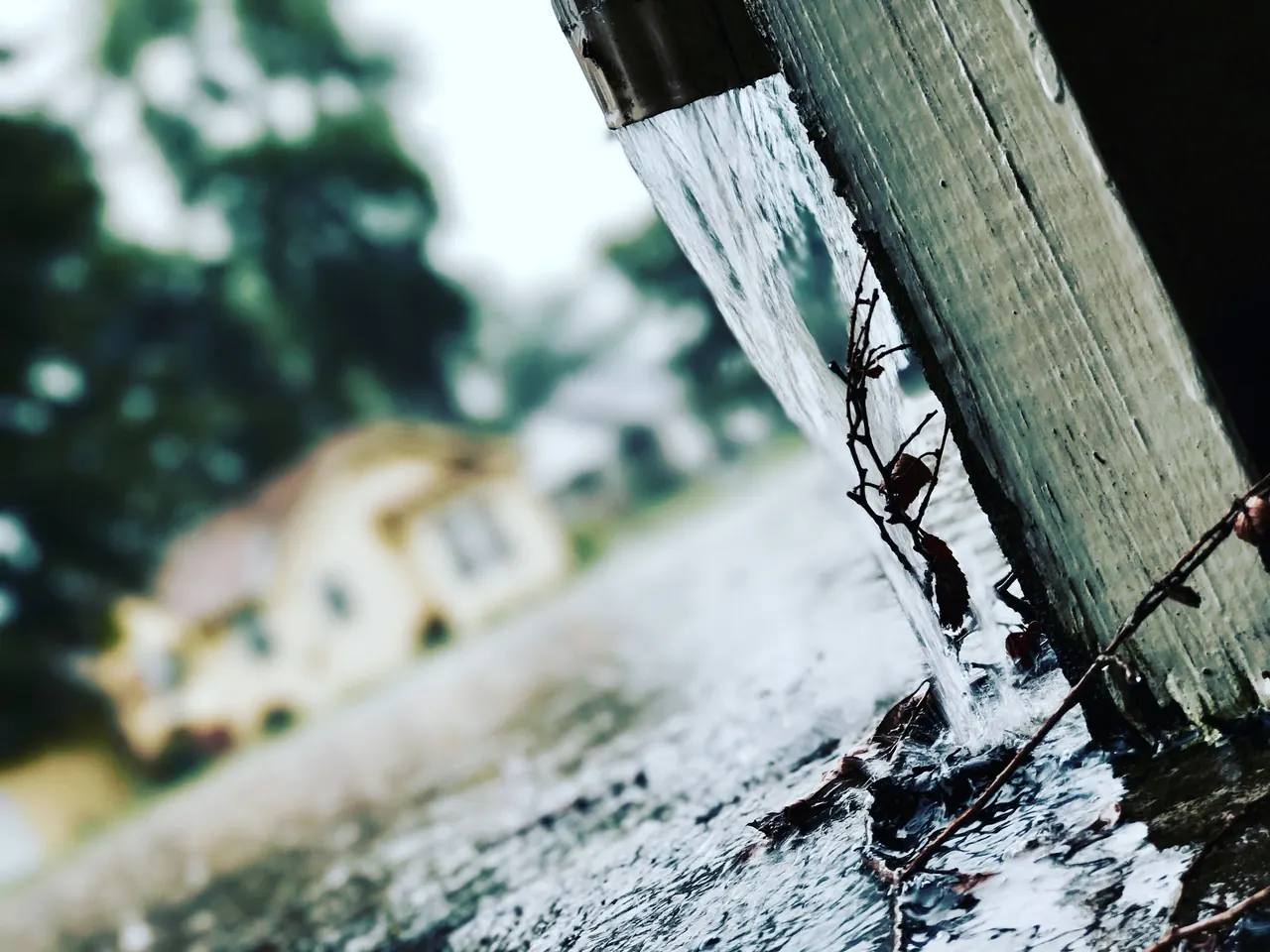
On the 1880s side streets off Abbeville Road, the back of a terraced house often drains several small gutters into one hopper head and one downpipe. When that pipe blocks part way down, the hopper fills and spills down the back wall, and the gutters feeding it back up.
Where the blockage is out of reach, we rod the downpipe from the top or through an access point and flush it through to prove it runs. If the pipe is cracked, or the blockage is packed solid at a bend, that section is replaced. Silt from old slate roofs is a common culprit in these pipes, along with moss.
Gutters that have lost their fall
In Clapham Park, the gutters on the Edwardian semis of Rodenhurst Road and the later houses are long runs. A long run that has dropped at one bracket, or was never set to fall properly, holds water at the low point, and debris settles there rather than washing through to the outlet. Clearing it helps for a while. Resetting the brackets so the run falls steadily to its outlet is what stops it filling again.
Routine clearing is a separate service, and our Clapham South gutter cleaning page covers it. The main blocked gutter repair page explains the general causes of blockages in more detail.
Frequently asked questions
The parapet gutter on our Abbeville Road building keeps blocking at the outlet. Can the outlet be made bigger?
Often, yes. It depends on the wall, the lining and where the downpipe runs. We look at it after clearing and explain whether enlarging the outlet, renewing the lining around it or changing the hopper is the right fix.
Can you reach a parapet gutter on an Abbeville Road parade without going through the shop?
Usually. We check by drone first, then plan access from the roof, from the rear or from the flats above, depending on the building. The shop below rarely needs to be involved beyond knowing when we are working.
The hopper on the back of my Narbonne Avenue house fills with grit every winter. Where is it coming from?
Most likely from the roof above. Old slate sheds fine grit and moss that washes into the gutters and settles in the hopper. Clearing it and the pipe below solves the overflow, and a look at the roof shows whether anything there needs attention.
Water is running down the front of a Rodenhurst Road semi from the middle of the gutter, not the end. Why?
That usually means the run has dropped at a bracket and the water is collecting at a low point. We clear it, reset the brackets to give a steady fall, and replace any that have failed.





