



 Google reviews

Roofs with one way out
Towards the southern end of Brixton Hill stands a stock brick terrace that Lambeth's conservation area appraisal dates to the early 19th century. Single storey Victorian shops were built out to the pavement over its front gardens, and the parapet along the front of those shops is topped by a classical balustrade. Behind a parapet like that is a low roof that drains to one outlet, then down one pipe.
The 1830s houses in western Elm Park have the same arrangement at the top of the house, with the front gutter hidden inside the parapet; our roof inspection page for Brixton Hill explains how that strip is checked.
That arrangement is fine while the outlet is clear. When it blocks, there is no edge for the water to spill over. It rises behind the parapet, finds the lowest gap in the lining or the flashing, and comes in through the ceiling below, often during a single heavy downpour. On a shop roof the first sign is usually water through the shop ceiling; on an Elm Park house it is a stain in a top-floor front room.
Sags, offsets and narrow outlets on Leander and Arodene Road
On the bay-fronted terraces of Leander Road, Arodene Road and Beechdale Road, blockages tend to have a cause beyond the debris itself. Something stops the leaves washing through:
- Lost fall. A bracket drops, the run dips, and silt settles in the low spot until it holds water permanently.
- Narrow outlets. Older outlets, and some added later on extensions, are smaller than the roof above needs, so they choke in heavy rain even when nearly clear.
- Downpipe offsets. Where a pipe kinks out round a bay or a string course, debris catches at the bend and builds up from there.
- Hoppers and back additions. At the rear, gutters often drain into a hopper or onto a lower roof, and a blocked hopper backs up the whole run above it.
Leaves and seeds from Rush Common and the street trees are what fill these traps, and keeping them cleared before autumn is the job of our gutter cleaning in Brixton Hill. This page is about what to do once one has already blocked.
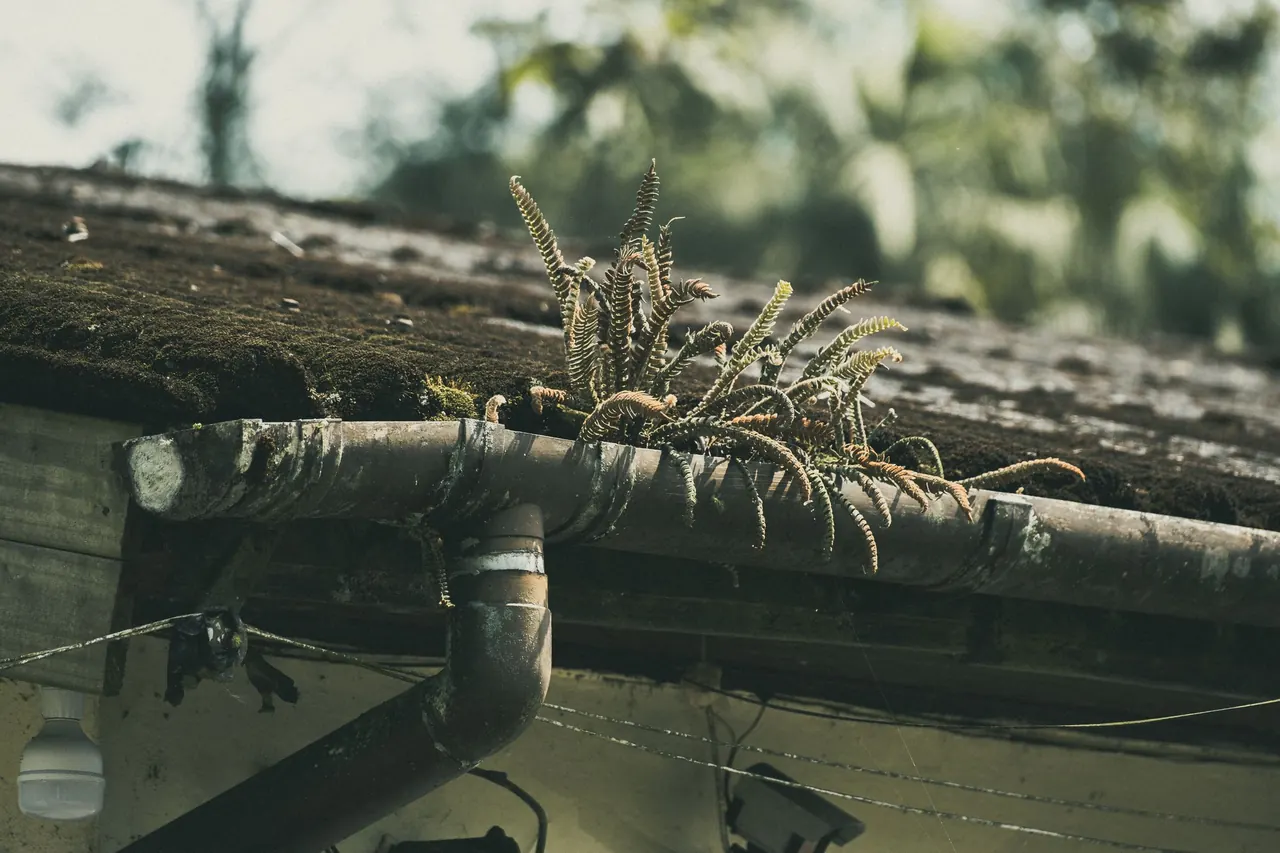
Rodding a terrace downpipe, opening a shop outlet
We clear the full gutter or parapet run, not just the spot that overflowed, then rod or flush the downpipe until it runs freely. Water goes through the whole system to prove it drains. Then we look for the reason it blocked: a sag to reset, an outlet to open up or renew, an offset to rebuild, a split lining behind a parapet. We also check what the overflow has damaged, such as a soaked fascia, bent brackets or a wet wall top.
The Which? roofer cost guide lists clearing all the gutters at the front and back of a house at £75 to £350 excluding VAT, with any repairs to brackets, joints or downpipes on top. If the overflow has broken a joint or pulled a bracket, our gutter repair page for Brixton Hill explains that work.
When water is already inside
If water is coming through a ceiling or pouring down a wall, call 0330 133 4111. A choked parapet outlet in heavy rain can put a lot of water into a room in a short time, and clearing it stops the leak far faster than anything done inside. Where the roof itself has been damaged, our emergency roof repair page covers making it safe.
Frequently asked questions
Water is standing behind the balustrade on a shop roof at the south end of Brixton Hill. Is the outlet blocked?
Very likely, or the downpipe below it. Standing water behind a parapet should drain within a day of rain stopping. If it does not, the outlet, the pipe or the fall of the roof needs looking at before the water finds its way into the shop.
Why does the downpipe on my Beechdale Road terrace keep blocking at the bend?
The offset where the pipe steps out round the bay is a natural trap. Debris lodges at the bend and builds up. Rebuilding the offset with a smoother shape makes it less likely to block again.
Can conkers from the horse chestnuts on Josephine Avenue really block a downpipe?
Yes. Horse chestnut husks and seeds lodge at the top of the pipe or at an offset, and leaves then pack in behind them. Lambeth's appraisal counts mature horse chestnuts among the trees that shape Josephine Avenue, and houses there see this most in September and October.





