



 Google reviews

Hopper heads on the big Stradella gables
Southwark's Stradella Road appraisal notes that the larger houses in the conservation area have hopper heads and rainwater pipes serving their gable roofs. The biggest are the detached and semi-detached houses at 26 to 44 Half Moon Lane, with gables facing the street and, on some, mansard roofs behind.
A hopper is an open box at the top of the downpipe that collects water from one or more gutters. Its open top makes it easy to blame. When it spills, the usual first move is to scoop it out, and the overflow comes back with the next storm. That is because a hopper only overflows when it fills faster than the pipe below can empty it, so the cause is often under the hopper, not in it:
- a pipe narrowed by years of silt stuck to the inside walls
- a bend or offset where the pipe steps around a bay, packed solid with leaves and seed
- a shoe at the bottom buried in a flower bed or gravel, so water cannot get out
- a gully or drain at ground level that is blocked, backing water up the pipe
We clear the hopper, then rod or flush the pipe from the top and watch where the water comes out. If it backs up, the blockage is further down, and we work down until it is found.
Back additions off Railton Road
On the Lambeth-side terraces off Railton Road, the back addition gutter often collects water from two slopes, and sometimes from the main roof above as well, so a small blockage there overflows quickly, often right over a back door. The low rear roofs on Winterbrook Road behave the same way. The outlet at the end of a short run like that is the usual choke point, and a bent or sagging section just before it holds debris that the next storm cannot shift.
At ground level, the downpipe usually ends in a gully. If the gully is full of silt and leaves, water backs up the pipe and spills from the first joint or the hopper above, which looks like a gutter fault but is not. We lift the gully grid, clear what we can reach and run water to prove it drains. The hidden parapet gutters at the Milkwood Road junction are a separate job, covered on our Herne Hill gutter repair page.
Winter and the old cast iron
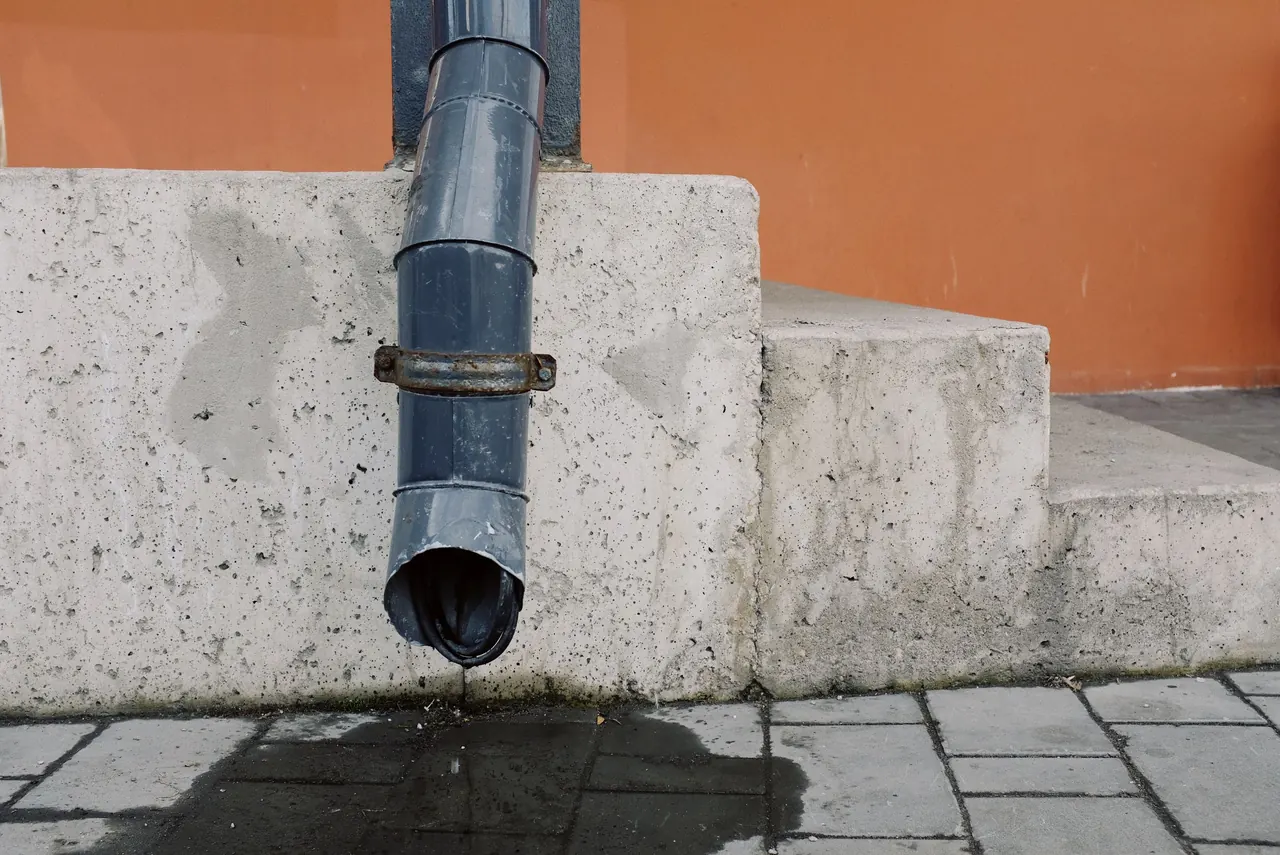
A blocked cast iron pipe full of standing water can freeze, and ice can split the pipe along its length. The Sunray Estate's guidance lists cracked pipes and blockages among the usual problems with its original cast iron, and the two are often connected. After clearing a cast iron pipe, we check its full length for cracks, and if one has split, the repair is a matching cast iron length.
Leaves from street and garden trees are the raw material behind most blockages. If the problem is simply that the gutters have not been cleared for a while, a routine gutter clean is the cheaper answer. The main blocked gutter repair page goes into causes in more depth.
Frequently asked questions
The hopper head on our Half Moon Lane gable spills every time it rains hard. Is the hopper too small?
Not usually. Overflow in heavy rain usually means the pipe below is partly blocked or the shoe at the bottom is buried. We test the pipe before suggesting any change.
The back addition gutter on our Railton Road terrace overflows over the back door. Where is the blockage likely to be?
Usually at the outlet or in the first bend of the downpipe. We clear it and check the fall of the run, since a sag just before the outlet keeps catching debris.
Water bubbles up from the gully at the foot of our Heron Road downpipe. Is that the gutter?
Usually not. It means the gully or the drain beyond it is blocked, so water backs up the pipe. We clear the gully and the pipe. If the blockage is further along the underground drain, that is a job for a drainage engineer, and we tell you so.





