



 Google reviews

How a Camberwell Grove parapet floods a top floor
On lower Camberwell Grove, from no. 15 upwards on the east side, the early 19th century terraces almost all finish in a coped parapet that hides the roof. The 1880s blocks on the curving north side of Camberwell Church Street have a strong parapet line too. Behind each of those walls, the roof drains into a gutter that runs along the back of the parapet, usually lined in lead, and leaves through a small outlet into a hopper or pipe.
Over the years, leaves, moss off the slates, grit and the odd nest build up along that gutter and settle at the outlet. In light rain, water still finds its way through. In a summer cloudburst it cannot drain as fast as it arrives. The level rises behind the parapet until it reaches the top of the lining, and then it runs back under the slates or over the lining into the roof space. The first sign is usually a stain on a top-floor ceiling near the front wall, and on a converted house that ceiling is someone else's flat.
Valley gutters between two shallow slopes behave the same way, and so do the gutters at the foot of the mansards on Church Street and Denmark Hill. Each is a channel with a narrow exit, and each overflows inwards when the exit is choked.
Plane leaves along Peckham Road
East of the Green, the source of a blockage is often easy to see. Southwark's Sceaux Gardens appraisal describes lines of plane trees behind the front boundaries on Peckham Road, and Lucas Gardens, behind Camberwell House South, is full of mature trees. West of the Green, the Camberwell Green appraisal picks out a large London plane in the grounds of St Mary's Greek Orthodox Church on Camberwell New Road.
Plane leaves are large and leathery, and they break down slowly. Two or three wedged in an outlet are enough to slow it, and the smaller seed balls and twigs pack in behind them. Gutters and hoppers near these trees tend to block in late autumn and again after spring winds.
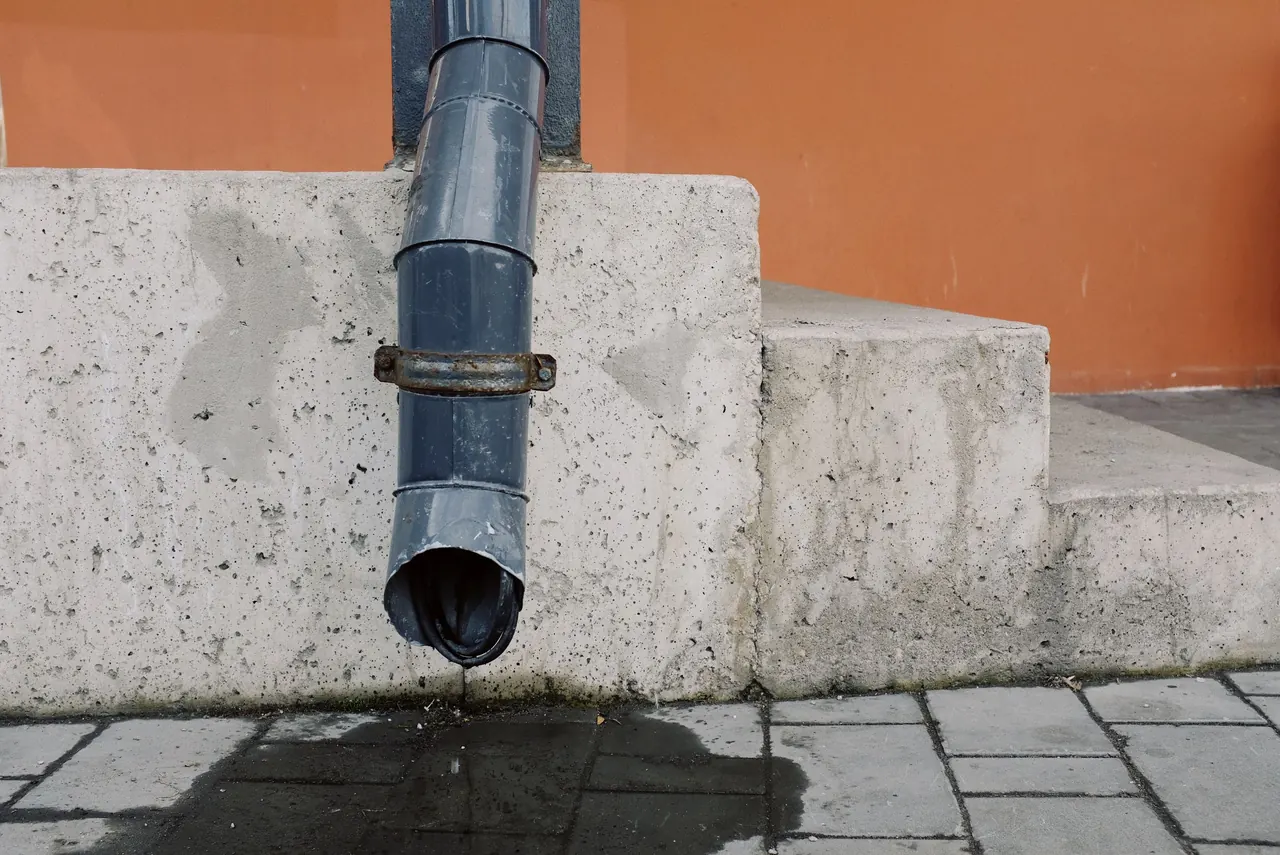
Rodding the long downpipes off Church Street
On a four-storey building, clearing the gutter is only half the job. The water still has to get down a long downpipe, past a hopper, through several joints and into a drain at street level, and a blockage halfway down backs the whole system up. So the work runs from the top down. The hidden gutter is photographed first, by drone if it sits behind a parapet. The full length of gutter is cleared, not just the part that overflowed, then the outlet and hopper. The downpipe is rodded or flushed to the drain, and water is run through to prove it all drains.
Then the damage is checked. An overflow behind a parapet often leaves a split in the lead lining, a wet joist end or a soaked wall. If it has got into the roof, that is a repair for our Camberwell roof repairers. Water that has run down a stucco front has its own consequences, explained on our Camberwell gutter repair page. A gutter that has lost its fall, or an outlet that is undersized for the roof, is put right too, so the debris does not settle in the same place again.
Once it runs freely, a planned gutter clean in Camberwell each year keeps it that way. The main blocked gutter repair page has more on the methods.
Frequently asked questions
Why does the ceiling in my Camberwell Grove top-floor flat only stain in a cloudburst?
That pattern points to a parapet or valley outlet that is partly blocked. In ordinary rain it copes. In a downpour, water backs up behind the parapet faster than the outlet can take it, rises over the lining and gets in. Clearing the outlet and checking the lining usually solves it.
Plane leaves from Peckham Road block my hopper every November. Can that be stopped?
Not entirely while the trees are there, but it can be made less frequent. A guard over the outlet holds back the big leaves, and a clear in late autumn, once the planes have dropped, stops the build-up turning into a blockage in the winter rain. If the hopper or pipe is undersized for the roof, that is worth fixing too.
Birds nest behind the parapet on my Church Street building. Is that what blocks it?
Often it is part of it. Nesting material and droppings collect at the outlet and bind the leaves together. A nest that is in use is protected by law, so clearing it may have to wait until the birds have gone, while the rest of the gutter is dealt with. A guard over the outlet afterwards helps keep it clear.





