


 Google reviews

The roof work Camberwell's houses ask for
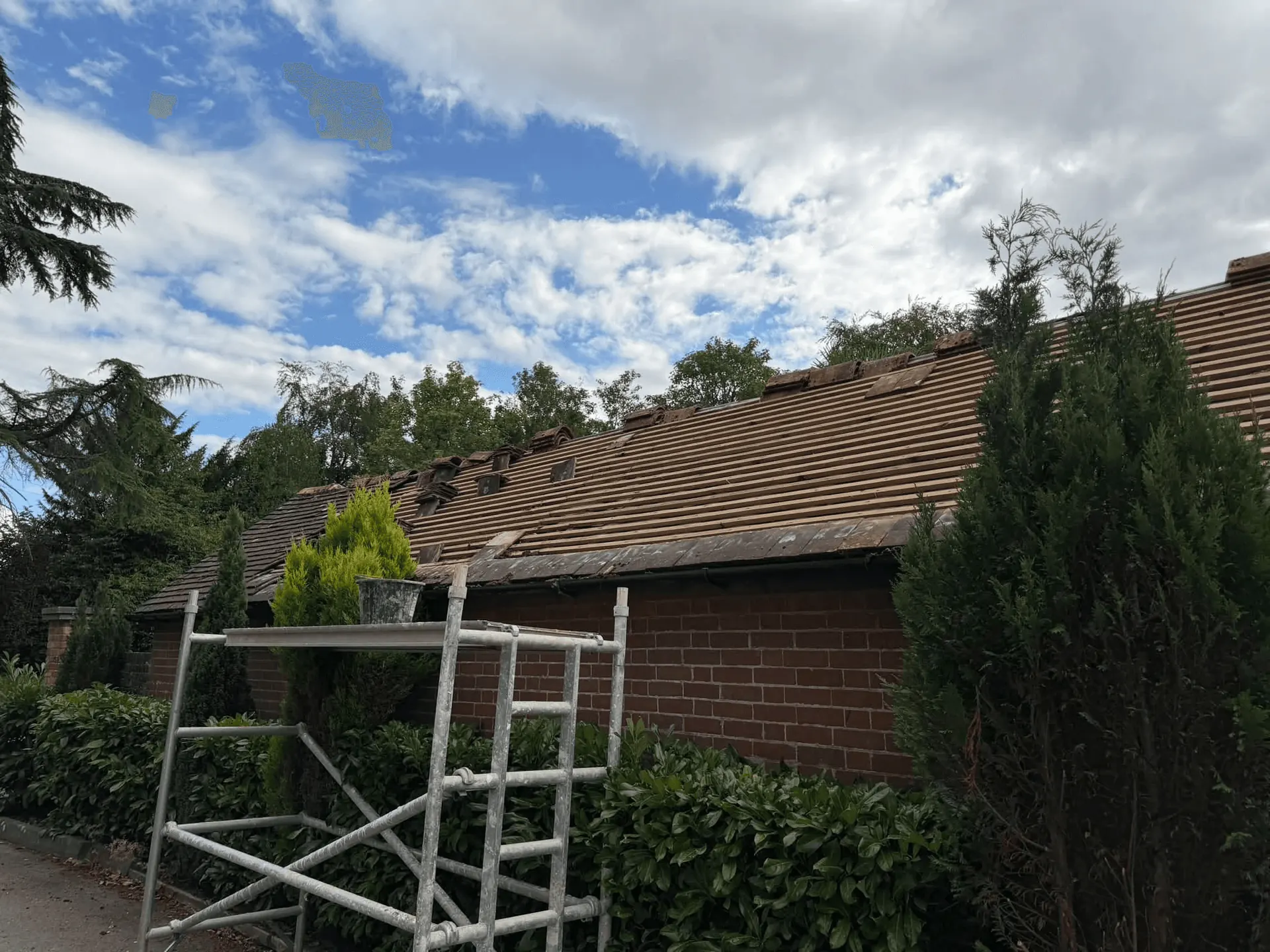
Most of the older houses in Camberwell share one kind of roof. Southwark's appraisals for Camberwell Grove and Camberwell Green describe it again and again: natural slate laid to a shallow pitch, finished with overhanging eaves, hidden behind a parapet, or topped with a slated mansard attic storey. That one description covers a Georgian terrace on the hill, an 1880s shop block on Church Street and a villa on Denmark Hill, and it tells you a good deal about what goes wrong.
- Hidden gutters and lead. Where the roof sits behind a parapet, rainwater runs into a lead channel behind the wall and leaves through a small outlet. When that outlet chokes, water comes indoors; our page on blocked parapet gutters in Camberwell explains how.
- Slipped slate on shallow slopes. A low pitch sheds water slowly, so one slipped slate matters more than on a steep roof. Our roof repairs on the Camberwell hill page covers the slate and lead work.
- Tall stacks. Southwark expects original stacks and pots to be kept and repaired, so flaunching, pointing and lead on a tired stack are repaired rather than the stack taken down.
- Cast iron. Listed fronts in Addington Square and Jephson Street call for cast iron gutters and downpipes to the original pattern.
- Flat roofs. Post-war townhouses, council estates and the single-storey kitchens behind the older houses add flat roofs, from old felt to GRP and EPDM.
The later houses are the exception. Grove Park and Champion Grove were built in revival styles with steeper plain-tiled roofs, timber eaves and gable boards, so their fascias, soffits and bargeboards need the attention that a parapet terrace never does.
Area by area, from the Grove to Peckham Road
- Camberwell Grove and Grove Lane. Two long residential streets built up between the 1770s and the 1840s; nos. 91 to 95 Camberwell Grove, from 1775, are among the earliest houses. Three and four storey terraces, many over basements, with stucco details and roofs behind parapets. Near the top, Grove Crescent is a Regency terrace facing its own narrow green.
- Grove Park, Champion Grove and Love Walk. Semi-detached houses and red-brick gabled terraces with linked porches and tiled roofs, and detached Victorian villas on Love Walk. Many of Champion Grove's slate roofs went to concrete tiles long ago, a story told on our Camberwell roof replacement page.
- Camberwell Green, Church Street and Denmark Hill. Flats over shops in 1880s blocks with parapets and steep mansards, and the Peabody buildings facing the Green, rising from four storeys with a mansard roof storey to six in places. Near the foot of Grove Lane, Jephson Street is a small listed group of houses with half dormers.
- Addington Square. A Georgian and Regency square off Camberwell Road whose first house was finished by 1810. The houses on three sides are Grade II listed. Burgess Park, the largest park in Southwark at 56 hectares, lies just to the north.
- Peckham Road and Sceaux Gardens. Older houses behind lines of plane trees on Peckham Road, the 1955 Sceaux Gardens Estate of flats, maisonettes and bungalows, and 1960s housing south of Dalwood Street.
The war shaped all of these streets. Southwark records 5,650 houses in the old Borough of Camberwell destroyed, and the gaps were filled with council flats and new estates in the 1950s and 60s, which is why a flat-roofed block can stand between two Georgian terraces. Camberwell's western edge, around Ruskin Park and the far side of Denmark Hill, falls under Lambeth Council. The roofs on either side of the boundary are much alike, and we work on both.
What Southwark asks of a roof
Much of older Camberwell lies in one of Southwark's conservation areas: Camberwell Grove, Camberwell Green, Camberwell New Road, Sceaux Gardens and Addington Square. Southwark's list of conservation areas shows no Article 4 direction for any of them, but the appraisals are firm about roofs.
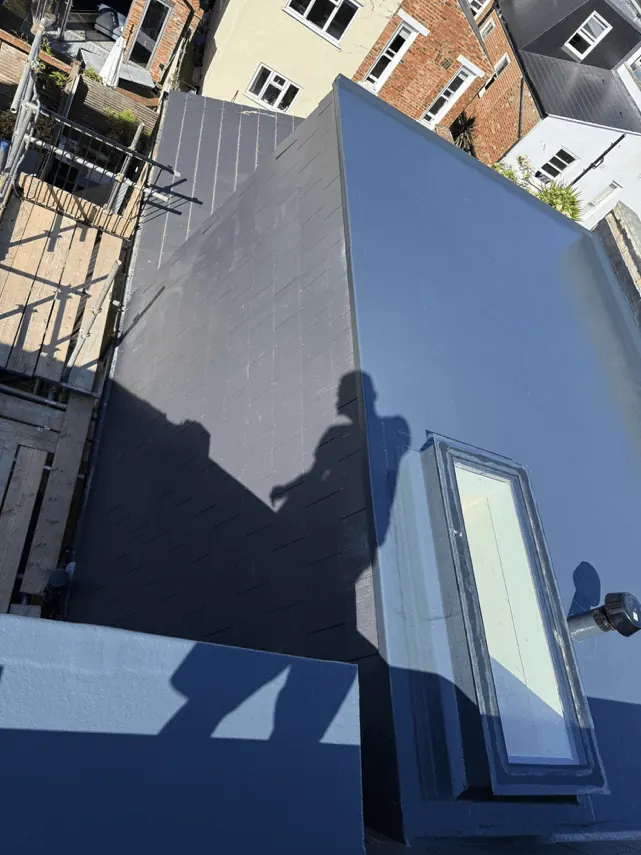
Original coverings should be kept and repaired with matching slate. When a roof does have to be renewed, Southwark will usually want natural slate, though it can accept a good reconstituted slate on an unlisted building. It rules out concrete tiles and artificial slate, and the Camberwell Green appraisal gives a practical reason: concrete tiles can weigh more than a roof designed for slate was built to carry. Original chimney stacks and pots should always be kept.
Routine upkeep is treated more lightly. The Camberwell Green appraisal lists clearing debris from gutters and rainwater pipes, repointing failed mortar and re-fixing loose slates as minor tasks that need no authorisation. Like-for-like re-roofing is normally maintenance too. Anything that changes how a roof looks, or any work to a listed building, is a question for Southwark before it starts, and we will say so when we quote.
Big houses with several owners
As the wealthy moved out of Camberwell, Southwark's appraisal notes, its big houses were shared out between several households. Many are flats today, with one roof and several owners, and that changes how roof work gets decided. If a freeholder or managing agent looks after your building, tell us who and the photos and quote can go to them as well as to you.
On a tall terrace or a roof hidden behind a parapet, Josh can fly the drone so everyone sees photographs of the slopes, gutters and stacks without anyone climbing up or putting up scaffolding just to look. Simranjeet, our surveyor, or one of the roofers then goes through what has failed and what can wait. The full range of work is on our services page.
Frequently asked questions
Does Addington Square's listing affect a small roof or gutter repair?
Like-for-like repairs, such as re-fixing slates or resealing a cast iron joint, keep the building as it was listed. Changing a material or the look of the roof is different, and on a Grade II listed house it may need listed building consent. We repair in matching slate, lead and cast iron, and tell you before quoting if consent looks likely to be needed.
Why do leaks on lower Camberwell Grove so often start at the parapet?
Because the roof drains through a narrow outlet behind the parapet wall, and when it chokes the water comes inside; our parapet gutter page explains the fix.
Is the Ruskin Park side of Denmark Hill covered by the same rules?
No. That side falls under Lambeth Council, which has its own conservation areas and guidance. The roofs are much the same, but if a repair would change how a house looks, check with Lambeth rather than Southwark.
Are there Article 4 directions on Camberwell's roofs?
Southwark's list of conservation areas shows none for Camberwell Grove, Camberwell Green, Camberwell New Road, Addington Square or Sceaux Gardens. The conservation area rules and any listing still apply, so changes to how a roof looks are worth checking with the council first.





