



 Google reviews

Deep eaves on the Love Walk villas
At the eastern end of Love Walk, between Grove Lane and Denmark Hill, nos. 2 to 9 are detached, double-fronted Victorian villas with overhanging eaves. No. 9, on the corner of Grove Lane, has a hipped roof, so its eaves run right round the house. On a deep overhang the soffit is wide, the fascia is long, and the rafter ends behind the fascia carry the weight of the gutter and whatever water is sitting in it.
That is a lot of painted timber, and it fails from behind. A gutter that has overflowed for a few winters soaks the back of the fascia where nobody sees it. The paint on the face stays intact for a while, then blisters, and by the time the board looks bad the timber is soft. Soffits sag when the fascia or the bearers above them soften, and a gap at a joint is all a wasp or a starling needs.
When boards come down on a house like this, the rafter ends are checked before anything goes back up. After years of wet they can be soft at the tips even when the fascia only looked tired. Rot is cut out and repaired first, because a new fascia fixed to timber that will not hold a screw is the same problem a year later. Gutters on these villas fill under the garden trees, and keeping them clear protects the boards too; see our Camberwell gutter cleaning page.
Where the fascias are on a parapet terrace
On lower Camberwell Grove the front of the house ends in a parapet, so there is no fascia to replace there. The roofline timber is at the back, on the back additions and outriggers, where a lower roof finishes in an eaves with a board and a gutter. Those boards are short, often hard to reach from a narrow yard, and easy to forget about because they cannot be seen from the street.
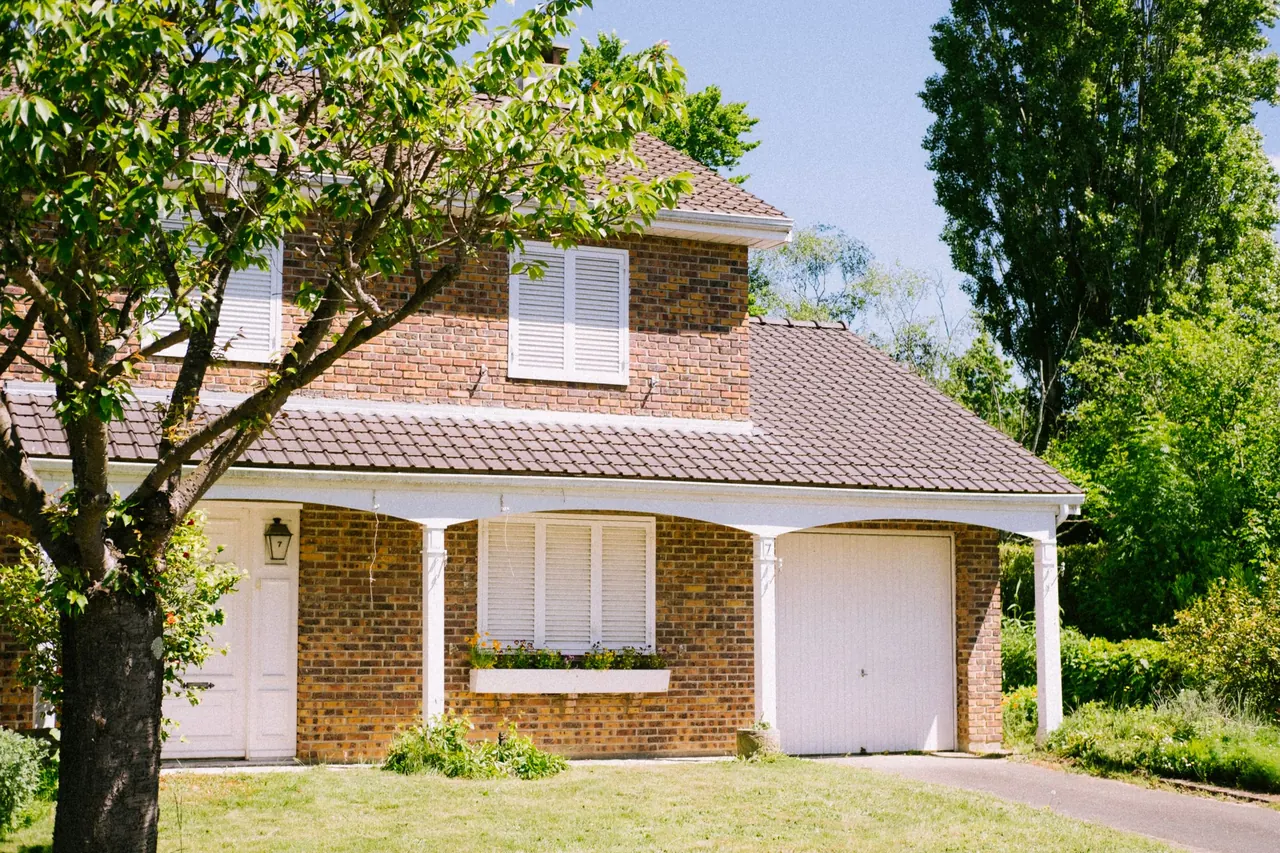
The later streets have more. Southwark's appraisal describes the houses of Grove Park and Champion Grove as revivalist in style, with steeper plain-tiled roofs, eaves and gable boards. Grove Park's semis come in three main versions, and the Champion Grove terraces have gables linked by entrance porches. The bargeboards on their gables rot first at the lower ends, where water runs off the verge, and a rotten foot can often be cut out and replaced in timber on its own.
Nesting birds and timing
Behind the big back gardens of the hill, eaves are a natural place for birds to nest. Under the Wildlife and Countryside Act 1981, it is an offence to damage or destroy the nest of a wild bird while it is being built or used, so a soffit with an active nest in it waits until the young have gone. That makes spring and early summer an awkward time to start on a soffit with known nesting, and autumn a good one, once the gutters have been cleared and the boards can be seen properly.
Timber or uPVC in a conservation area
Where boards are rotten along most of their length, or new gutters are going up anyway, replacing the full run is the lasting answer. uPVC fascias, soffits and bargeboards come in white, black, grey or woodgrain, with ventilated soffits where the roof needs eaves ventilation. Capping old timber with a thin uPVC cover is cheaper, but only works over sound wood, because capping rot only hides it.
On a period house in the Camberwell Grove Conservation Area, appearance matters as well. Southwark's guidance favours original materials and matching replacements, and names uPVC replacing timber, in its case sash windows, as a widespread problem. On a listed house or a prominent front, talk to the council before changing the material. Because the fascia carries the gutter, the two are often done together, which our new gutters in Camberwell page covers. The finishes we fit are shown on the main fascias and soffits page.
Frequently asked questions
Birds are nesting in the soffit of my Love Walk villa. Can the work still go ahead?
Not on that part of the soffit while the nest is in use, because active nests of wild birds are protected by law. Work elsewhere on the house can usually continue, and the nesting section is done once the birds have left, with the gap closed so they do not return to the same spot.
Does a Camberwell Grove terrace with a parapet have any fascias at all?
Not at the front. At the back, the back additions usually have an eaves with a board and a gutter, and any dormer or rear roof will too. Those are the boards that need checking on these houses.
Is uPVC allowed on a Grove Park semi in the conservation area?
Changing timber to uPVC on a prominent front is the kind of change Southwark's guidance is critical of, so check with the council first. On an unlisted house, repairing the timber you have in matching timber needs no such check, and at the back of the house there is usually more freedom.





