



 Google reviews

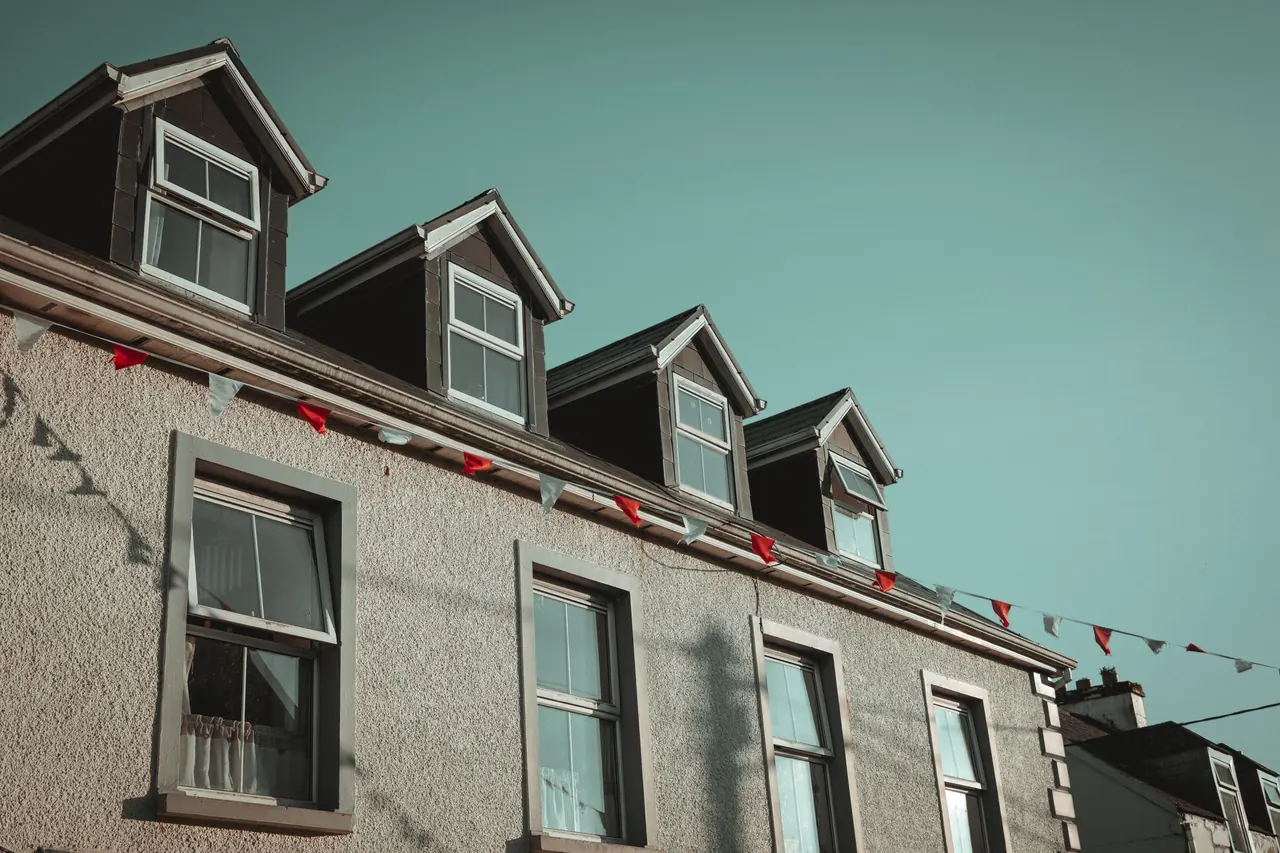
Pierced bargeboards and deep eaves on the 1890s semis
The houses in the Stradella Road Conservation Area were built between 1894 and 1903 with medium-pitched slate roofs and overhanging eaves. Southwark's Stradella Road appraisal describes the Half Moon Lane pairs as having one bay on each house set below a gable roof with an attic window and pierced bargeboards. In Stradella Road itself, different gable treatments, render and half-timbering were used to give each group some variety.
Deep eaves mean a wide soffit and a lot of exposed timber at the roof edge. On a house this age, the fascia and soffit were painted softwood, and paint is what keeps them going. Once it fails, water gets into the end grain at joints and corners, and the rot spreads along the board from there. The warning signs are paint lifting in long strips, a soft patch when you press with a screwdriver, a gutter that will not stay level, and gaps at the corners where birds start to get in.
Pierced bargeboards suffer more because they have so many cut edges. A board that has rotted at the foot of the gable can often be repaired with a spliced-in section cut to the same pattern, rather than replaced in full. Where a whole board has gone, a new one can be made in timber to the same pattern, from a template of the old board or the matching gable next door, and we fit it in its place.
Holmhurst and the older houses on Half Moon Lane
The appraisal picks out Holmhurst, 46 Half Moon Lane, built around 1882 and older than the streets around it. It records the house as retaining many original features, including its ornamented bargeboards and the balcony railings over the two front bays. Houses like this show what the original roof edges looked like, and they are a useful reference if your own bargeboards have been simplified or lost over the years.
In the conservation area, swapping decorative timber for plain uPVC changes how the house looks from the street, and the appraisal treats original features as worth keeping. Houses here also fall under the Dulwich Estate's Scheme of Management, which covers changes to outside appearance. On those houses we price the timber repair first and only suggest uPVC on boards that cannot be seen or that have already been replaced.
Sunray cottages and the Lambeth terraces
The Sunray Estate's cottages have steep hipped or gabled clay roofs. The estate's guidance does not set specific rules for fascias, but it asks for materials and details that match the existing houses, so like-for-like timber is the safe choice there.
On the Lambeth side, the terraces off Railton Road and the post-war houses on bomb sites usually have plainer, shallower eaves, and many already have uPVC. Full replacement in uPVC is the low-maintenance option on those: the gutters come down, the old boards come off, the rafter ends are checked and repaired, and new fascias and ventilated soffits go up before the gutters are refitted. Capping over old timber is only worth doing where the board underneath is completely sound.
As a guide, Checkatrade's fascia and soffit guide puts replacement at £90 to £170 per linear metre. If the gutters are due too, the Herne Hill gutter installation page explains which type suits each street, and the main fascias and soffits page covers materials and finishes. Our gutter repair page for Herne Hill covers gutters that only need refixing.
Frequently asked questions
Can you copy a rotten pierced bargeboard on our Half Moon Lane gable?
Yes. A new timber board can be made to the same pattern from a template of the old one, or of the matching gable on the other half of the pair, and we fit it. If only the lower end has rotted, we repair that section instead.
The soffit under the deep eaves of our Stradella Road semi is sagging. What is behind it?
Usually rot in the soffit board or the bearers that hold it, sometimes reaching the rafter ends. We open it up, replace what has rotted and close it again with a ventilated finish so the roof space can breathe.
Our Sunray Estate cottage still has timber fascias. Should they be changed to uPVC?
Not necessarily. The guidance asks for matching materials and details, so repairing or replacing in timber is the straightforward route. Check with Southwark and the Dulwich Estate before changing material.





