



 Google reviews

Deep eaves from the station to the Italianate villas
Lambeth's conservation area statement describes the original booking hall at Streatham Hill station, built for the line that opened in 1856, as having a hipped slate roof whose very deep eaves form a wide overhang carried on large iron brackets. It is the boldest example of something you see all along Leigham Court Road. The Italianate villas there have naturally slated hipped roofs with overhanging eaves, sometimes with stucco brackets underneath.
Deep eaves protect the walls below, but they put a lot of timber out in the weather. The fascia along the edge carries the gutter, the soffit underneath is wide, and the rafter ends inside are exposed to any water that gets past the gutter. When the gutter leaks or overflows for a few winters, the back of the fascia rots, the brackets holding the gutter lose their grip, and the soffit starts to sag or open up. Birds, squirrels and wasps find their way into the gap.
On a villa like this we take the gutter down, remove the damaged boards and check every rafter end before anything new goes up. Where a rafter end has rotted, we deal with it first. Then the new fascia and soffit go on, with ventilation where the roof space needs it, and the gutter is refitted with the right fall.
Carved bargeboards on the Gothic houses
Not every house on Leigham Court Road is Italianate. The Gothic houses that followed have steep gables, and Lambeth's appraisal picks out the decorative timber bargeboards at Nos. 41 and 43 as good examples. A carved bargeboard is part of what makes a house like that worth looking at, and replacing it with a plain plastic board would take that away.
Where a decorative board has rotted in places, the sound parts can often be kept and only the damaged length repaired or replaced. Where the whole board has gone, we talk through matching its look in timber before anything comes down. On a front gable in a conservation area, keeping the original character is the safer route, and Lambeth can advise if you are unsure.
Turret and gable edges in Telford Park
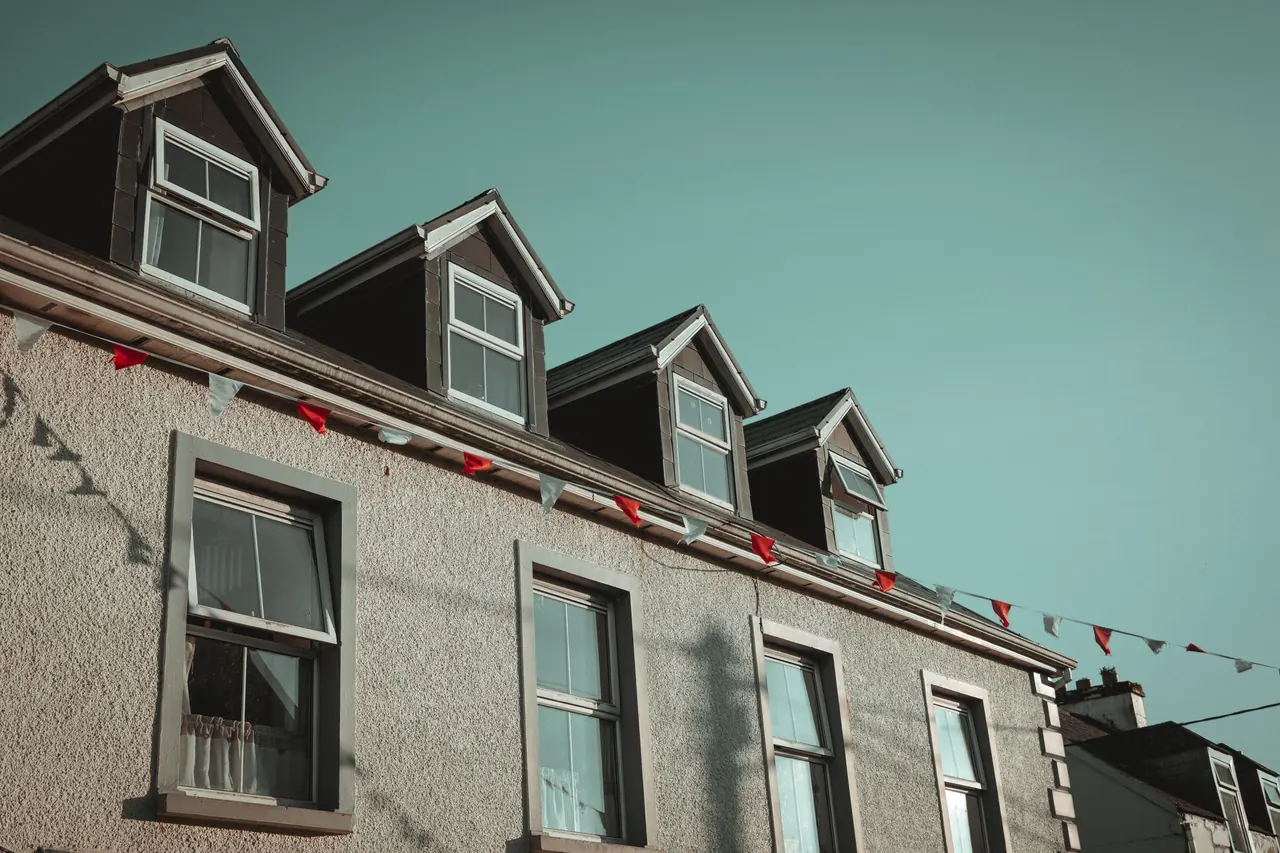
West of the main road, Telford Park's houses have Dutch gables, turrets and bays, so the roofline has many more edges than a standard terrace. Each gable has its own verge or barge detail, and each turret has short, angled eaves boards. Those short sections are fiddly to replace and easy to get wrong, and a poorly fitted board on a turret shows from the street.
At the back of these houses and on later extensions, uPVC fascias and soffits are the usual low-maintenance choice and come in white, black, grey and woodgrain. Capping over old timber only makes sense when the timber underneath is completely sound. For costing, Checkatrade's fascia and soffit cost guide gives £90 to £170 per linear metre for replacing fascias and soffits together, before height and scaffold on a tall villa are added.
New boards and gutters work best as a pair, and our gutter installation in Streatham Hill can be done on the same visit. Keeping them clear afterwards with regular gutter cleaning stops the new boards being soaked again. The main fascias and soffits page explains the job in full.
Frequently asked questions
Can the carved bargeboards on a Gothic house on Leigham Court Road be copied in new timber?
Where only part of the board is rotten, we repair or replace that length and keep the rest. If the whole board has to go, we agree how to match the original look in timber before anything is taken down.
The soffit under our villa's overhanging eaves is sagging. What is behind it?
Usually rot in the soffit bearers or the rafter ends, caused by water getting past the gutter. We open it up, show you what we find and repair the timbers before fitting new boards.
Do the turret eaves on a Telford Park house need different boards?
The materials are the same, but the boards are cut in short angled sections to follow the turret. It takes longer than a straight run, and we price it that way.





