



 Google reviews

When the gutter starts to drop
The commonest fascia problem on the Holy Trinity streets does not look like a fascia problem. A gutter that sags at one end, a bracket pulling out, a stain that keeps coming back under the eaves: those usually mean the board or rafter end the gutter is fixed to has softened. Paint fails, water gets in at the joints, and the timber rots from the ends.
On Dalebury and Crockerton Roads, the houses have decorative cornices at eaves level and over the projecting ground floor, with a nailhead string course below. Wandsworth Council's 2007 draft Holy Trinity appraisal records that detail as part of the street's character. The appraisal does not say what each cornice is made of, so that is checked first. Where the moulding does much of the work, the timber may be no more than a board behind the gutter and a soffit tucked under the overhang.
That changes the job. Rather than a full new roofline, the work is usually to replace the rotten timber that is there, protect the cornice around it, and give the gutter a sound fixing again. Our guide to water running behind a gutter explains why the board goes first.
Keeping the cornice on show
Covering a moulded eaves in a run of white uPVC hides exactly the feature the appraisal values, and in a conservation area it makes one house stand out from its neighbours. On these fronts, timber is replaced like for like and painted.
On Trinity Road, 139 is described in the appraisal as the best surviving example of Heaver's villas at 121 to 147, with carved brickwork at the eaves and at the apex of the gable. Where brick does the work, there is no fascia to replace, and repairs are limited to the timber at the rafter ends and soffits behind it.
Soffits high on the gabled fronts
The gabled fronts on Trinity Road put their soffits three storeys up, and timber at that height gets less maintenance than it should, because painting it means access equipment. Gaps in a soffit there let birds and wasps into the roof space. The repair itself is modest; the access is most of the cost, so it makes sense to plan any other high-level timber or gutter work for the same visit. Our Upper Tooting gutter installation page covers the gutter side.
If nesting birds are using a gap, the work waits until they have left, since active nests are protected by law.
Later houses, where uPVC fits
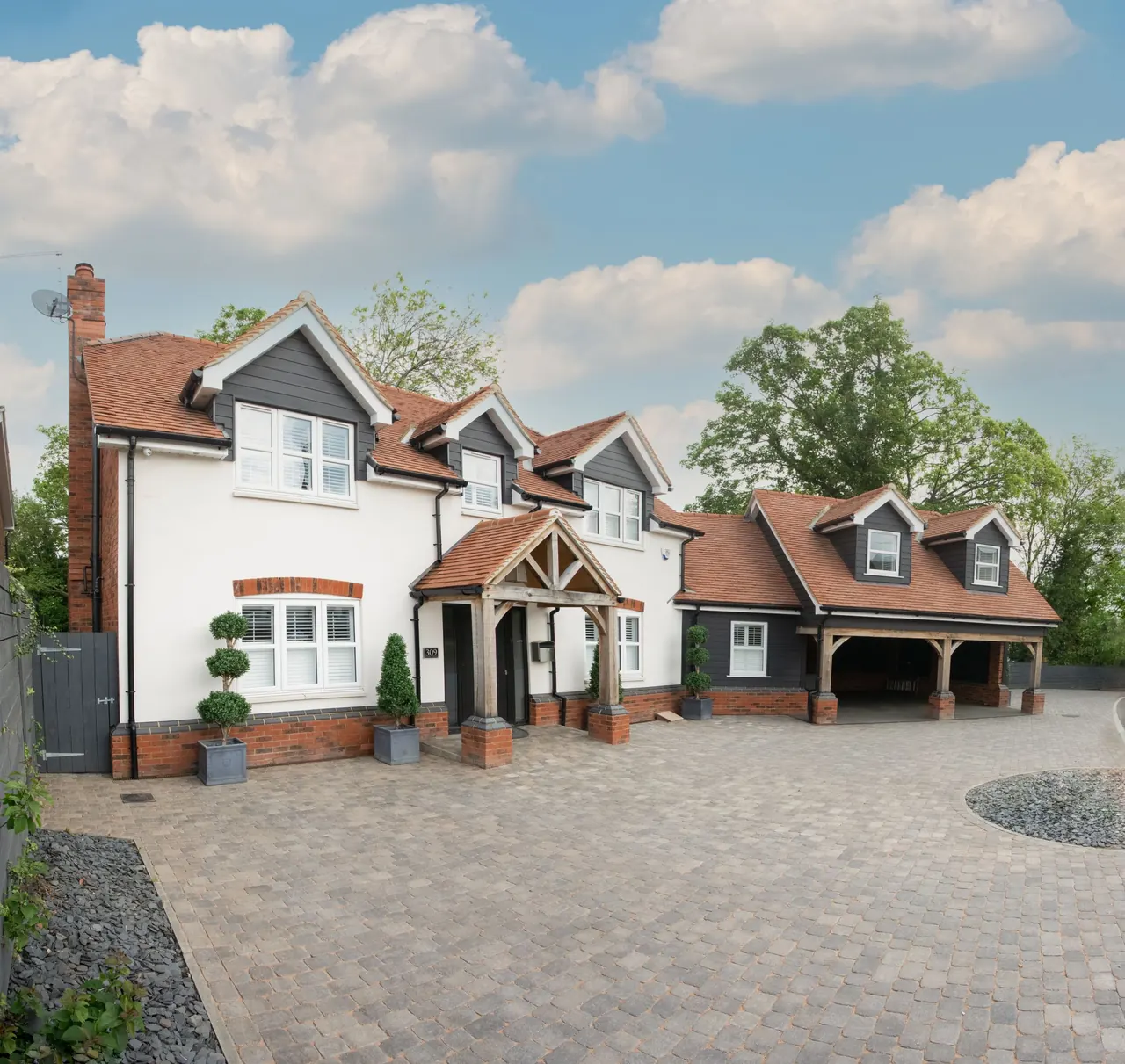
Away from the Victorian fronts, the choice is simpler. The late-1920s houses of the Bell estate around Fishponds Road, the infill that replaced 133 and 135 Trinity Road, and rear extensions across the area are more likely to have conventional fascia and soffit boards. Where the timber is rotten along most of its length, full replacement in uPVC is the practical long-term answer. It comes in white, black, grey and woodgrain, and ventilated soffits help air move through the roof space where there is no other eaves ventilation.
Capping, fitting a thin uPVC board over existing timber, only works when the timber underneath is completely sound. It is checked before capping is suggested, because capping over rot hides the problem. More on materials is on our main fascias and soffits page.
Checkatrade gives a published range of around £90 to £170 per linear metre for fascia and soffit replacement.
Frequently asked questions
The eaves on my Dalebury Road house have a moulded cornice. Can uPVC go over it?
It can be done, but it hides the cornice and looks out of place on a street the council wants kept consistent. Repairing or replacing the timber behind the gutter keeps the cornice exposed.
Birds are getting into the soffit on my Trinity Road villa. Can it be sealed now?
Not while there is an active nest. Once the birds have gone, the gap is closed and any rotten timber replaced at the same visit.
Do you replace fascias on the 1920s houses around Fishponds Road?
Yes. Where those houses have conventional boards, new fascias, soffits and gutters can usually go up together in one visit.





