



 Google reviews

Rear additions, extensions and dormers on Arodene Road
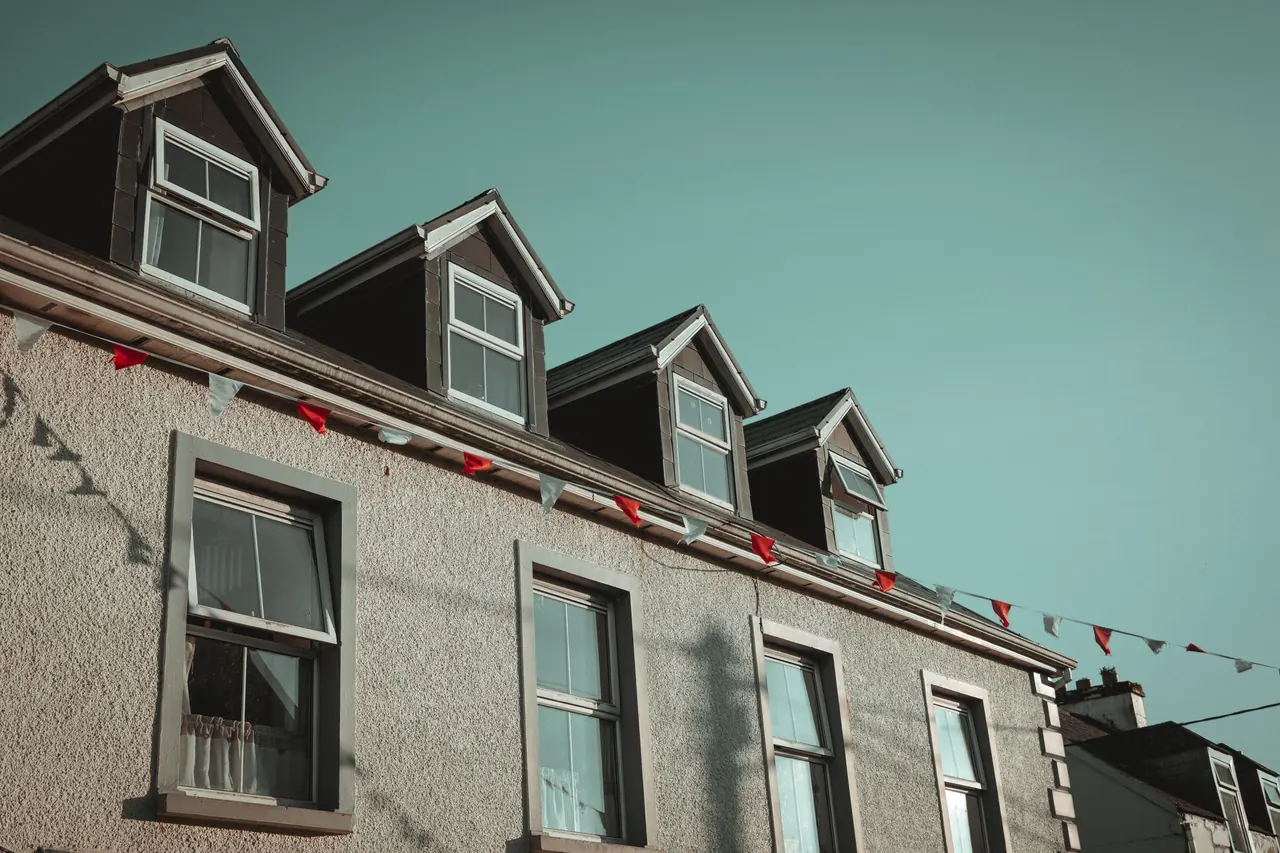
Go round the back of an Arodene Road or Beechdale Road terrace and the timber appears. The rear additions usually have a fascia under their gutter, and the extensions, side returns and loft dormers added over the decades almost always have fascias and soffits. Those are the boards that rot, sag and let birds in.
- Soft or flaking timber, often rotting from the back where water has got behind the gutter.
- A gutter sagging or pulling away because the board can no longer hold the brackets.
- Gaps or holes in the soffit under a dormer or extension eave.
- Staining or blackening on the wall or soffit just below the eaves.
Water running down the wall behind a gutter is often the first sign that the fascia is taking on water. Our article on water leaking behind a gutter explains why.
Leander Road's brick gables
Leander Road was built between 1876 and 1888, and Lambeth's Rush Common and Brixton Hill appraisal picks it out for some particularly fine decorative brickwork on its gable ends, laid in yellow brick headers and red brick stretchers. Most of the bay-fronted roads nearby finish their eaves in brick too.
On fronts like these the eaves are brick, not timber, so there is little or no fascia board to replace. Where there is timber, it is usually at the verge of a gable, where a bargeboard or a timber verge finishes the edge of the slate, or tucked behind the gutter on the rear addition. Covering a patterned brick gable in plastic boards would spoil exactly what the appraisal values, so we do not suggest it. On these houses we work on the timber that is there and leave the brickwork alone.
A gable bargeboard takes weather full on: rain driven against it, sun on its face and water running off the slate edge behind it. It is often the first piece of roofline timber to rot on a house that otherwise has very little. Where the board is sound, it can be repaired and repainted. Where it is soft, we replace it, usually in uPVC in a dark or woodgrain finish, cut to sit neatly against the brick, and check the slate verge and the ends of the battens behind it while it is off.
Boards that are sound, boards that are not
A short length of damaged fascia can sometimes be replaced on its own. Where boards are rotten along most of their length, or new gutters are going up anyway, replacing the full run is better value. Capping, where a thin uPVC board covers the old timber, is cheaper but only works if the timber underneath is sound; capping over rot hides the problem rather than fixing it.
A replacement runs in a fixed order. We survey the boards, gutters and roof edge, take down the gutters and old boards, check and repair the rafter ends behind them, fit new fascias and ventilated soffits, rehang the gutters and connect the downpipes, then take the old material away. Because the fascia carries the gutter, the two are usually done together, and our gutter installation in Brixton Hill page covers that side. uPVC boards come in white, black, grey and woodgrain, and on a period house a dark or woodgrain finish usually looks more at home than bright white.
Checkatrade's fascia and soffit cost guide puts replacing fascias and soffits at £90 to £170 per linear metre, so a short rear addition is a much smaller job than a full house. If the rafter ends turn out to be rotten, the roof edge may need attention too, which our roof repair page for Brixton Hill covers.
Frequently asked questions
If my Leander Road gable has a timber bargeboard, can you replace it without hiding the brickwork?
Yes. The new board is cut to the same width and line as the old one, so the patterned brick below stays fully visible. We do not add cladding or boxing over the gable.
My house has red-brick eaves and no fascia board at the front. What can you do?
We leave the brick detail as it is and check how the gutter is fixed and whether water is getting into the wall top. Any fascia work is usually on the rear addition or an extension, where boards are more common.
The soffit under my dormer at the back of an Arodene Road house has gone black. Is that rot?
It may be mould from condensation or water getting behind the board. We open it up, check the timber and the dormer edge above it, and tell you whether it needs a new board or a fix to the leak above.





