



 Google reviews

Pots, flues and the Sunray rules
The Sunray Estate's 1920s cottage houses each have a plain brick stack with simple pots set in a mortar bed. Southwark's Sunray Estate guidance is specific about them: repairs to stabilise a stack are fine, reducing its height will not generally be acceptable, loose pots should be rebedded and not removed, and flues should stay ventilated even when no fireplace uses them.
In practice that means a Sunray chimney gets repaired where it stands. The work that usually comes up is:
- Flaunching, the sloped mortar around the pots, which cracks with age and lets water into the top of the stack and loosens the pots.
- Rebedding pots that rock in a wind, set back into fresh flaunching at the same height.
- Flashings where the stack meets the steep clay roof, which need dressing carefully into the tile courses.
- Pointing on the exposed faces, where frost has opened the joints.
A disused flue sealed at the top and at the fireplace traps damp air inside the stack. We fit a ventilated cap or cowl that keeps rain and birds out but lets the flue breathe, which is also what the guidance asks for. Houses on the estate fall under the Dulwich Estate's Scheme of Management, which covers repair work, so it is worth letting the Estate know before a chimney job starts.
Louvred clay vents on Stradella Road
Across Half Moon Lane, the Stradella Road houses are a generation older and slate-roofed. Southwark's Stradella Road appraisal says original stacks and pots should always be kept and repaired, and notes that some original clay pots there are still capped with louvred clay vents. Those vents are period pieces. If one is cracked, we look for a matching replacement rather than swapping it for a modern metal cowl.
The same appraisal sets out how repointing should be done in the area: kept to a minimum, in a lime-based mortar no stronger than 1:1:6, coloured with sand to match the original, with flush or slightly recessed joints. On a chimney that means raking out only the failed joints and matching what is there, not repointing the whole stack in hard grey cement.
Lead flashing on these slate roofs is the usual leak point. Where lead has split or pulled out of its joint, we cut new lead into the brickwork and step it down the slope with soakers under the slates. As a guide, MyJobQuote's chimney leadwork guide puts full leadwork replacement with scaffolding at £700 to £920.
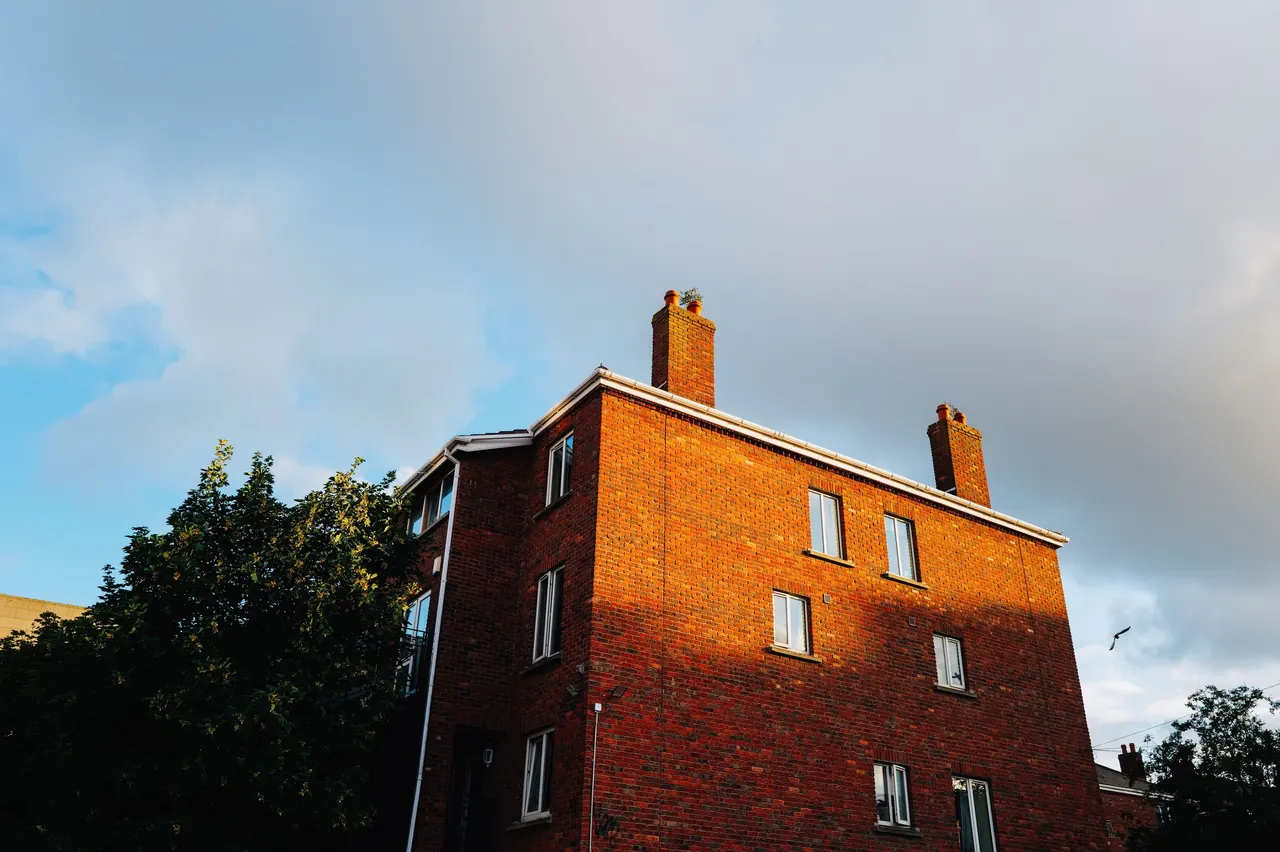
Tall stacks above the Milkwood Road junction
On the Lambeth side of Herne Hill, Lambeth's Herne Hill Conservation Area statement describes buildings of mostly four storeys from around 1900, many of which have kept their brick chimneys with traditional copings and terracotta pots. The group includes Herne Hill Mansions, a pair of mansion blocks built in 1898 to 1900, and the former fire station of 1906, which the statement notes has red brick chimneys.
Stacks this high need scaffold or a tower from the roof, and on shops with flats above, the access has to work around trading hours and the service yard. We check what is needed from photos first, then price the access with the repair so there are no surprises. If the roof around the stack needs work too, our roof repair page for Herne Hill covers slate and leadwork, and our chimney maintenance guide lists the early warning signs. The main chimney repairs page has guide prices for leadwork and repointing.
Frequently asked questions
One of the pots on our Sunray Estate stack is loose. Can you rebed it rather than take it off?
Yes, and that is what Southwark's guidance asks for. We lift the pot, cut out the old flaunching, set the pot back at the same height and form new flaunching around it.
Should the louvred clay vent on our Stradella Road chimney pot stay?
If it is sound, yes. It keeps rain out while letting the flue breathe, and it is an original feature the appraisal mentions. We rebed it if it has worked loose.
What access does a chimney above a shop at the foot of Herne Hill need?
Usually a scaffold or a tower on the roof, depending on the height and the roof shape. We agree the timing with the shop and the flat owners so the pavement and doorways stay clear.





