



 Google reviews

The small stack on the rear addition
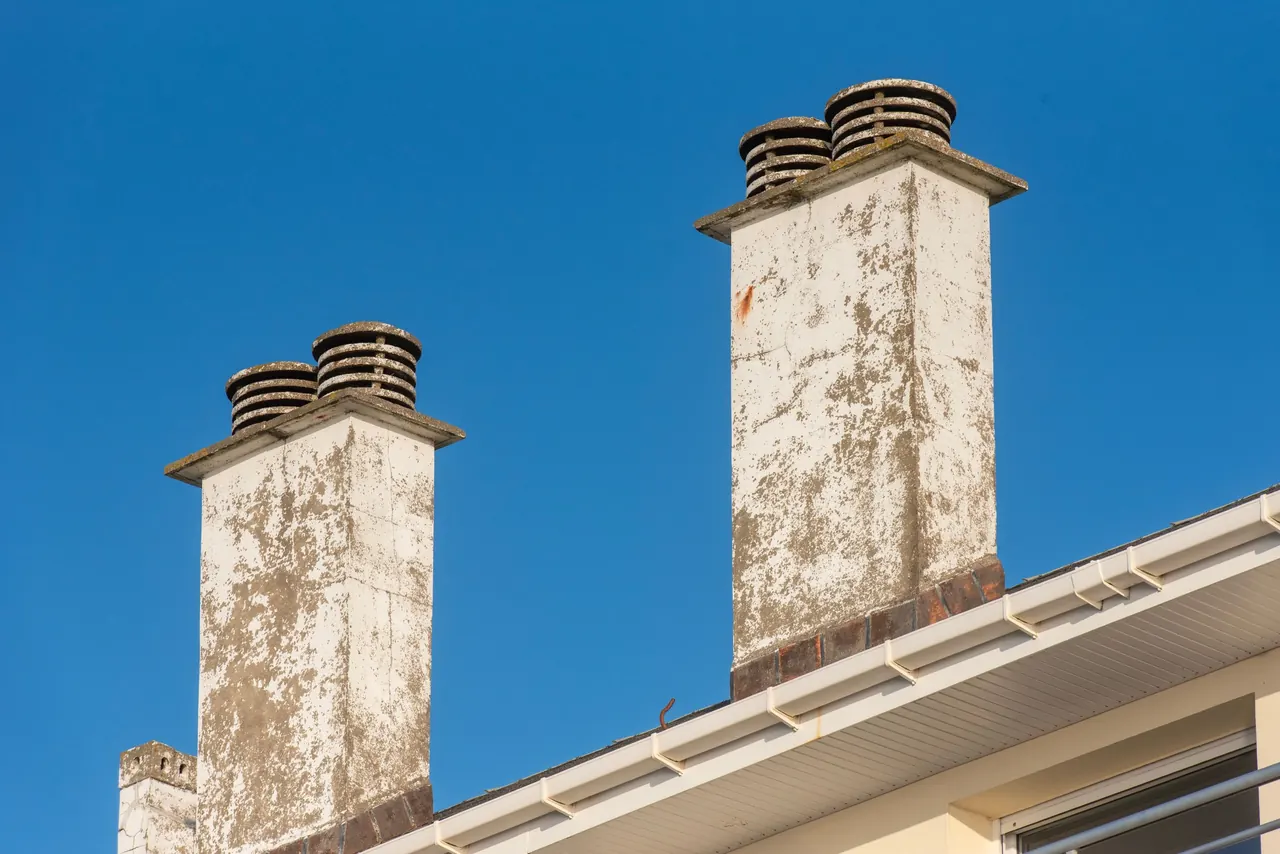
Most terraces on the old Friern Manor and Bowyer-Smith estates have two kinds of chimney. The main stacks sit on the party walls, one stack serving two houses with a row of pots across the top. Behind them, many houses have a second, smaller stack on the rear addition, often sitting right beside a valley or against the back wall of the main house.
That small stack is where three awkward details meet. The lead has to turn from the slope of the rear roof onto the brickwork, run along the valley edge and tuck under the higher wall, all in a space a roofer can barely kneel in. Over the decades the lead lifts or cracks, or someone replaces it with a cement fillet that cracks as soon as the roof moves. Water then runs down the side of the stack and shows as a stain in the back bedroom or on the bathroom ceiling of the addition.
The usual faults on stacks of this age, front or back, are:
- Old flashing. Lead that has lifted, cracked or slipped, or a cement fillet put in instead of lead.
- Soft pointing. Mortar washes out of the joints over the decades and rain soaks into the brickwork.
- Cracked flaunching. The mortar bed around the pots breaks up, loosening them.
- Open, unused flues. An open pot on a flue nobody uses lets rain and birds straight in. A ventilated cap or cowl keeps them out and lets the flue breathe, while a flue that still serves a fire or stove needs a cowl made for a working flue.
On the main party-wall stack, half the brickwork is yours and half is next door's, but the pointing and flaunching on top protect both houses. That is why the drone flies round the whole stack, including your neighbour's side, before we quote. Where a stack has let water into the roof around it, we can deal with the roof repair on the same visit.
Deep stacks against the parapets on Peckham Rye
The houses facing Peckham Rye Common are built on a bigger scale. Southwark's appraisal of The Gardens conservation area describes the later pairs there as having shallow hipped slate roofs "with a deep chimney stack and sloping parapet upstand dividing the pairs along the party wall". Where a parapet runs up the roof into the stack, slate, brick and lead all meet at one point, and each joint needs its own piece of leadwork. All of it is three storeys up, so re-leading or repointing a stack like this usually needs a scaffold, while resetting a pot or refixing a short length of flashing can sometimes be done from roof ladders.
Because most of these houses are now flats, chimney work usually goes through the freeholder or a managing agent, and clear photos of the stack help everyone agree what is needed before paying for scaffold.
Listed houses and The Gardens: what needs consent
Routine repairs in matching materials, such as new lead, repointing in a suitable mortar or resetting pots, are normally treated as maintenance. Two groups of East Dulwich houses need more care:
- The Gardens conservation area. It covers The Gardens, Kelmore Grove, Oakhurst Grove and part of the Peckham Rye frontage. The appraisal says the roofs on the Peckham Rye frontage are prominent in views across the Common, so repairs should keep the stack at its full height and keep the pots. Taking a stack down or changing its look is a question for Southwark's planning team first.
- Listed buildings. Nos. 152 to 166 Peckham Rye, early 19th-century houses facing the Common, are Grade II listed, as is the pair at 31 and 33 East Dulwich Grove. Work to a listed chimney beyond a like-for-like repair needs listed building consent.
If you are not sure whether your house is covered, Southwark can confirm for your address. Our chimney maintenance guide covers what is worth checking each year, and the chimney repairs page explains leadwork, repointing and flaunching in more depth.
Frequently asked questions
The stack on our Peckham Rye house meets a sloping parapet. Why does it leak there?
Because three things meet at one point: the parapet coping, the side of the stack and the slates. Each junction needs its own lead, and if one piece has lifted or been replaced with mortar, water finds the gap. A drone photo usually shows which piece has failed.
The small stack on our rear addition off Lordship Lane sits right beside a valley. Can it be fixed from ladders?
Often, yes. The rear addition is lower than the main roof, so new lead and pointing can usually be done from roof ladders. If the stack itself is leaning or the top courses are loose, a small scaffold may be needed.
A pot looks loose on the chimney above our shop flat on Lordship Lane. What happens next?
If it could fall onto the pavement, treat it as urgent and call our emergency roof repair line. We make it safe first, then quote for new flaunching and resetting the pots, usually to the freeholder.





