



 Google reviews

Brick eaves on the 1870s terraces
Many East Dulwich houses do not have the deep timber fascia boards found on later suburbs. The 1870s and 1880s terraces between Lordship Lane and Peckham Rye often have brick eaves, sometimes corbelled, with the gutter carried on brackets fixed into the brickwork or onto the rafter ends. The Ideal Homes history of East Dulwich dates most of them to the twenty years after 1865, and that brick detail is part of what makes a street of them look right.
That changes how a new gutter goes up. The brackets need sound fixings at the right spacing, set so the gutter falls towards the outlet without cutting into decorative brick. Old fixing holes are often loose or cracked, so we find fresh, solid fixing points rather than reusing them. Where a house does have a timber board, at the back or on a later extension, we check it is sound enough to carry new brackets before anything goes up, and our fascias and soffits work covers it if it is not.
A new gutter on one of these terraces is usually needed when the old one overflows even when it is clear, has cracked in several places, is pulling away from the eaves or is leaving rust streaks down the brickwork. If it is one joint or one bracket, a gutter repair is the better answer and we will say so.
The Grove Vale Estate and other shared buildings
Not everything here is a Victorian terrace. Ideal Homes records that the Grove Vale Estate, around Oxenford Street and Everthorpe Road, was built by Camberwell Borough Council between 1903 and 1905: seven houses and 174 flats, an unusually early piece of council building.
Where one roof covers more than one flat, a new gutter is a shared job. The run along the eaves drains the whole roof, and the downpipes often pass the windows of the flat below on their way to the drain. Before replacing anything we work out who owns which part, where the outlets are and whether the downpipes can stay where they are. The same applies to the flats above the Lordship Lane shops and to the larger houses on Peckham Rye that have been divided up.
On these buildings, getting the outlets right matters as much as the gutter. A run that drains the whole of a wide roof needs enough downpipes, in sensible places, to cope with heavy rain without spilling over the front.
Picking a system for a period front
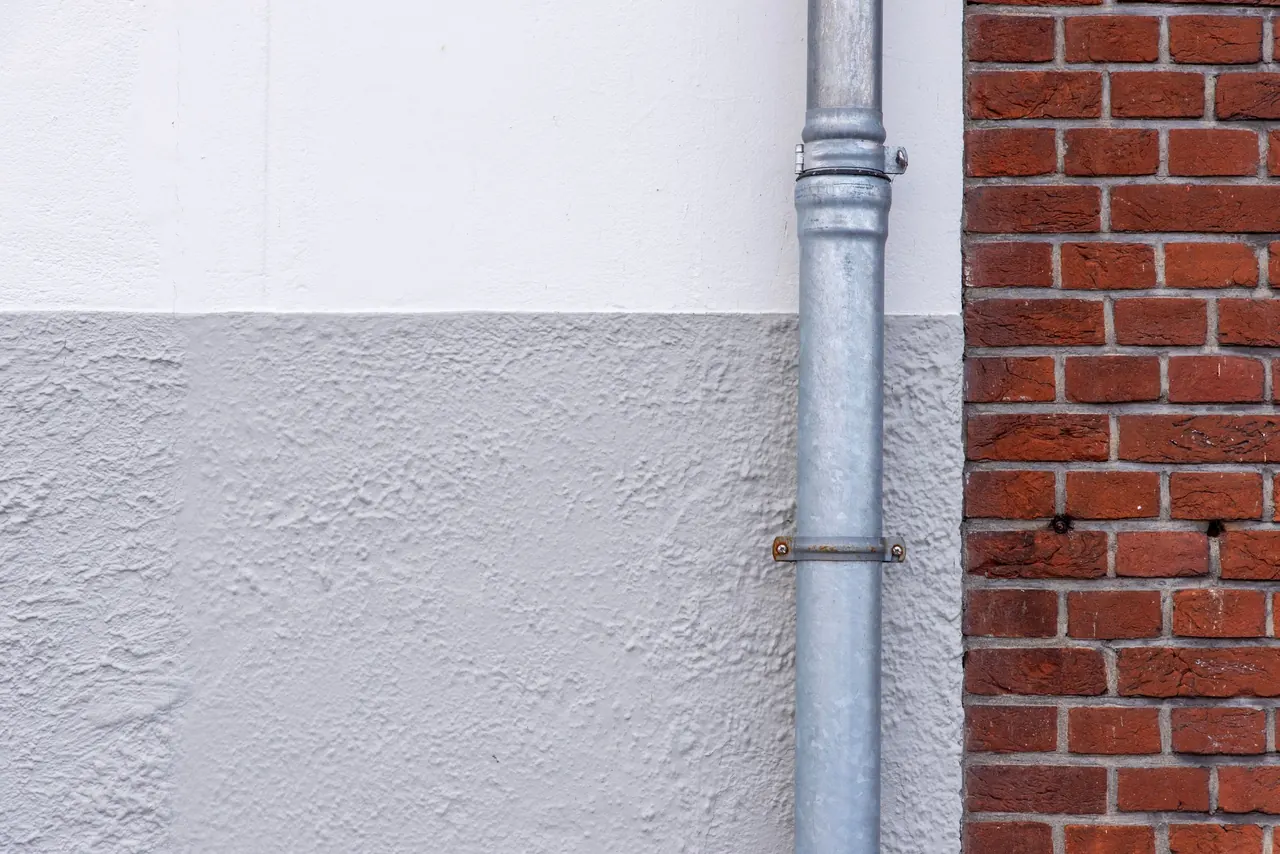
Most houses of this age were built with cast iron. It is heavy and needs painting, but it lasts a long time and looks right on a Victorian front. Inside The Gardens conservation area, keeping or matching original details carries more weight. Half-round and ogee profiles are the usual shapes for houses like these.
uPVC is lighter, cheaper and needs little upkeep, which suits the back of the house and later extensions well. Aluminium sits between the two: a coated metal that does not rust, fitted as standard sections or as seamless runs where the eaves are long and straight.
Whichever you choose, a proper installation sets the fall, roughly 1:600 towards each outlet, connects the downpipes to the drain or a water butt and seals every joint so the run works as one system. On a terrace we also make the joint to each neighbour's gutter watertight, because water from their length will still reach yours. Profiles and sizes are compared on the gutter installation service page.
Frequently asked questions
Our flat is on the Grove Vale Estate. Can we arrange new gutters ourselves?
Check with whoever manages the block first. On a building where one roof covers several flats, the gutters are usually part of the shared structure, so the landlord or freeholder arranges the work. We can quote whoever is responsible.
Our terrace near Goose Green has no fascia at the front. What do the new brackets fix into?
Into the brickwork of the eaves or onto the rafter ends, the same way the original gutter was carried. We use sound fixing points and avoid cutting into the corbelled brick.
Will new gutters stop the damp on our back addition wall?
If the damp comes from water spilling over or leaking from the old gutter, yes, once the wall has dried out. If the gutter is fine and the damp has another cause, we will tell you rather than replace a gutter that does not need it.





