



 Google reviews

Deep eaves on Roseway and Turney Road
The first sign is usually the gutter. It starts to dip at a corner, or a bracket pulls out of the board, and when you look closer the paint on the fascia has flaked and the wood underneath is soft. On a house with deep eaves, that is common.
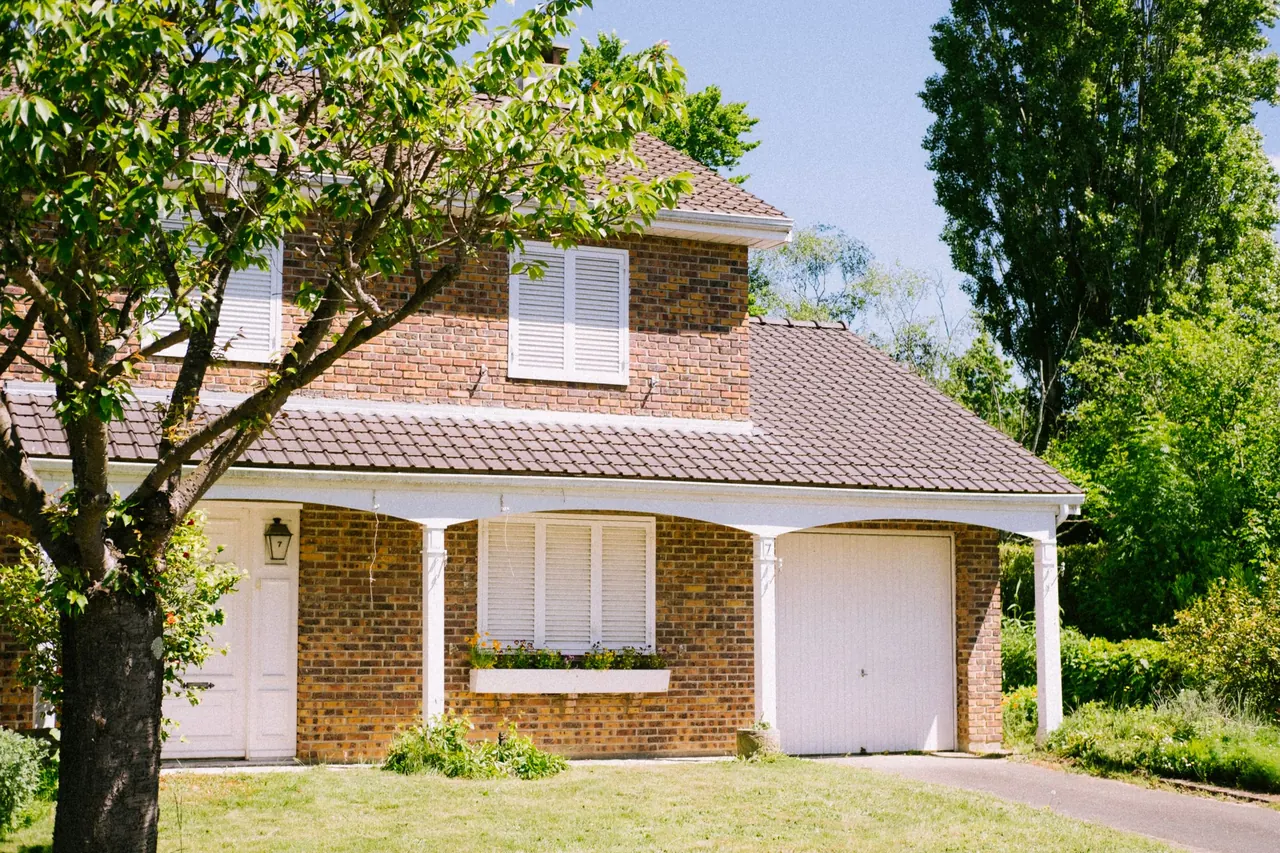
Roseway and 157 to 175 Turney Road were laid out by the College governors in the 1920s on garden suburb lines. Southwark's appraisal describes them as stuccoed pairs with shallow-pitched roofs and deep eaves. Deep eaves throw rain clear of the walls, but they also mean wide soffits and long fascias. Rot tends to start at the corners, where two fascias meet and the gutter turns, and at the joints where water has sat behind the paint for years.
On these houses the soffit also does a job for the roof space. A shallow roof with deep eaves needs air moving through it, and a ventilated soffit helps where the roof has no other eaves ventilation. A soffit that has been patched solid, or blocked by old insulation pushed into the eaves, is worth checking when the boards are opened up.
Timber, capping or uPVC on a Scheme of Management house
We repair a damaged section on its own where the rest of the board is sound, replace full runs where rot has spread, and cap sound timber with uPVC where that suits the house. Capping only works over completely sound wood; over rot it hides the problem and lets it spread.
In Dulwich, the look of the house is part of the decision. The Estate treats any change in appearance as something it must approve, as our Dulwich area page explains, so swapping painted timber for white plastic on a period front goes to the Scheme office first. On a post-war house or a rear elevation, a full uPVC replacement in white, black, grey or woodgrain can suit well.
For a guide figure, Checkatrade's national cost guide puts replacing fascias and soffits at £90 to £170 per linear metre. On a Dulwich house the number of storeys, the depth of the eaves and any rotten rafter ends found once the old boards are off will move a job around that range, and we price it in a free quote.
Bargeboards on Dovercourt, Eynella and Beauval Roads
Elsewhere the timber is decorative. The appraisal describes Dovercourt Road, Eynella Road and Beauval Road as late 19th and early 20th century brick terraces and pairs, where bay windows and barge-boarded gables set a strong rhythm along the street. Each gable adds two bargeboards and an apex, and each bay roof its own short run of fascia and soffit. When the paint fails, water gets into the end grain and the boards rot from behind.
On those gables, keeping the timber and repairing it is often the better answer, both for the street and for the Estate. Fascias carry the gutters, so doing them together with new gutters in Dulwich saves putting access up twice. The fascias and soffits service page lists the boards and finishes we fit.
Frequently asked questions
Why is the paint peeling on the fascia under my Roseway eaves?
Water is probably getting behind it, often from a gutter leaking at the back or overflowing at a corner. Fix the water first, or new paint will fail the same way. Our article on water leaking behind a gutter explains the usual causes.
Can uPVC capping go over the old timber on a 1920s Dulwich house?
Only if the timber underneath is completely sound. Capping over soft wood traps the rot. If the house is under the Scheme of Management, the change in appearance also needs the Estate's agreement.
Is uPVC acceptable on a post-war house on Court Lane?
It is more likely to be than on an Edwardian one, because the post-war houses are plainer and of their own time. If the house is under the Scheme of Management, put the colour and profile to the Estate before ordering.





