



 Google reviews

Copper roofs from the 1960s
Not every flat roof in Dulwich is felt over a kitchen. The Estate's guideline on roofs notes that copper, which weathers to a soft green, has been used on some houses here since the 1960s. Because it is durable and looks good, the Estate wants copper repaired rather than replaced. Where repair is not possible and like-for-like replacement is not feasible, it will consider a copper-coloured single-ply material with rolled seams and matching details, with full details submitted for approval.
We do not work in copper. If yours is a copper roof, the Estate's first question will be whether a specialist can repair it, and that is the right place to start. If it truly has to be replaced, the Estate decides on the substitute, and we can talk you through what a single-ply re-cover involves.
Why the flat roofs here are mostly at the back
Southwark's guidance for the Dulwich Village Conservation Area treats changes to the main roof form as generally unacceptable, and looks for low-key additions in suitable materials where a roof is already altered or hidden from view. So when houses here have grown, it has tended to be at the back: a single-storey kitchen extension, the top of a back addition, a garage or garden room. From the street, the late 19th and early 20th century houses on Dovercourt Road, Eynella Road and Beauval Road read as bays, gables and pitched slate or tile. Whatever flat roof a house has is usually out of sight behind.
The drawback of a roof nobody sees is that nobody looks at it until it leaks. On a rear extension the trouble usually comes down to a few spots.
- The outlet. Under the street trees and the woodland trees of Court Lane Gardens, leaves and seeds collect at the outlet. Once it blocks, the roof holds water like a tray. Our guide to water pooling on a flat roof explains when standing water matters.
- The wall joint. Where an extension roof meets the old house, the upstand and flashing are the usual leak point, and on old soft brickwork the chase for the flashing has to be cut into the mortar joint, not the brick.
- Rooflights. Kitchen extensions often have one, and the joint between the rooflight and the covering is a regular weak spot.
- Old felt. Felt on older garages and back additions blisters, cracks and splits at the edges after years of summer sun.
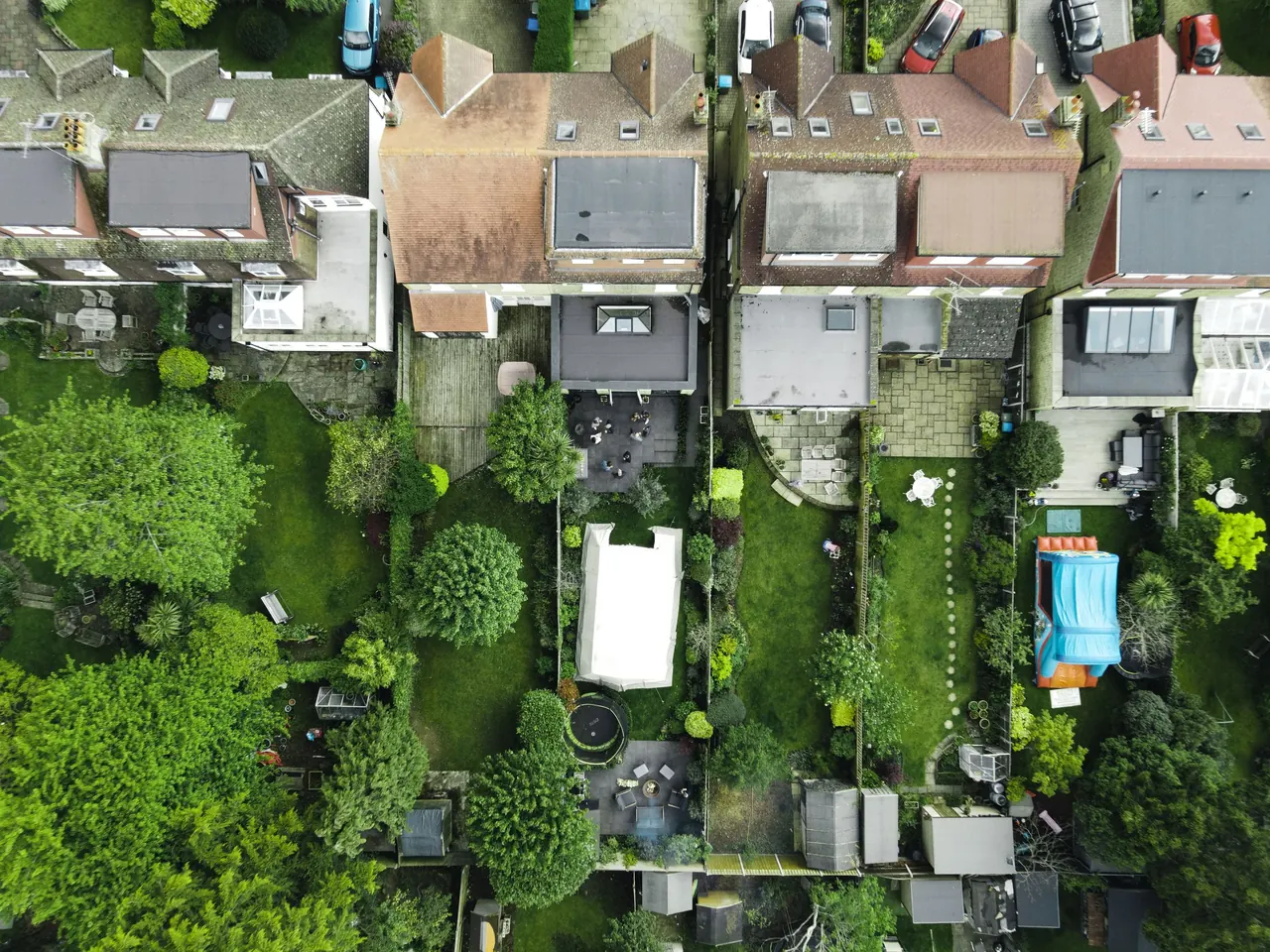
Re-covering a rear roof on a Scheme of Management house
A flat roof that is sound apart from one damaged area can usually be patched. If it leaks in several places, is blistered all over or the deck is soft underfoot, re-covering is the better spend. We fit GRP fibreglass for a seamless finish on modest roofs, EPDM rubber in large sheets for wider extension roofs, and torch-on felt where it suits. When we cannot see the roof well from a window or ladder, the drone gives a clear view of the whole surface first.
Re-covering in the same material at the back of the house rarely changes how it looks, but the Estate's Scheme covers repair work too, so check with its office. Switching material, or adding a rooflight, is a change it wants to see: its fee list even has an entry for adding a roof light. Our Dulwich area page explains the approval process.
For a rough budget, MyJobQuote's October 2026 national guide gives £4,200 to £5,400 for a fully insulated GRP roof on a 20 m² single-storey rear extension. Our flat roofs carry a 10-year guarantee. If you are planning a new addition rather than re-covering, see our roof installation in Dulwich page; the flat roofing service page compares GRP, EPDM and felt in more depth.
Frequently asked questions
My 1960s Dulwich house has a copper roof. Can it be re-covered in GRP?
The Estate wants copper repaired where possible, and if it must be replaced, it will consider a copper-coloured single-ply with rolled seams. A plain GRP finish is unlikely to be what it approves, so speak to the Scheme of Management office before deciding.
Does a new rooflight in my kitchen extension roof need the Dulwich Estate's approval?
If the house is under the Scheme of Management, expect so. Adding a roof light appears on the Estate's own fee list, so it is something it wants to approve before work starts.
How do I stop chestnut husks blocking my extension roof outlet?
A wire balloon guard over the outlet stops husks dropping into the pipe, but it still needs clearing, because leaves pile up around it. A check after the autumn leaf fall, done at the same time as the house gutters, keeps the water moving.





