



 Google reviews

Houses on the edge of Dulwich Wood
Dulwich Wood and Sydenham Hill Wood, on the west slopes of Sydenham Hill, are together the largest surviving part of the ancient Great North Wood. Dulwich Wood is privately owned and managed by the Dulwich Estate, with entrances from Low Cross Wood Lane off College Road and by Cox's Walk off Dulwich Common. The streets around it, from the post-war Estate houses below the hill to the Victorian houses higher up, sit right against the trees.
Street trees drop most of their leaves in a few weeks of autumn. A wood does not work like that. Mixed woodland sheds leaves, catkins, seeds and twigs through spring, summer and autumn, and the shade keeps roofs damp enough for moss, which washes down in mats. A gutter by the wood can block in June as easily as in November. For routine clearing under the Village chestnuts, see our page on gutter cleaning in Dulwich; this page is about the blockages that keep coming back or have already caused damage.
Swan necks and downpipes under the woodland
A gutter that spills over the front in rain is telling you the water cannot get away. The question is where it stops, because clearing the visible leaves will not help if the real blockage is lower down.
- At the outlet. The most common spot. A twig lodges across the outlet, leaves build behind it and the gutter fills like a trough.
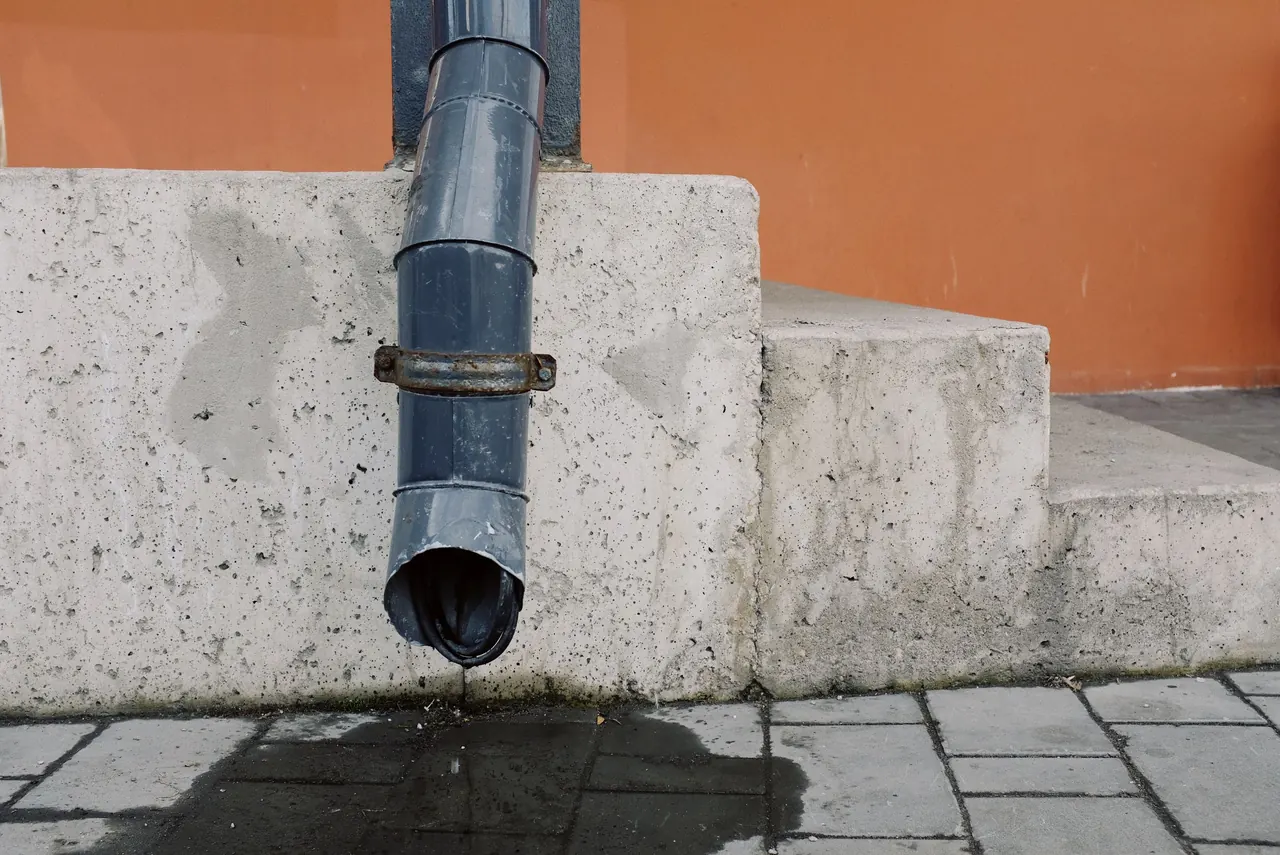
- In the downpipe. Debris that gets past the outlet packs at the first bend or the swan neck under the eaves, or at the shoe at the bottom. We rod or flush the pipe until it runs clear.
- Below ground. If the downpipe runs clear but water still backs up, the blockage may be in the gully or the underground drain it feeds. We tell you if that is the case, as clearing a drain is a drainage job rather than a gutter one.
Every blockage is checked with water once it is cleared, from the far end of the gutter to the drain, so we know the whole route is open before we leave.
Lost fall and frost by the Dulwich Wood edge
A gutter that blocks in the same place again and again usually has a fault under the debris. The commonest is lost fall: a bracket has bent or a fascia has moved, the run has dropped in the middle, and debris settles in the low spot every time. Clearing it without resetting the fall only buys a few months, so we reset the brackets and the slope.
The weight of a blocked gutter does damage of its own. Wet leaves and standing water are heavy, and on an older run that weight bends brackets, opens joints and pulls the gutter away from the board. In winter the standing water can freeze, and the ice puts more strain on brackets and joints that are already struggling. Under the trees, where a roof gets little sun, that ice can be slow to clear.
Once the water is moving we check for the knock-on damage: cracked lengths, opened joints, soaked fascias, and on pre-1919 solid brick walls, damp patches where overflow has run down the outside. Anything that needs more than resetting can be put right through our gutter repairs in Dulwich, often on the same visit.
When a downpipe is cracked or crushed rather than blocked, it has to be replaced. MyJobQuote's November 2026 guide puts replacing a downpipe at £80 to £250. When a gutter counts as blocked rather than just dirty is set out on the blocked gutter repair service page.
Frequently asked questions
Moss from my roof near Sydenham Hill Wood keeps washing into the gutter. What can be done?
Clearing the gutter deals with what has washed down. If the moss on the slope is thick, we look at whether it is lifting slates or tiles, because that is a roof repair question rather than a gutter one, and we tell you what we find.
Can ice in a blocked gutter on a shaded Dulwich slope crack it?
It can. Standing water that freezes expands and adds weight, which strains brackets and joints, and on an old run that can open a joint or crack a length. Keeping the outlet clear before the first frost is the best protection.
What if the blockage is in the drain, not the downpipe?
We test the downpipe to the bottom. If it runs clear and water still backs up at ground level, the problem is in the gully or underground drain, and we tell you so you can call in a drainage firm.





