



 Google reviews

Brick, timber or board: what your eaves are made of
Not every house on Gipsy Hill has a fascia board. When Lambeth described the Christ Church vicarage on Highland Road in its 2000 report on the conservation area, it noted a brick dentil course below the eaves: a row of projecting bricks, like teeth, that carries the line of the roof with no timber fascia at all. That was one building, described a quarter of a century ago. Where a house has brick eaves like that, the gutter is fixed to the rafter feet or into the brickwork.
Other houses of the same age have timber eaves, with a painted fascia carrying the gutter and, on a gable, bargeboards running up its sloping edge. Later houses built between the Victorian ones have standard fascia and soffit boards. Each type fails in its own way, so we start by looking at which one is on your house, front and back, before talking about materials.
How each type goes wrong
- Timber fascias. Painted boards on older houses rot from behind, where a leaking gutter has dripped onto them for years. Brackets then lose their grip and the gutter dips.
- Soffits. Thin boards under the eaves split or drop at the joints, leaving gaps into the roof space.
- Bargeboards. On gables facing the open side of the hill, rain and wind work into the joints and ends.
- Brick eaves. No timber to rot, but the dentil course and the brickwork below it wash out where an overflowing gutter has run down them.
Water running down the wall behind a gutter is often an eaves problem rather than a roof one. Our article on water leaking behind your gutter explains why.
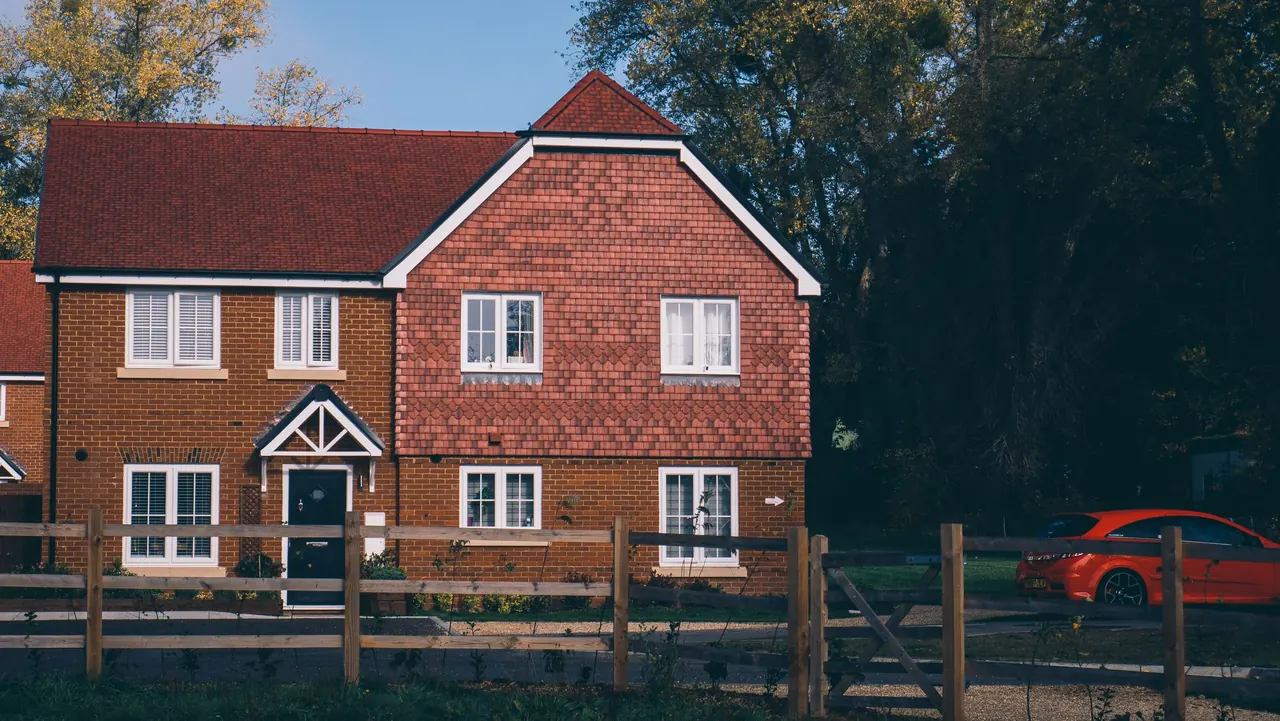
Street fronts in the Gipsy Hill Conservation Area
In the Gipsy Hill Conservation Area, the look of the roofline from the street matters. A short length of rotten fascia can be cut out and spliced. Decorative bargeboards that are mostly sound are worth repairing rather than replacing, because a plain modern board changes the face of the gable. Where timber is beyond saving, a new board made to the same profile keeps the look. If you are unsure what the council would expect, ask Lambeth before committing.
On brick eaves the repair is masonry rather than joinery: repointing the dentil course and the brick below it, and making sure the gutter brackets are fixed into sound joints.
Back walls, infill and converted villas
On later infill houses and on rear walls that cannot be seen from the road, uPVC replacement is usually the practical choice. It comes in white, black, grey and woodgrain finishes. Covering existing timber with a thin uPVC board only works if the timber underneath is completely sound, so we check it first. Ventilated soffits are worth fitting where the roof space has no other eaves ventilation. In a villa split into flats, the eaves are usually shared structure, so the freeholder or managing agent normally arranges the work for the whole elevation.
The sensible time to renew boards is when the gutters come down too, since one set of access covers both. Our Gipsy Hill gutter installation page covers the gutter side. For Southwark streets just over the boundary, see our Dulwich fascias and soffits page. Board colours and materials are listed on our fascias and soffits page.
Frequently asked questions
My house on Gipsy Hill has a brick dentil course and no fascia. How are the gutters fixed?
On brackets fixed to the rafter ends or into the brickwork. We check the brick and mortar at each fixing first, because a bracket in a crumbling joint will not hold the weight of a full gutter.
Our flat is in a converted Gipsy Hill villa and the soffit under our window has dropped. Who arranges the repair?
Check the lease, but the eaves are normally part of the shared structure, so it usually goes through the freeholder or managing agent. Photos of the dropped section and the boards either side make it easier for everyone to agree one repair rather than a patch.
There is a damp streak on the brickwork under our eaves, but no fascia. What is causing it?
Usually a gutter overflowing or leaking at a joint and running down the face. Over time that washes out the mortar in the brick course below the roof. The fix is to sort the gutter first, then repoint the joints it has damaged.





