


 Google reviews

A hill that decides the access
Gipsy Hill climbs from its junction with Gipsy Road and Alleyn Park, past the station and Christ Church to Central Hill and Westow Hill on the Norwood Ridge. The ridge is London Clay, capped on its highest parts by sandier beds, and its top stays above 100 metres for more than two kilometres. The old police station on Central Hill was once called the highest in London, with a bench mark nearby at 109.9 metres.
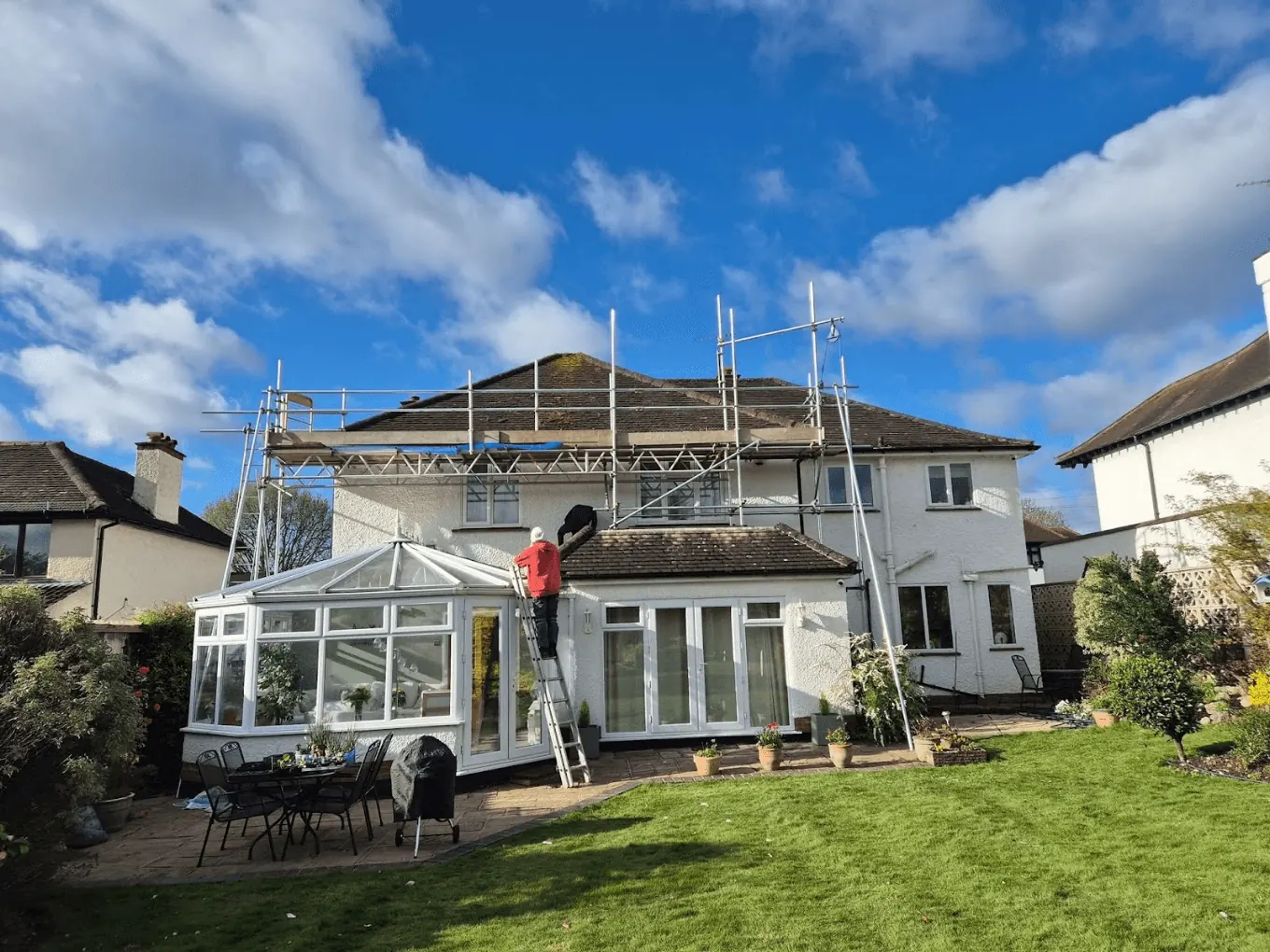
That height affects how roofs here weather and how they are reached. Houses near the crest stand on high ground and catch more wind than those lower down. Halfway down, a house on the uphill side of a street may have a tall front and a short back, while its neighbour opposite has the reverse. Ladders, towers and scaffold all have to be planned around the slope, and so do gutters and downpipes, because water on this hill always has somewhere lower to go.
The name is older than the houses. Gypsies camped in this part of the Great North Wood long before it was built on, and Samuel Pepys noted in 1668 that his wife had been to see "the gypsies at Lambeth". Until 1889 the area was split between the parishes of Lambeth and Camberwell, and a boundary marker for the two still stands beside the eastern branch of the River Effra at Gipsy Hill, now partly buried by the pavement.
What the 1840s to 1870s left on the roofs
Building began in the 1840s and sped up after Gipsy Hill station opened on 1 December 1856. Lambeth Council's 2000 report on the Gipsy Hill Conservation Area says most of its properties date from the middle decades of the 19th century, the 1840s to the 1870s. The large private houses came first, and most of them have since been split into flats.
Houses of that age share a roof pattern. Natural slate on the main slopes, nailed to battens with no felt underneath. Tall brick stacks, often with several pots, and lead where the stacks meet the slate. Valleys between slopes, and a back addition with its own small roof, which over the years has often been replaced with a flat one. The slate itself can go on for a very long time. The nails, battens, mortar and lead are what wear out, and on many houses here they are on their second or third round of patching.
Newer homes are mixed in. Council blocks, including the Central Hill Estate, followed in the mid 20th century. Elsewhere there is private infill from the later 20th century, with concrete tiles, standard fascias and uPVC gutters.
Chapels, a police station and a church tower
An unusual number of homes on the hill were built as something else: the 1854 police station at No. 10 Gipsy Hill, the Wesleyan chapel, the Baptist church on Gipsy Road, and the tower of Christ Church.
Christ Church, consecrated in 1867, was a large ragstone church with slated roofs. A fire in 1982 destroyed all of it except the tower, which is Grade II listed. The church was rebuilt in reinforced concrete with timber roof trusses, and the tower was extended and converted into a house.
Roofs on buildings like these do not behave like house roofs. They have bigger spans, parapets and hidden gutters, steep pitches and flat sections added during conversion, and ownership is usually split between several flats. They are worth inspecting before anyone buys, and before any work is agreed.
The conservation area and the Becondale Road boundary
The Gipsy Hill Conservation Area (CA14) was first designated in 1974, extended in 1982 and revised in 1999. Lambeth describes it as piecemeal 19th-century suburban development rising up Gipsy Hill, including the station, the Christ Church tower and the former police station. In 2000 the council took the 1980s terraces at Nos. 1 to 10 Becondale Road out of it to tidy a boundary that cut through them, noting they were of a very different period from the Victorian houses around them. The rest of Becondale Road stayed in.
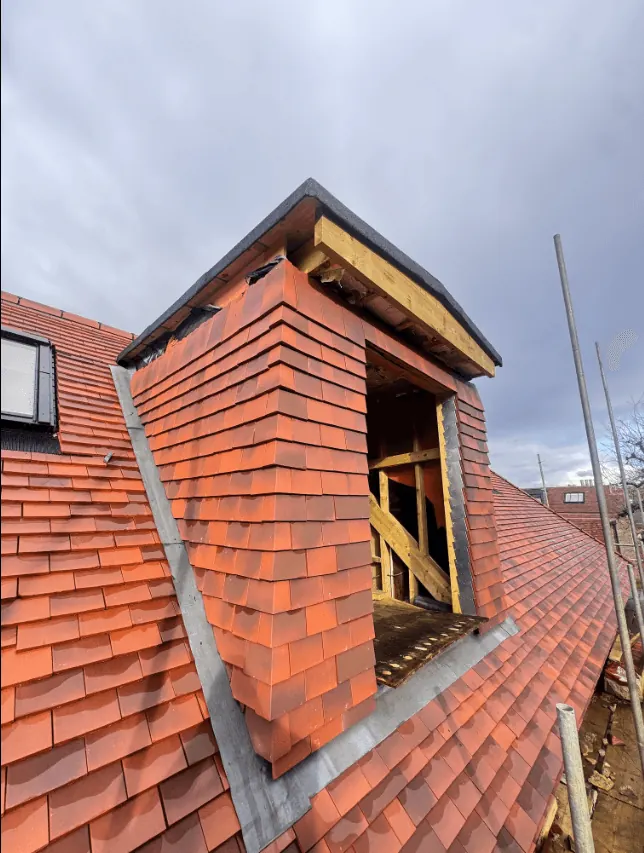
Inside the conservation area, slate-for-slate repairs are the normal starting point. Changing a roof covering, adding a dormer or taking down a stack visible from the street is worth checking with Lambeth's planners first. The council must also be given six weeks' notice of work to trees, which matters if a branch over your roof needs cutting back.
Where to start
If you are not sure what is wrong, start with a look at the whole roof. Our Gipsy Hill roof inspections use a drone where the back slopes or valleys cannot be seen from the garden, which is common on sloping plots. For slipped slates, tired ridges and leaking lead, see slate roof repairs in Gipsy Hill. When patching has gone on too long, a full re-roof with scaffold planned around the slope is covered on our roof replacement page for the area.
Stacks are the other big job on these houses: pointing, flaunching and lead on tall chimneys, often shared across a party wall. Gutters come next, because a broken downpipe on a hill sends water down to whoever is below. You can reach us through the contact page or on 0330 133 4111.
Frequently asked questions
Do you work on the converted chapel and church buildings on Gipsy Hill?
Yes. Converted buildings often have parapet gutters, lead-lined valleys and flat sections that are hard to see from the street. We look at the whole roof first and set out which parts belong to which flat before quoting.
My house is on Becondale Road. Is it in the conservation area?
It depends on the number. Nos. 1 to 10 were taken out in 2000, and the rest of the road stayed in. Lambeth's planning team can confirm the boundary for your address, and the answer changes what you can do to the roof without asking first.
Why does access cost more on some Gipsy Hill houses than others?
Because the slope changes the height. A house on the downhill side of a street can be two storeys at the front and three at the back, so a rear scaffold or tower may need to be taller than the front suggests. We look at both sides before pricing.
Are roofs near Central Hill more exposed than those lower down?
Yes. The crest is some of the highest ground in London, so roofs there are worth a look after a gale for loose slates, ridge tiles and chimney pots. A check before winter is sensible if the roof has not been looked at for a few years.





