



 Google reviews

Stacks that stand proud on a stepped terrace
Where a terrace steps down Gipsy Hill, each house's stack stands above the roof of the house below it, with one face open to the weather and another tucked against a neighbour's slope. Driving rain hits the exposed face, which takes the weather that the neighbour's roof shelters from the other side. On the uphill side, the lead collects all the water running down the slates above.
So two stacks on the same terrace can fail in different ways. One loses its pointing on the open face and lets damp into a top-floor chimney breast. The next one has sound brick but a back gutter that overtops in heavy rain and leaks into the roof space.
Gipsy Hill villas with a dozen pots
The large houses built on the hill in the mid 19th century were heated by open fires in most rooms, so their stacks carry several pots each. A villa now split into four flats may have a dozen pots and only a couple of working flues. Each flat may be responsible for its own fireplace but share the stack with everyone, and the unused flues are often open to the rain.
- Pointing. Lime mortar washes out of the exposed faces first, and water then soaks into soft brick.
- Flaunching. The mortar bed holding the pots cracks, and a pot that was firm becomes loose.
- Lead. The apron, soakers and back gutter that seal the stack to the slate lift or split.
- Old cement repairs. Hard cement pointing on soft brick traps water and spalls the face of the brick.
Repairs follow the fault: raking out and repointing in a suitable mortar, renewing the flaunching, resetting or replacing pots, renewing lead flashings, and capping or fitting cowls to flues that are no longer used. Agreeing one repair for the whole stack is usually cheaper than several separate visits, because the access is the same whichever pot is at fault.
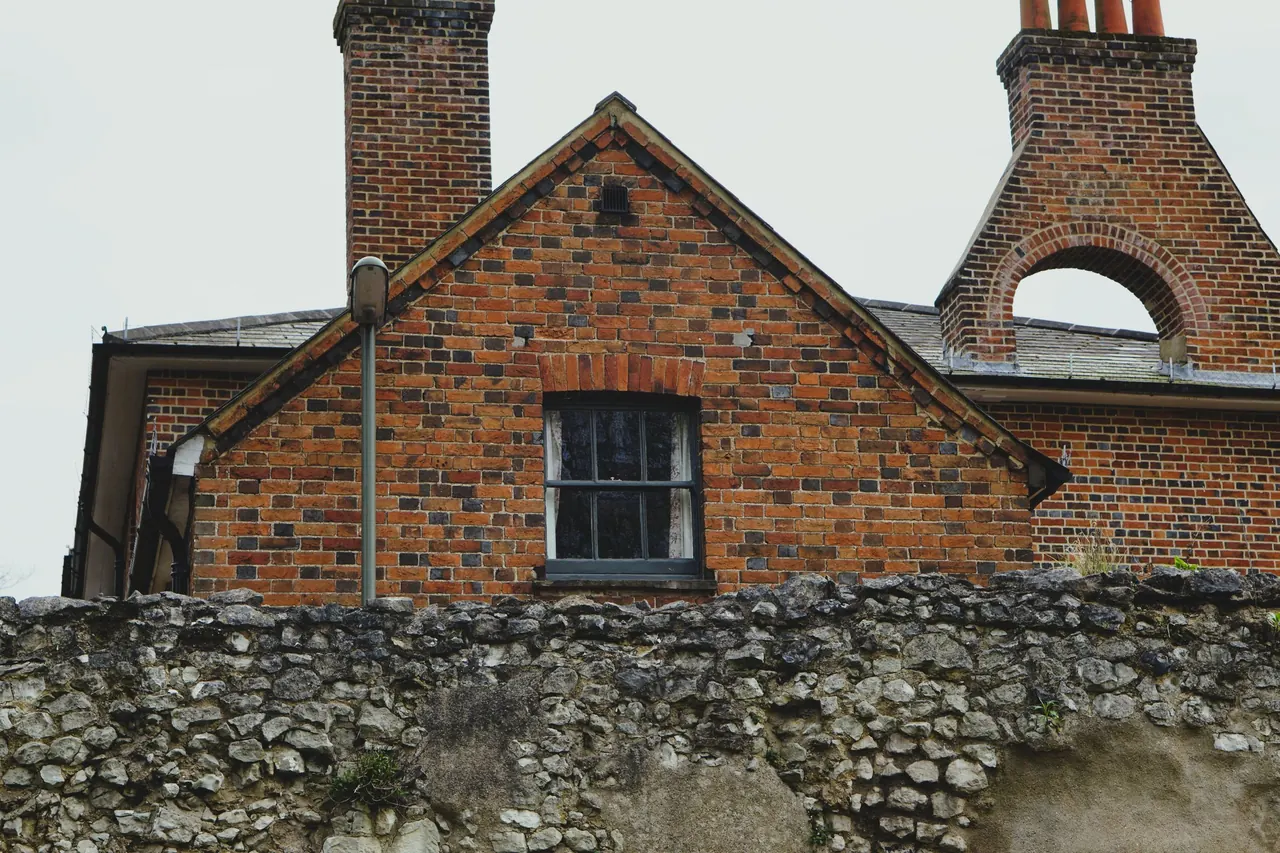
Tall chimneys and the conservation area
Lambeth's 2000 report on the Gipsy Hill Conservation Area described the Christ Church vicarage on Highland Road as having a plain slated roof enlivened by several tall chimneys. That is one building, described a quarter of a century ago, and tall stacks are still a visible part of the roofscape on the hill. Repairing a stack to its existing height and detail is maintenance. Taking one down or lowering it where it shows from the street is a question for Lambeth first.
Pricing the access on a three-storey back
A stack on a three-storey house, or on a house whose garden drops away, is a long way up, and most work at that height needs a scaffold or tower. Before you pay for access, it helps to know exactly what is wrong. A drone flight gives close photos of all four faces, the pots, the flaunching and the lead, so the quote covers the work the stack needs and nothing else.
As a guide, MyJobQuote's chimney leadwork guide puts a patch repair at £150 to £250 without scaffolding and £450 to £600 with it, and a full leadwork replacement at £350 to £460 without scaffolding and £700 to £920 with it. These are national guide figures, not our prices. On a tall stack here, access can be a large part of the total.
If the stack is part of a wider problem, our roof repair team in Gipsy Hill can sort the slates and valleys around it at the same time. A re-roof is the cheapest moment to rebuild a stack, as our Gipsy Hill roof replacement page explains, and the chimney repairs page sets out each repair in more depth.
Frequently asked questions
Can a stack be rebuilt shorter in the Gipsy Hill Conservation Area?
Ask Lambeth first. The council treats tall chimneys as part of the character of the area, so lowering a stack that can be seen from the street may need permission. Rebuilding to the same height and detail is the safe course.
Our terrace steps down the hill and our stack sits against the next roof up. Why does the lead there keep failing?
The uphill side of a stack takes all the water running down the slope above it. If the back gutter there is too small or badly dressed, water overtops it. Renewing it with a properly formed lead back gutter usually solves it.
The stack on our Gipsy Hill villa has hard cement pointing. Should it come out?
Usually, when the stack is next repointed. Cement is harder than the old brick, so water collects behind it and the brick faces break up. A softer mortar lets the stack dry out between showers.





