



 Google reviews

Stacks that set the rhythm of 1-29 Norton Gardens
Croydon's appraisal of the Norbury Estate uses one terrace to explain how the LCC architects designed the place. At 1-29 Norton Gardens, a red brick terrace is framed by two projecting end buildings, the two central houses form a gabled centrepiece, and the chimney stacks rising above the pitched roof give the whole group what the appraisal calls a strong sense of rhythm. Prominent stacks and clay pots are on its list of the estate's key features.
So a chimney here is part of a pattern that runs along the row. If one stack in the middle is cut down, rendered or given a different pot, the pattern breaks. That is why the management plan says stacks should not be lowered or rendered and original clay pots should be kept or replaced to match, and it is why repairs on the estate are done in matching brick, mortar and clay rather than with whatever is quickest.
Brick, pots and lead on a conservation area stack
After a century of weather, estate stacks tend to need the same few things. The top courses lose their mortar first, because they take rain from every side. The flaunching, the mortar bed holding the pots, cracks and lets the pots rock. Lead where the stack meets a steep slate or clay slope lifts or splits, or was replaced long ago with a cement fillet that has since cracked away from the brick.
Each of those has a matching repair. Open joints are raked out and repointed in a mortar that suits the old brick, so the face of the brick is not damaged as the stack moves. Flaunching is renewed and the original pots are reset on it. Lead is renewed and dressed into the brickwork, never covered with another layer of sealant. Where a pot is broken, we look for a clay pot of the same height and pattern as the others on the stack.
A tired stack can be the real cause of a leak that looks like a roof problem. If the water is coming in lower down the slope, our Norbury roof repair page covers the slate and tile side.
Dentil courses on Beatrice Avenue and stacks on London Road
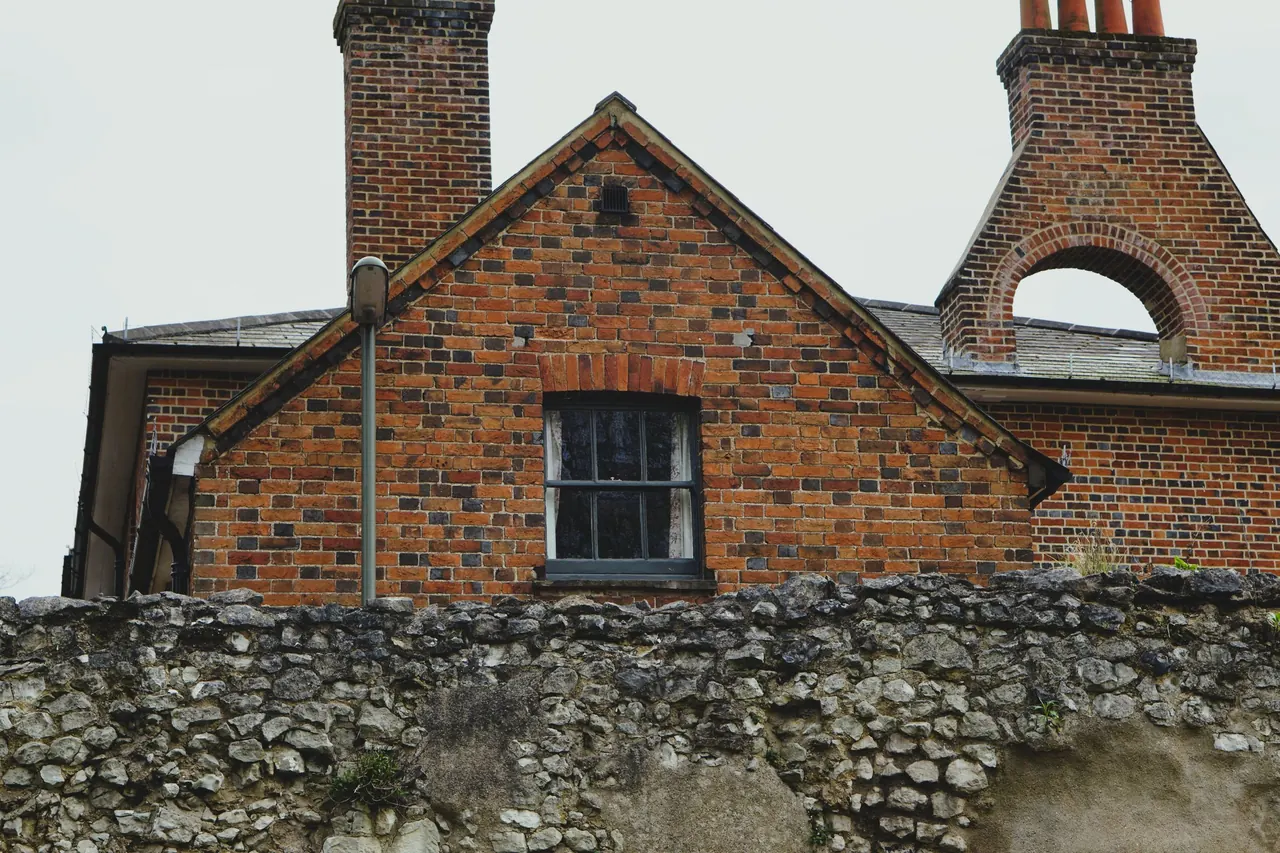
Outside the estate, Croydon's Local Heritage Area review records brick stacks with dentil courses and original chimney pots on Beatrice Avenue, built from 1902 to 1910. Beatrice Avenue is a Local Heritage Area, not a conservation area, so the controls are lighter, but the stacks are named as part of what makes the street worth protecting. A dentilled cap is repointed course by course so the projecting bricks keep their line, and the original pots go back on the new flaunching.
On London Road, the villa at No. 1374 has red and white striped stacks, and work on a stack like that is planned around the shop below. For houses to the south-west on Pollards Hill, see our Pollards Hill chimney repairs page.
Raised forecourts and scaffold on Norton Gardens
Access is often the biggest part of a Norbury chimney job. Smaller work, such as resetting a pot or renewing a short length of lead, can often be done from roof ladders. Repointing a whole stack or re-leading it usually needs a scaffold round the chimney. On Norton Gardens and nearby parts of Tylecroft and Northborough Roads, many houses sit behind raised forecourts reached by steps, and the scaffold has to stand on them without damaging the original brick walls and red clay tile paths.
Before quoting, a drone flight lets us see the top of the stack, the pots and the lead close up, so the price includes the right access from the start. For a guide to cost, MyJobQuote's chimney leadwork guide puts a patch repair at around £150 to £250 and full replacement at £350 to £460, before any scaffold. If a pot or loose brickwork looks ready to come down, treat it as an emergency roof repair rather than waiting for a quote. Our chimney maintenance guide has a simple yearly checklist.
Frequently asked questions
Can I render the chimney on my Norbury Estate house to keep the weather out?
The management plan says estate stacks should not be rendered. It also lists render on originally exposed brick as one of the threats to the estate. Repointing open joints and renewing the flaunching and lead deal with the weather without changing the look of the stack.
Where can I find a clay pot that matches the others on my Tylecroft Road stack?
We measure the height and pattern of the surviving pots and source a clay pot to match, new or reclaimed. On the estate the council asks for pots to be kept or replaced to match, so a plain modern pot is not the answer.
Will the scaffold for my Norton Gardens stack stand on the raised forecourt?
Often it has to, because the houses sit back behind the raised paved area. We plan where the scaffold feet go and protect the brick walls, steps and paths before anything goes up.





