



 Google reviews

What the Norbury Estate plan says about rainwater goods
Cast iron downpipes and gutters are on the list of key architectural features in Croydon's appraisal of the Norbury Estate, alongside the overhanging eaves they hang from. The management plan is short and clear on them: historic cast iron gutters and downpipes should be retained, and all replacement gutters and downpipes should be metal and black.
That rules out the white or grey plastic that has crept onto some terraces, and it puts repair ahead of replacement. Where the cast iron on your house is sound apart from a weeping joint or a rusted bracket, our Norbury gutter repairs page is the better place to start. New gutters on the estate make sense when a run has rusted through, has cracked in more than one place, or was swapped for plastic by an earlier owner and is now failing.
When we do fit new, it is a black metal system: cast iron, or black-coated aluminium where you and the council are happy with it. The seamless gutter page for Norbury explains where an aluminium run can fit on the estate and where it cannot.
Matching the run along an LCC terrace
The estate's gutters do not stop at each house. They run along the eaves of the whole terrace, and the terraces were designed as single compositions with gables, bays and stacks placed in a pattern. A new length on one house has to line up with what is either side of it.
- Profile. We match the half-round or ogee section next door, so the eaves still read as one line from the street.
- The boundary joint. Where your new gutter meets a neighbour's old one, the joint is made with the right adaptor and sealed so it does not become the new leak.
- Gables in the run. A street-facing gable breaks the eaves line, so the gutter stops and starts around it, with a downpipe at each side.
- The rear additions. Many houses have a small rear addition from the 1970s modernisation, which needs its own gutter or outlet rather than spilling onto the wall below.
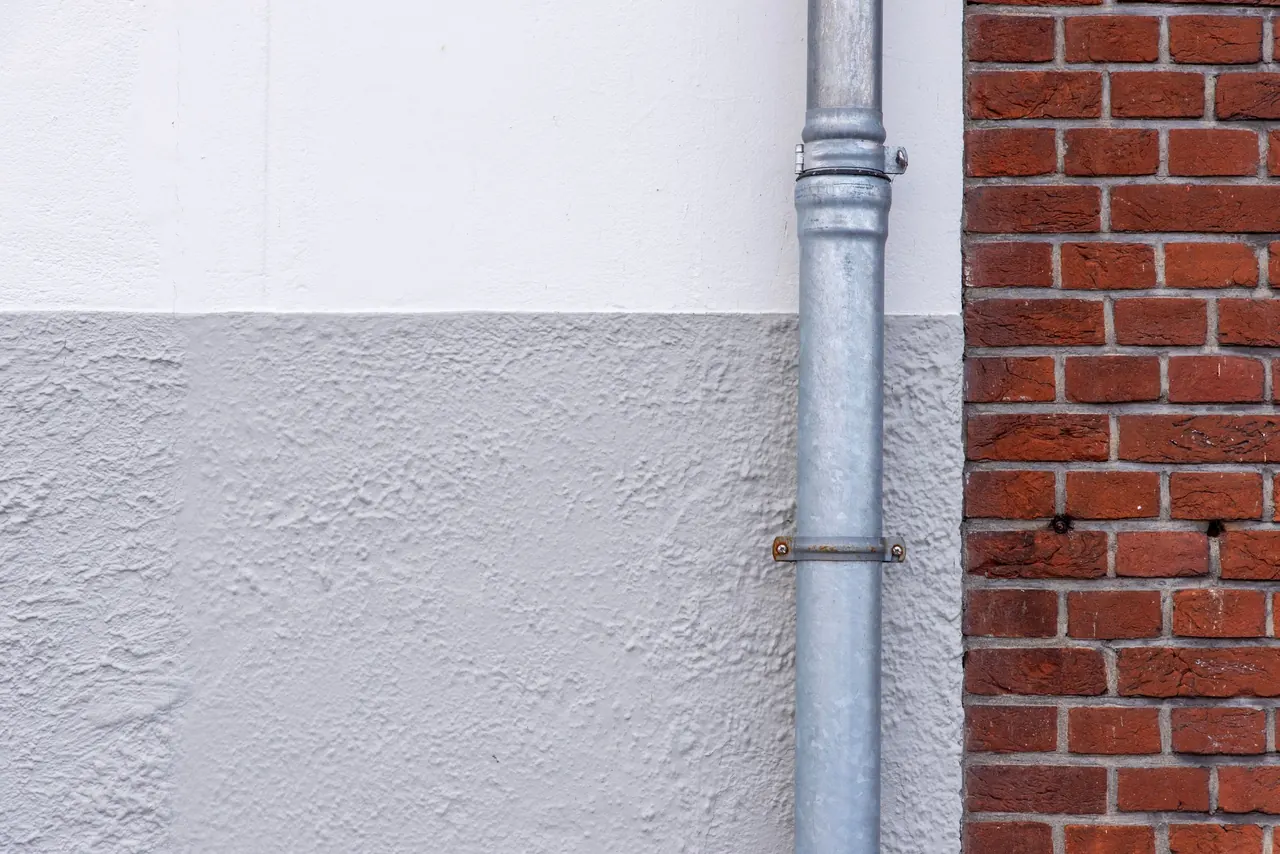
Bays and back additions on St Helen's Road and Beatrice Avenue
The Victorian houses around St Helen's Road and the Arts and Crafts houses on Beatrice Avenue are a different job. Their roofs are broken up by front gables, hipped ends, bays and back additions, so one house can need several short runs, a lot of corners and more downpipes than a plain semi. Beatrice Avenue is a Local Heritage Area, and the Victorian villas on St Helen's Road fall within the London Road (Norbury) one. Neither is a conservation area, so the material is your choice, but cast iron suits the age of these houses and lasts if it is painted.
On houses like these, the fascia behind the gutter is often original timber. If it is soft, new brackets will not hold, so it is replaced before the gutter goes up; see our fascias and soffits page for Norbury.
Hipped semis between the railway and Green Lane
The interwar semis on the old North Surrey golf course are outside the conservation area, and uPVC is the common choice there because it is cheap and needs no painting. Their hipped roofs mean the gutter turns a corner at every hip, and some streets have rear service alleys where the back downpipe is easy to forget about until the wall is stained. We place the outlets so that each length drains to a downpipe without long, flat runs, and connect downpipes to the drain or a water butt rather than onto the path.
For the estate's metal requirement, Checkatrade's gutter replacement guide gives fitted cast iron at roughly £85 to £275 per metre, several times the price of plastic, which is one more reason to repair sound cast iron first.
Frequently asked questions
Does black uPVC count as metal on the Norbury Estate?
No. The management plan asks for replacement gutters and downpipes to be of metal construction and black in colour. Black plastic meets the colour but not the material. If you are unsure what applies to your house, ask Croydon's planning team before ordering.
Why does my Beatrice Avenue house need so many short gutter runs?
Because the front gables, hipped ends and bays split the eaves into separate sections, each with its own corners and outlet. That is normal for Arts and Crafts houses, and it is also why a single long seamless run rarely suits them.
Can a new gutter on my estate house take the water from the rear addition as well?
Often, yes, if the downpipe and outlet are sized for it. Where the addition's roof drains onto the main gutter or straight down the wall, we can give it its own gutter and connect it properly.





