



 Google reviews

Reading a patched slope on Tylecroft Road
Stand across the road from an LCC terrace on Tylecroft Road or Newlands Road and the front slopes look much alike. Close up, one slope can hold original natural slate, a few replacements of a different colour, a strip of concrete tiles where someone gave up matching, and a cement fillet where lead used to be. Patches like these rarely show from the pavement, and they are where the next leak usually starts.
On the estate that mix matters for a second reason. Croydon's management plan asks for original slates and tiles to be relaid on street-facing slopes when a roof is redone, and it does not consider concrete an acceptable covering. So an inspection here records what is original on the front, as well as what is failing: natural slate, handmade clay, terracotta ridge and hip tiles, and any slate or clay hanging on the gables. That record decides how much new material a future re-roof needs.
Valleys, gables and the 1970s back additions
The estate's roofs are steep and broken up by street-facing gables, so there are more valleys and abutments than on a plain terrace. Each of those is checked, along with the tall stacks and their clay pots, which the council asks to be kept at full height.
At the back, many houses have a small rear addition from the council's 1970s modernisation. The joint between that low roof and the main wall is a common place for water to get in, and it is checked from above and, where we can get into the loft, from the inside. In the loft we look for daylight between slates, damp staining on the timbers, rusted nail tips and wet insulation.
If the estate house is still council owned, a tenant should report roof faults to the council. An inspection is for owners, buyers and anyone who has bought from the council and now looks after the roof themselves.
Parade roofs nobody sees from London Road
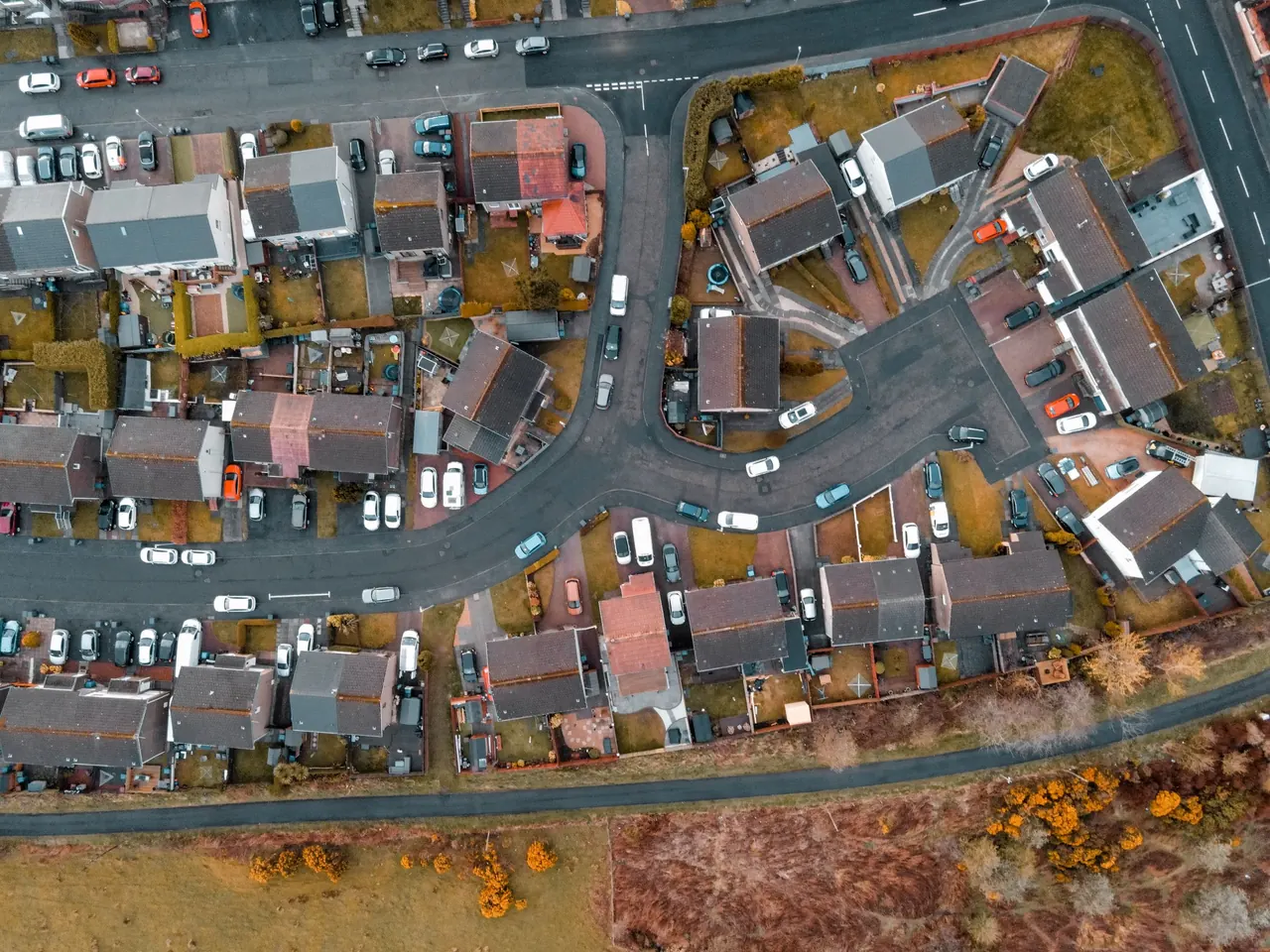
The three and four storey parades on London Road hide most of their roofs. Gables with bargeboards and half-timbering face the street, but behind them there can be valleys, parapet gutters and flat roofs over the shops. Josh flies the drone close to all of them without a scaffold, which is often the only practical way to see the state of a parade roof before anyone commits to access costs. For a leaseholder in a flat above a shop, the photos also give the freeholder something concrete to act on.
Gables and ridges on Beatrice Avenue
The Arts and Crafts houses on Beatrice Avenue were built from 1902 to 1910 with front gables, hipped ends, timber bargeboards and decorative clay or slate ridge tiles. Those features are part of what the Local Heritage Area protects. On these roofs the valleys behind the front gables and the ridge tiles get the closest look, along with the brick stacks and their dentil courses.
Once the findings are in, they are split into what needs doing now, what can wait a year or two, and what is fine. If the answer is a few slipped slates, the next step is a roof repair. If the whole slope is failing, a Norbury re-roof is the conversation to have, and if the trouble is round a stack, the chimney repairs page explains what usually follows. Our guide to checking a roof before buying covers the wider buying process.
Frequently asked questions
Will the drone show if an earlier owner put concrete tiles on my Norbury Estate front slope?
Yes. Close-up photos show the difference between natural slate, handmade clay and concrete clearly. That matters on the estate, where the council does not consider concrete an acceptable replacement and lists swapping it back to slate or clay as an improvement.
Can you check the flat roof over a London Road shop from my flat upstairs?
Usually, yes. Where the shop roof forms a terrace in front of the flat, the covering, the upstand against your wall and the outlets can often be seen from the terrace and by drone, without going through the shop. If the photos show a split or standing water, we can then price the work.
I am buying on Beatrice Avenue. Will a homebuyer's survey cover the roof?
A homebuyer's survey rarely gets onto the roof itself. On Beatrice Avenue a roof inspection is worth having before exchange, because the valleys behind the gables and the decorative ridges are the parts most likely to need money spent on them.





