



 Google reviews

Bargeboards and finials on Beatrice Avenue
Beatrice Avenue was laid out in 1894 and built from 1902 to 1910 as a set piece of Arts and Crafts semis and terraces. Croydon's Local Heritage Area review lists timber bargeboards and decorative timber finials among the street's special features, along with front gables and hipped ends. It also notes that most of the detail on the street was individually designed and handcrafted.
That makes the roofline here different from a plain fascia board holding up a gutter. A bargeboard on a front gable is exposed on both faces and along its top edge, and a finial at the apex catches rain from every side. They usually fail where water sits: at the foot of the bargeboard where it meets the gutter, behind any joint, and in the end grain at the top of the finial.
Where the timber is sound apart from those spots, we cut out and replace the rotten lengths rather than the whole board, so the profile and the line of the gable stay as they were. Where a length is beyond saving, we talk through replacing it to the same shape. Capping a decorated bargeboard in plastic loses the detail the Local Heritage Area exists to protect, so we would not suggest it here.
Deep overhanging eaves on the Norbury Estate
Overhanging eaves are one of the key features listed in Croydon's appraisal of the Norbury Estate, along with gable ends and street-facing gables. Deep eaves give each terrace its shadow line, but they also mean a wide soffit underneath and a long run of exposed timber along the front.
Because the gutter runs from house to house along the terrace, a leak at one joint soaks the fascia at that point, and the board rots from behind long before the paint shows it. On a soffit this wide, a split board soon drops at one end and opens a gap into the roof space.
The management plan for the estate does not deal with fascias directly. It does favour keeping original features, asks for timber windows and like-for-like replacement of original doors, and lists the loss of historic features and poor quality new materials among the threats to the area. Before swapping timber eaves for uPVC on the estate, it is worth checking with Croydon's planning team. Where we can, we repair or replace only the damaged lengths in timber.
Dentils and deep eaves on London Road
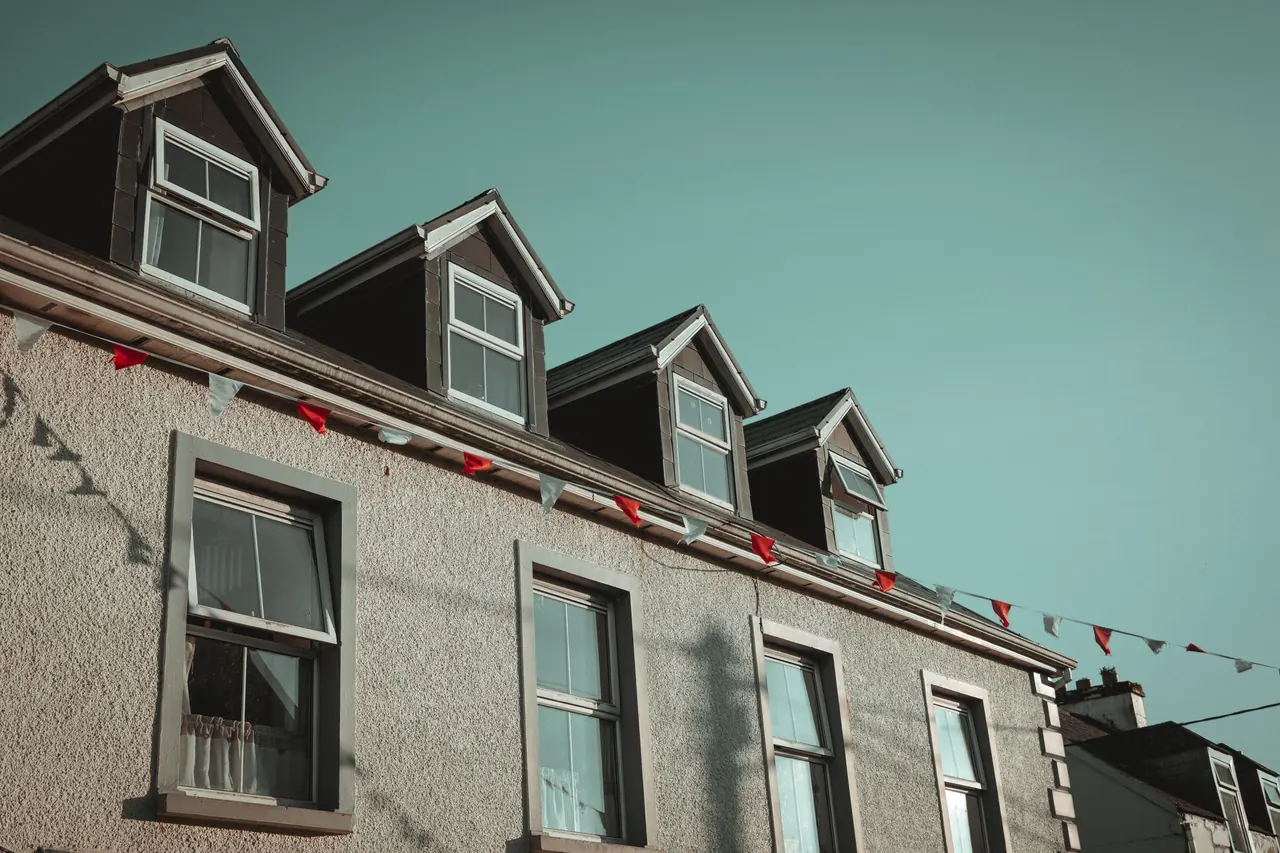
On London Road the decoration moves up a storey. The heritage review records No. 1433 with hipped roofs, deep projecting eaves and white dentils, and the villa at No. 1374 with decorative white timber dentils under the eaves of its main roof and gables. Further along, the Queen Anne style parades carry half-timbered gables finished with timber bargeboards.
At three and four storeys, these are access jobs first. Damage is often spotted from a flat window or a drone photo rather than from the pavement, and the repair has to be planned around the shop below. Timber dentils that have dropped or rotted are a joinery repair rather than a fascia swap, and we will say so if that is what your roofline needs.
Capping, replacing and the gutter behind it
Away from the estate and the decorated gables, plain timber fascias are often best replaced in full with uPVC. It comes in white, black, grey and woodgrain, and ventilated soffits keep air moving through the roof space. Capping old timber with uPVC is cheaper but only works if the timber underneath is completely sound, and on a hundred-year-old board that is worth checking length by length before anyone commits to it. Since a lot of fascia rot starts with the gutter, our Norbury gutter installation page is worth reading at the same time, and regular gutter cleaning in Norbury protects new boards.
Checkatrade's fascia and soffit cost guide puts replacement at about £90 to £170 per linear metre. A decorated bargeboard repaired in timber is priced on the joinery involved rather than by the metre.
Frequently asked questions
A finial on my Beatrice Avenue gable has rotted at the base. Does the whole bargeboard have to go?
Not usually. The rot often starts where the finial meets the bargeboards at the apex. If the boards are sound lower down, the damaged section is cut out and replaced, and the finial is renewed to match.
Can I fit uPVC fascias on my Norbury Estate house?
The estate guidance does not mention fascias directly, but it favours original materials and treats the loss of historic features as a threat. Ask Croydon's planning team before changing timber eaves to plastic.
The soffit under the deep eaves of my Northborough Road terrace is sagging. What causes that?
Deep estate eaves mean a wide soffit board. Once damp gets into one, often from a leaking joint in the terrace gutter above, it softens and drops between its fixings. The fix is to stop the leak first, then replace the soffit board in timber.
For more on the link between gutters and rotten boards, see our guide to water leaking behind a gutter.





