



 Google reviews

Corner boards on the semis around Wide Way
The first sign is rarely the board itself. It is a gutter that tilts outwards, brackets that pull out, or a dark stain running down the wall below one corner of the house. All three point back to the timber behind the gutter.
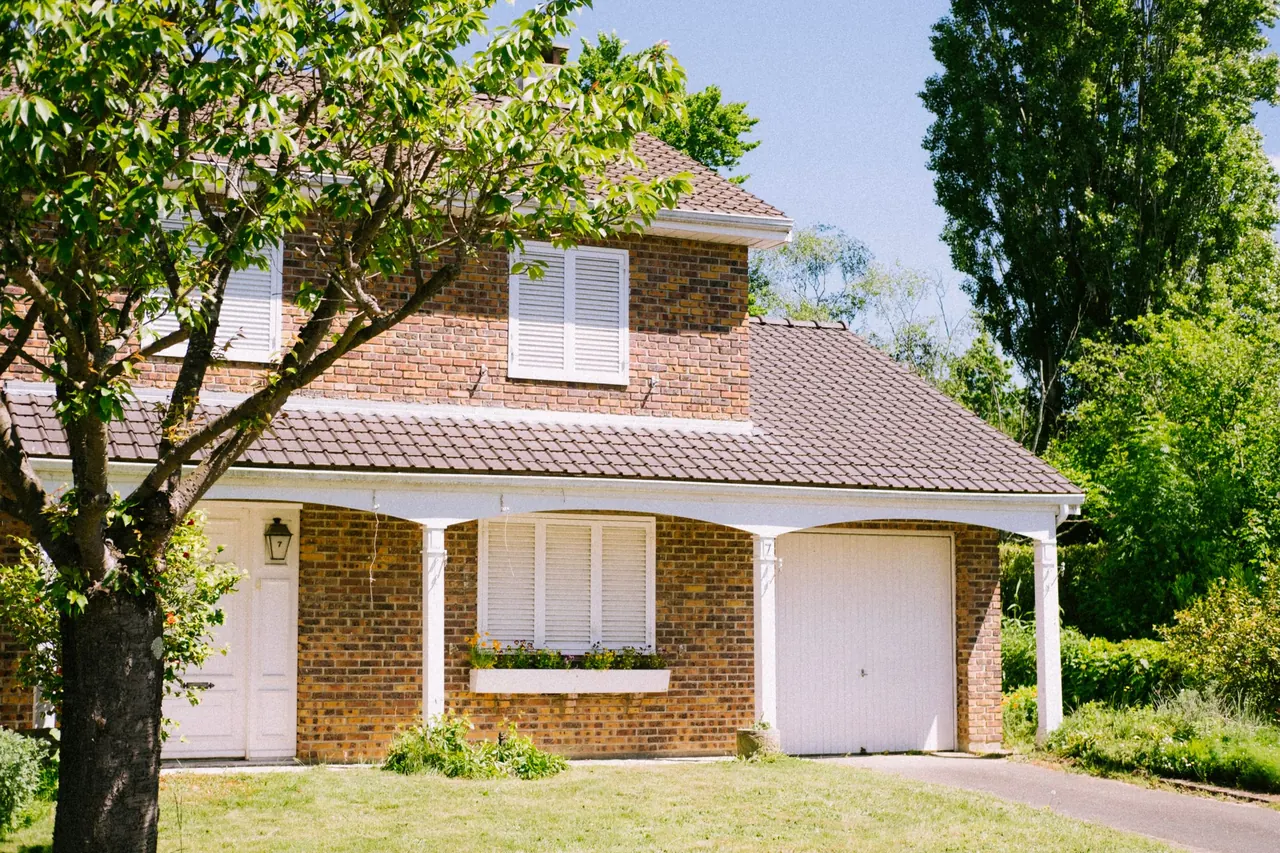
Where the semis around Chestnut Grove, Sherwood Park Road and Wide Way have hipped roofs, the eaves run along three sides: front, back and the outer side, with the party wall side closed off by next door. That gives each house two exposed hip corners, and the corners are the weak points. The joint between two fascias opens, water gets into the end grain, and rot spreads back along both boards from there. Soffits on houses of this age were often thin timber or sheet material, and they sag or crack where the fascia above has let them down.
Where the timber is rotten along most of its length, we take the old boards off, check and repair the rafter ends behind, and fit new uPVC fascias and soffits, in white, black, grey or woodgrain, with ventilated soffits to keep air moving through the roof space. Capping, a thin uPVC board fitted over the old timber, is cheaper but only works if the wood underneath is sound, so we check it first. As a national guide, Checkatrade puts fascia and soffit replacement at about £90 to £170 per linear metre.
Roof edges on the estate after the 2014 works
The flat-roofed estate north of South Lodge Avenue has a different roofline. In December 2014, Merton granted permission, ref. 14/P4165, for new rendered cladding and roof finishes, replacement windows and new balcony balustrades on the estate, according to a later planning committee report.
Where a flat roof finishes at a fascia, that board carries the edge of the roof covering and often the gutter as well. After a re-roof and new cladding, it sits between two newer systems. If the old timber behind it was kept, or the junction with the new render was not well sealed, that is where water can get in. For a freehold house on the estate, a look at the roof edge is worth having alongside any check of the roof itself, and our flat roofing service in Pollards Hill covers the covering and its edges together.
Deep soffits south of South Lodge Avenue
South of South Lodge Avenue, several of the rebuilt homes have oversailing mono-pitched roofs. The overhang creates a wider soffit than a tucked-in eave, open to the weather on the high side. Wider soffit boards flex more, and their fixings into the rafter ends carry more load. Loose or sagging soffits on these houses usually need refixing into sound timber as well as new boards.
Because fascias carry the gutter, it usually makes sense to renew the gutter at the same time, and our gutter installation in Pollards Hill covers that. The main fascias and soffits page has more on materials.
Frequently asked questions
The fascia corners on my Wide Way semi are soft but the rest seems fine. Can you replace just the corners?
Sometimes. If the rot has stayed near the corner, we can cut back to sound timber and replace that section. If it has spread along the board, a full run is the lasting answer.
Is the fascia on my freehold house in Monmouth Close mine to repair?
Generally yes, along with the roof. If the edge was renewed in Moat's works, check any paperwork from that programme first, since it may cover early faults.
The soffit under the overhang on my house south of South Lodge Avenue is sagging. Why?
A wide soffit on an overhang has more board between fixings, and if those fixings or the rafter ends behind them have loosened, it drops. We refix it into sound timber, or replace the board if it has warped.





