



 Google reviews

Render on stacks west of the roundabout
A damp patch on an upstairs chimney breast, or a brown stain in the roof space beside the stack, is often the first sign. On the Merton side of Pollards Hill those chimneys belong to the interwar streets: Wide Way, Sherwood Park Road, Chestnut Grove and the roads off them. One local walk-through describes the roads west of the shopping roundabout as interwar semis and part-terraced pebbledash, and many houses there carry pebbledash or render. The original estate terraces north of South Lodge Avenue are flat-roofed and are not what this page is about.
On a house finished that way, the chimney may be rendered too, either from the start or in a later makeover. Render on a stack has a hard life. It takes wind and rain on every side, and the brick behind it moves slightly with heat and frost. Once a hairline crack opens, water gets in behind the render and cannot get out again. It soaks the brickwork, and in winter it freezes and pushes the render further off.
From the ground, look for hollow-looking patches, cracks running out from the corners, or pieces missing near the top. Damp on a chimney breast can come from cracked render, failed flashing or an open flue, and the three look much the same from indoors, so we work out which before quoting. Where brickwork is exposed, we repoint the crumbling joints. If the render itself has failed badly, we tell you plainly so the stack can be dealt with properly rather than patched again.
Cement fillets and flaunching on Sherwood Park Road
Where a stack comes through a tiled roof, the joint should be sealed with lead flashing, stepped into the brickwork on the sides and dressed over the tiles. On many houses of this age, at some point that lead was replaced with a sloping fillet of cement mortar. Fillets crack as the stack and roof move against each other, and then they guide water straight into the roof. If yours has one, new lead is the lasting fix.
At the top, the pots sit in a bed of mortar called flaunching. When it cracks, rain runs down inside the stack and the pots can work loose. On a flue that is no longer used, an open pot also lets rain and birds straight in. We renew the flaunching, reset pots that have moved and fit cowls or caps where a flue is out of use.
On a pair of semis the stack is often shared, so a leak into your roof space can start on next door's side of it. We photograph both sides before deciding where the water is getting in. As a published guide, MyJobQuote puts full chimney leadwork at roughly £350 to £460 before scaffolding.
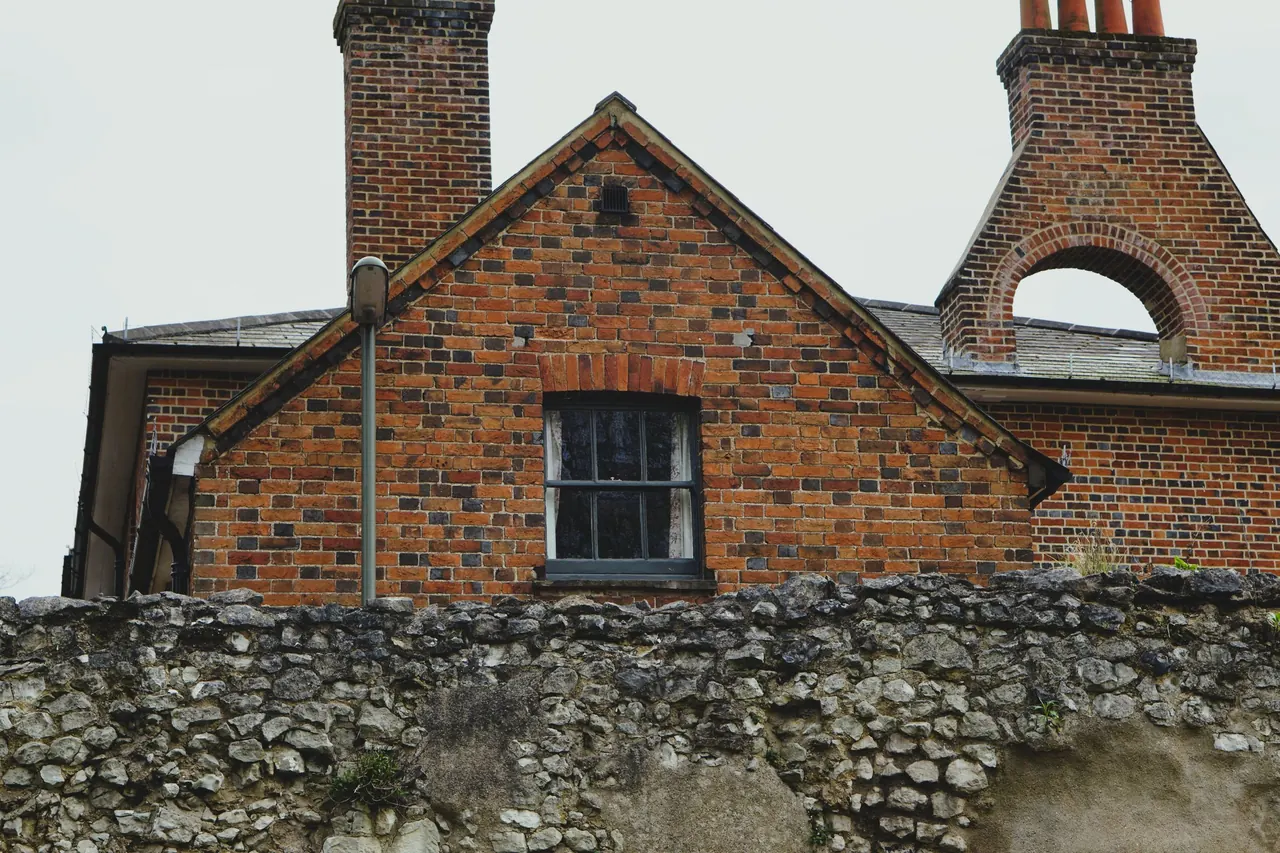
Stacks next to tired roofs
A chimney rarely fails alone on these houses. If the tiles or valleys around the stack are part of the problem, our roof repair work in Pollards Hill covers them on the same visit. Small jobs can usually be done from roof ladders, while repointing a whole stack or re-leading it fully normally needs scaffolding, and the quote says which. The Croydon side of the hill, towards Norbury, has its own Norbury chimney repairs page, and the main chimney repairs page explains each repair in more depth.
Frequently asked questions
The render on my Wide Way chimney has hollow patches. Can it be patched?
If the hollow areas are small, yes: the loose render is cut back and the stack repaired once the brick behind has dried. If large areas sound hollow, patching rarely holds. We photograph the whole stack by drone first so you can see how much has lifted.
My Sherwood Park Road semi has a cement fillet instead of lead at the chimney. Is that a problem?
It usually becomes one. Fillets crack as the roof and stack move, and they are a common source of leaks on interwar houses. Replacing the fillet with stepped lead flashing is the lasting repair.
Can you fix the chimney on a Chestnut Grove semi without scaffolding?
Smaller jobs, such as resetting a pot, fitting a cowl or refixing a short run of lead, can usually be done from roof ladders. Full re-leading or repointing the whole stack normally needs scaffolding.





