



 Google reviews

Where an 1880s stack gives way
The stacks on the old terrace south of Arneys Lane have stood for about 140 years, and the parts that wear out are predictable. The lead flashing where the stack meets the slope lifts or splits. The mortar between the bricks washes out on the faces that take the rain. The flaunching, the sloped mortar collar round the pots, cracks and lets the pots loosen.
Old repairs are often part of the problem: a cement fillet where lead should be, or a layer of black coating painted over flashing that had already failed. Both look like a fix from the ground and both hold water against the brick once they crack. On a terrace, stacks often sit on the party wall, so the one above your roof may serve next door as well.
The 1920s houses north of Arneys Lane and the early 1930s houses of Aspen Gardens have younger stacks, but a century or close to it is still long enough for the joints near the top to open up.
Wind off the open common
The terrace and the houses beside it face the open common on the other side of Carshalton Road, with the golf course beyond. Merton's character study describes that ground as undulating, with long open views, and a chimney is the highest, most exposed part of a house that faces it.
Wind and driven rain hit the top of the stack first. The flaunching takes the worst of it, and once it cracks, water gets into the top courses of brick and freezes in winter, which loosens them further. A pot that rocks in the wind is the warning. On the terrace the front of the stack stands over the pavement and the back over the gardens and Tramway Path, so a leaning pot or loose brick should not wait for spring. If something has already come down, our emergency team for Mitcham Junction can make it safe.
Sideways rain is also why a stack that looks fine in still weather can let water in during a gale. It pushes past flashing that has lifted only slightly, or soaks into open joints on the weather face.
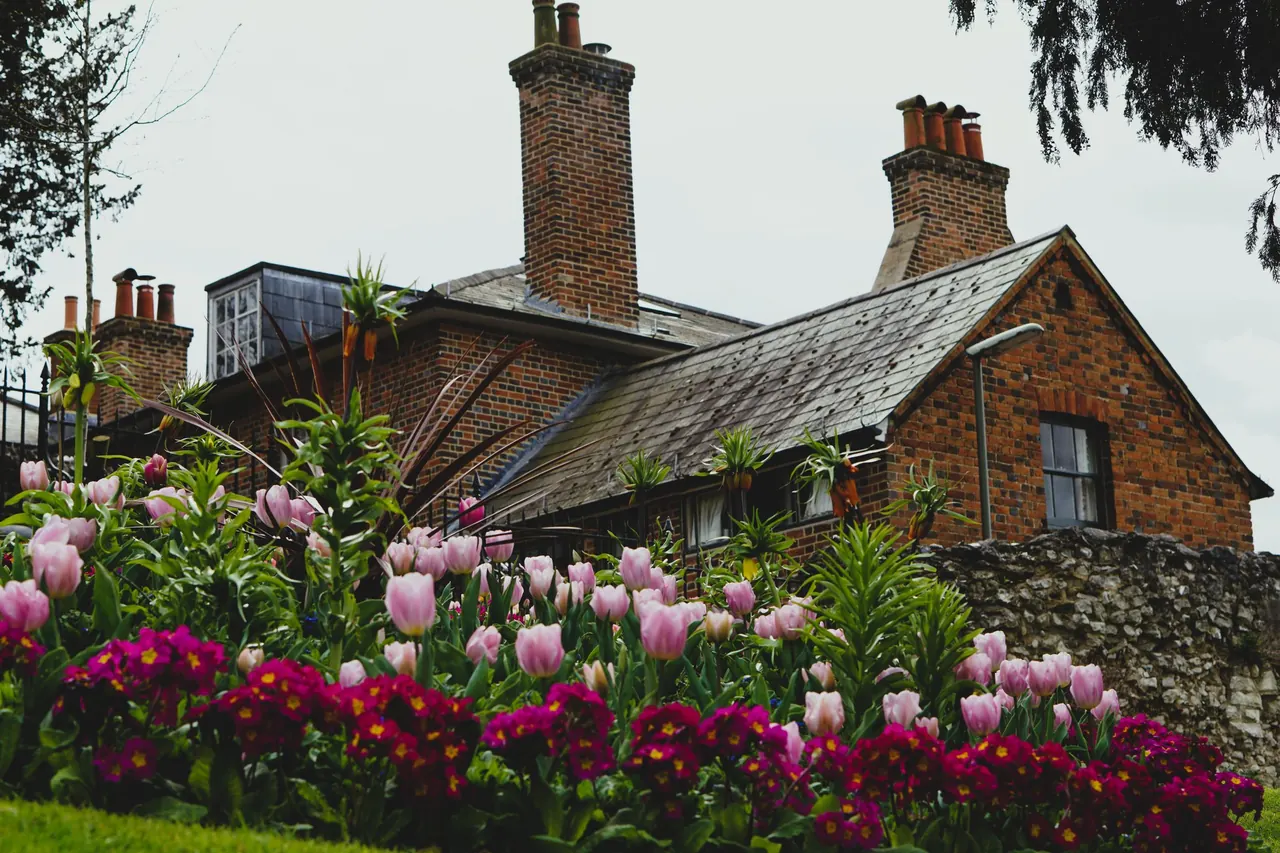
Pavement scaffold or Tramway Path ladders
Before quoting, Josh flies the drone round the stack so you can see the flashing, flaunching and pots in close-up photos. Those photos also tell us whether roof ladders will do or whether the work needs a scaffold, which is the biggest single factor in the price.
On the terrace, a scaffold at the front goes up on the Carshalton Road pavement and needs a scaffold licence from the council, while one at the back is reached along Tramway Path. Where a stack is shared, it is sensible to agree the work with your neighbour first; the Party Wall etc. Act 1996 can apply to work on a party wall stack.
Lifted or split lead is refixed or renewed in proper lead rather than sealant, worn joints are raked out and repointed, the flaunching is remade and loose pots reset, and a cowl or cap is fitted where a flue is no longer used. For a national comparison, MyJobQuote's chimney leadwork cost guide puts a patch repair to flashing at around £150 to £250. Our article on why chimney flashing fails explains the causes, and the main chimney repairs page covers the work in full.
Frequently asked questions
Bits of mortar keep landing on the Carshalton Road pavement below our stack. Is it about to fall?
Not necessarily, but it is a sign the flaunching or the top joints are breaking up. Once that collar goes, the pots loosen. It is worth having it looked at within days rather than months, given the stack sits over a busy footpath.
Can you work on the back of our stack from Tramway Path without a full scaffold?
Sometimes. If the stack is low and the slope is sound, roof ladders from the back may be enough for flashing and flaunching. A full rebuild or repointing on all faces usually needs a scaffold. The drone photos settle which.
Someone painted black coating over the lead round our terrace chimney. Is that a repair?
It is a stopgap. Coatings over cracked or lifted lead buy a season or two, then crack themselves. The lasting fix is to take it off and refit or renew the flashing so it is dressed properly into the brickwork and over the tiles.





