



 Google reviews

A listed stack that was rebuilt
The 1974 list entry for Ferncot and Littlecot on Wrythe Green Road describes two timber-framed, weatherboarded cottages of 1843 to 1848 under a slate roof, with a central brick stack carrying three tall pots. Sutton Council's 2020 draft appraisal takes the story on: the cottages all but fell down when they were converted into one house in the late 1970s, and the result, Little Ferncote, has a replica front and is brick-built behind. Any stack there now is most likely part of that rebuild, not the one the 1974 listing described.
The lesson applies up and down the Green, where the houses span two centuries of building and alteration. What a chimney looks like from the pavement tells you little about what it is built of, how often it has been rebuilt, or what is holding the pots on. Before pricing work on an older stack, we want to see it close up from every side, and from the loft where the breast passes through the roof.
Victorian stacks on the houses by the Green
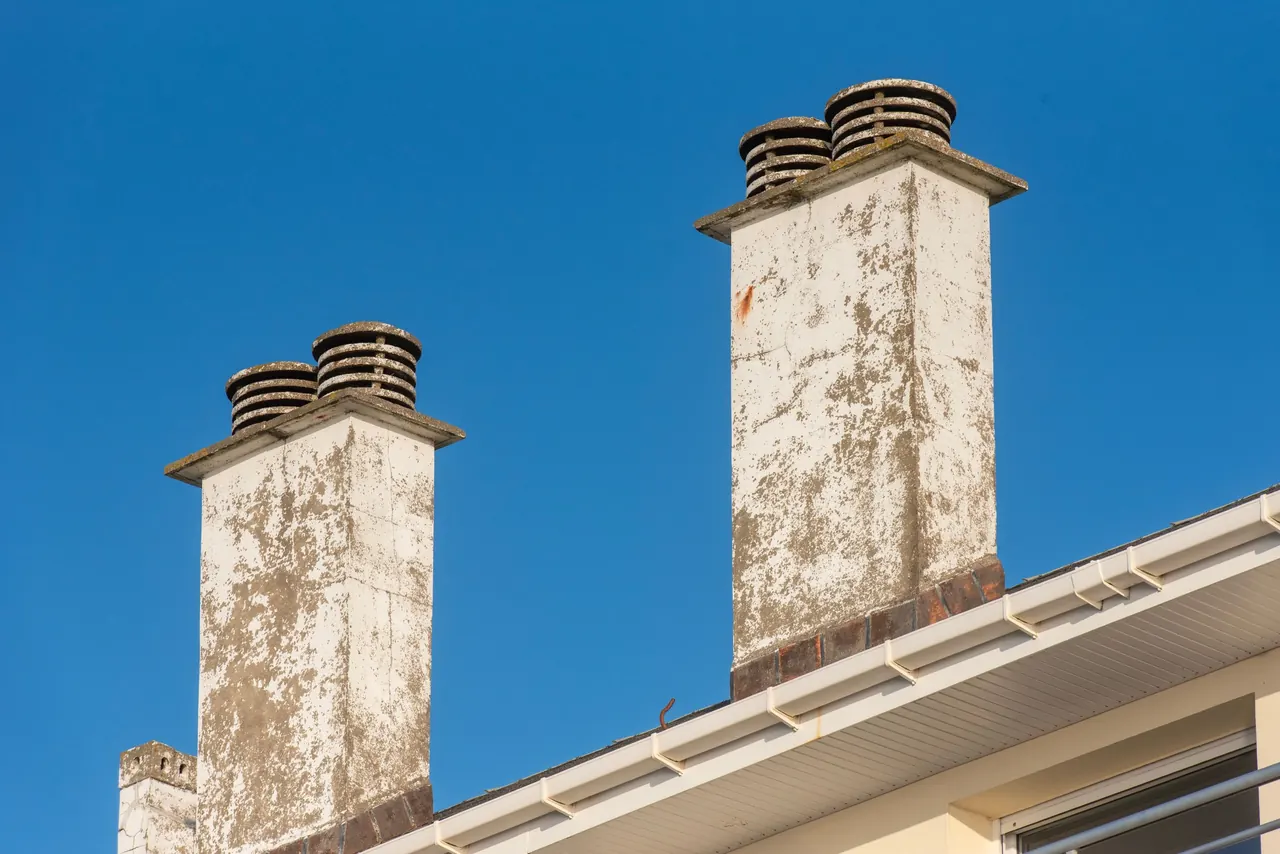
The other listed and older houses on Wrythe Green Road, and the late-Victorian pairs on the stretches of West Street and North Street inside the conservation area, are 19th century houses. On stacks of that age the usual faults are small but fiddly: pots that have worked loose in their mortar, crumbling joints in the top few courses where the weather is worst, and lead that has lifted where the stack meets the slate.
The appraisal favours keeping original materials in the conservation area, and on a listed building changes need consent. So the aim is to hand a stack back at the same height, with the same pots and face brick, repointed in a mortar that suits the brick rather than rendered over. If tiles or slates around the stack have cracked, we put them right at the same visit as part of our roof repairs in The Wrythe.
Shared stacks on the interwar semis beyond the Green
The interwar semis off Wrythe Lane and on the streets beyond the Green are a different type. On a typical semi of that age the stack sits on the party wall and serves both houses, so its brickwork, flashing and flaunching affect both households.
Flashings on stacks like these have often been patched at some point with a bitumen sealant or a smear of cement. That can look fine from the road for a while, but it cracks and lets go within a few winters. The proper fix is to cut the patching out and fit new lead, tucked into a raked-out mortar joint and dressed over the tiles. Where a stack is shared, the photos show both faces, so each household can see where the problem is before anything is agreed.
As a national guide, MyJobQuote's leadwork guide puts a patch repair to chimney flashing, where no scaffold is needed, at £150 to £250. Our chimney maintenance guide lists what you can check from the ground between visits, and the chimney repairs service page describes each job.
Frequently asked questions
Little Ferncote's front is a replica. Is its chimney original?
Probably not, given the late-1970s rebuild, and the only way to know what it is made of now is to look closely and from the loft. On a listed building, check with Sutton Council before changing anything.
Why does the flashing on my Wrythe Lane semi keep failing after it has been sealed?
Because sealant is a short-term patch. It shrinks and cracks with heat and cold, and water gets in behind it. New lead, tucked into the brickwork, is the lasting repair.
One of the tall pots on a stack facing the Green has started to lean. Is it dangerous?
It can be. A leaning pot usually means the flaunching round it has failed. If it is over a path or the street, call us and we will make it safe before resetting it properly.





