



 Google reviews

Whitehall Place and the Manor Road stacks
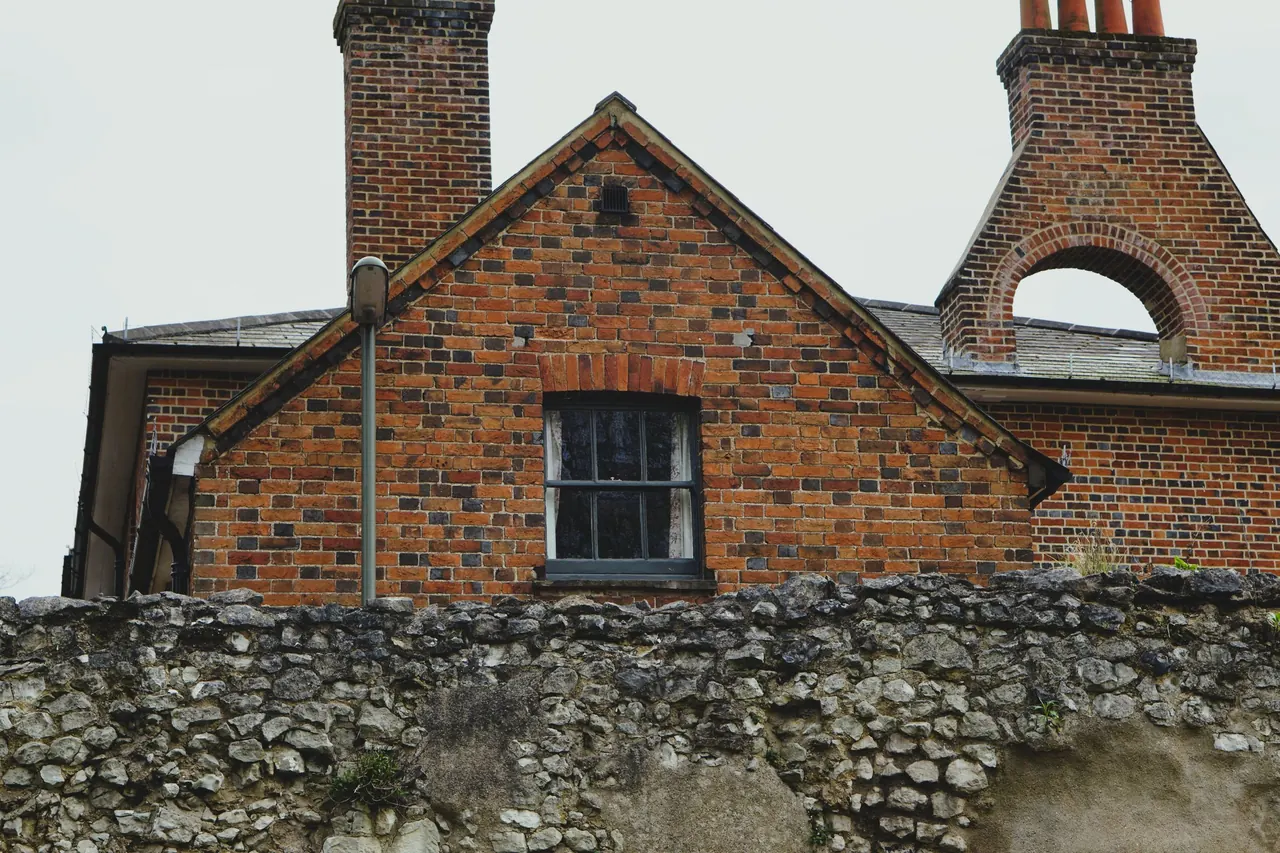
Whitehall Place is reached along the unmade road past the allotments at the end of Wrights Row. Its three houses, a terrace of about 1792, keep their slate roof and tall chimneys. Across on Manor Road, Manor Terrace has prominent stacks on both its front and rear slopes, and the listed pair at 38 and 40 has brick central and rear stacks topped with plain tile pots.
Tall stacks on old houses fail from the top down. The flaunching, the mortar bed holding the pots, cracks with frost; water gets into the top of the brickwork; then the pointing below starts to wash out. Lower down, the lead where the stack meets the slate lifts as the mortar holding its edge crumbles. On a listed building the repair keeps what is there: matching brick and mortar for the pointing, the original pots reset where they are sound, and lead rather than sealant at the flashings. Taking a stack down or changing its pots on a listed house is likely to need listed building consent, so the plan is agreed before anything is removed.
Ridge stacks on Wrights Row
The Grade II cottages at 3 to 9 Wrights Row have short square stacks standing directly on the ridge, two to each range, above red plain tile roofs and a dentil eaves cornice. A ridge stack has no slope above it for shelter, so it takes rain on every face, and its weak points are the joint where it meets the ridge tiles and the flashings down each side. Repointing open joints and renewing the lead there keeps water out of the walls below. Because the stacks are short, small jobs on them can often be done from roof ladders laid on the slope, with care taken over the old plain tiles they rest on. The rest of the conservation area, and why it is protected, is on our Wallington roofers page.
Keeping the chimney in South Wallington
In the Park Hill Road character area, Sutton's appraisal asks that existing chimneys be retained whenever a roof is refurbished, replaced or extended, and lists removing chimneys among the changes that harm the area. So a tired stack on Park Hill Road, Hawthorn, Heathdene or Brambledown Road is a repair job: repoint, renew the flaunching, re-lead, and fit a cap or ventilated cowl if the flue is no longer used. A flue sealed at both ends traps damp, so a disused one still needs air moving through it. On a tall Edwardian house the stack is a long way up, so the drone goes over it first and you see the lead, the pointing and the pots close up before anyone pays for scaffolding.
On the interwar semis across Acre Lane the stack often sits on the party wall and serves both houses, so it is worth talking to next door before work starts. MyJobQuote's chimney leadwork guide gives published figures of £150 to £250 for a patch repair to the flashing and £350 to £460 to replace the leadwork, both without scaffolding. Our main chimney repairs page explains each repair, and the chimney maintenance guide covers what to check each year.
Frequently asked questions
The pots on my Whitehall Place stack lean. Can they be reset rather than replaced?
Usually. A leaning pot is normally sitting in cracked flaunching. We lift it, renew the flaunching and bed the same pot back, which keeps the stack looking as it did. A cracked pot is replaced with one of matching size and colour.
Can a Wrights Row ridge stack be repointed without disturbing the plain tiles?
Mostly. The tiles beside the stack are lifted carefully so the flashings can be renewed, then relaid, and any broken ones are matched. The ridge tiles either side are rebedded where they meet the brickwork.
One of the plain tile pots on 38 Manor Road has cracked. Can it be matched?
Often, from reclaimed stock or a maker of traditional pots, chosen for height, colour and profile to sit with the others. Because the house is listed, it is worth confirming the replacement with Sutton's conservation officer first. If tiles round the stack have moved too, our Wallington roof repairs cover them in the same visit.





