



 Google reviews

A boiler house instead of fireplaces
When the first Roundshaw tenants moved in during 1967, their flats and maisonettes were heated from a central communal boiler house rather than a fire in each home. During the 1998 to 2010 regeneration the boiler house was demolished, and the refurbished homes were given their own modern heating systems.
So what comes through a Roundshaw roof varies from house to house, and there is no single answer for the estate. Some homes have nothing on the roof but tiles and a ridge. Others have a boiler flue terminal, a soil and vent pipe, or a chimney stack. Each of those is a hole in the roof covering that has to be sealed, and on this estate a damp patch that looks like a chimney leak is often coming from one of the smaller ones.
Flues and soil pipes through the slope
Most modern boilers vent through an outside wall, but some flues, and many soil and vent pipes, pass up through the roof. Where they do, the tiles around them are sealed with a lead slate or a purpose-made collar. Those seals fail in a few familiar ways:
- The collar lifts or cracks, so rain runs down the outside of the pipe into the loft.
- A tile beside the pipe slips and opens a gap on the uphill side.
- A boiler is replaced, the flue is refitted, and the tiles around it are not resealed properly afterwards.
The clue is usually in the loft: a stain on the underlay or a damp timber right beside the pipe, worst after rain from one direction. We deal with the roof covering and the seal around the pipe. The gas flue itself is a different matter, because any work on a gas boiler flue must be done by a Gas Safe registered engineer. If the flue is damaged rather than the seal, we tell you and you call your heating engineer.
The houses that do have a stack
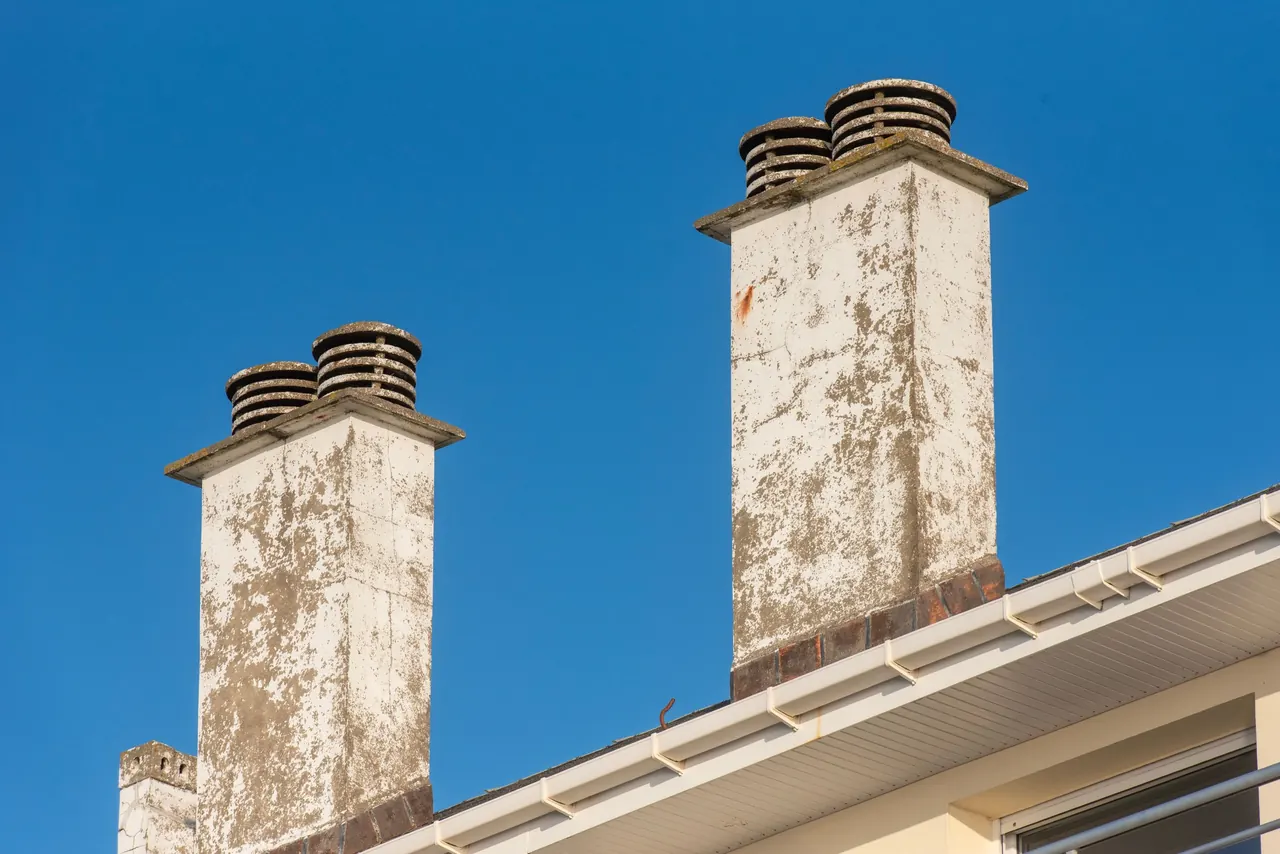
Where a Roundshaw house has a chimney, the brickwork is young compared with the Victorian stacks in older parts of the borough, so faults are usually at an early stage. The things that go first are the lead flashing where the stack meets the tiles, especially if it was sealed with mastic instead of dressed into the mortar joints, and the mortar bed around any pots on top. A stack that no longer serves a fire can be capped with a vented cowl to keep rain and birds out.
A drone look around the stack or pipe shows the top and the flashing in photos before anyone pays for access. As a guide, MyJobQuote's chimney leadwork guide, updated September 2026, puts a flashing patch repair at £150 to £250 before any scaffold. Our guide to chimney maintenance covers what you can check from the ground, and the main chimney repairs page explains each repair.
When it is not the chimney at all
If the damp is where your roof meets a wall or the house next door, rather than around a stack or pipe, the cause is more likely a wall flashing, and our roof repair page for Roundshaw covers it. Damp on a chimney breast inside can also come from condensation in an unused flue, which a vented cap helps with.
Frequently asked questions
My Roundshaw house has no chimney. Why is there a pipe sticking up through the tiles?
It is usually a soil and vent pipe for the drains, or sometimes a boiler flue. Both pass through the roof covering and rely on a seal around them. If that seal fails, the leak looks much like a chimney leak, so it is worth checking first.
There is damp on the ceiling round the flue on my house off Mollison Drive. Who should look at it?
Start with the roof. If the seal or flashing around the flue has failed, that is our job. If the flue pipe itself is damaged or has come apart, a Gas Safe engineer needs to repair it, and we will tell you which it is.
I rent from MTVH and water is getting in round the vent pipe. Do I book this myself?
No. Report it to MTVH, because the roof and anything sealed into it is normally part of the landlord's repairs. If you own the house freehold, it is yours to arrange.





