



 Google reviews

Lime-mortar stacks on the 1890s park houses
The Victorian and Edwardian houses built south of the High Street from the 1890s, and the older houses on Park Hill, often carry tall stacks with several pots, one for each fireplace the house was built with. A tall stack catches more wind and more driving rain, and a pot that has worked loose is a real hazard at that height.
On houses of this age, the bricks were generally laid in lime mortar. Lime is softer than the brick and lets the stack dry out between showers. Repointing with hard cement reverses that: the joints stop breathing, water is held in the face of the brick, and in frost the face can spall away. On older stacks, the repointing is done in a lime mortar that suits the brick. That matters most on listed buildings and in the Carshalton Park and Park Hill conservation areas, where the stack is part of the roofline the council wants kept.
A stack that has had a cement repoint at some point can usually be put right, but slowly: the hard mortar is raked out carefully so the brick edges are not broken, and the joints are refilled in lime.
Smoke control and the stack you no longer use
Sutton Council's smoke control page describes most of the borough, and in another place the entire borough, as a Smoke Control Area under the Clean Air Act 1993, and it is consulting on a single order covering the whole borough. In practice, smoke from a house chimney can be an offence unless you burn an authorised fuel or use an exempt appliance.
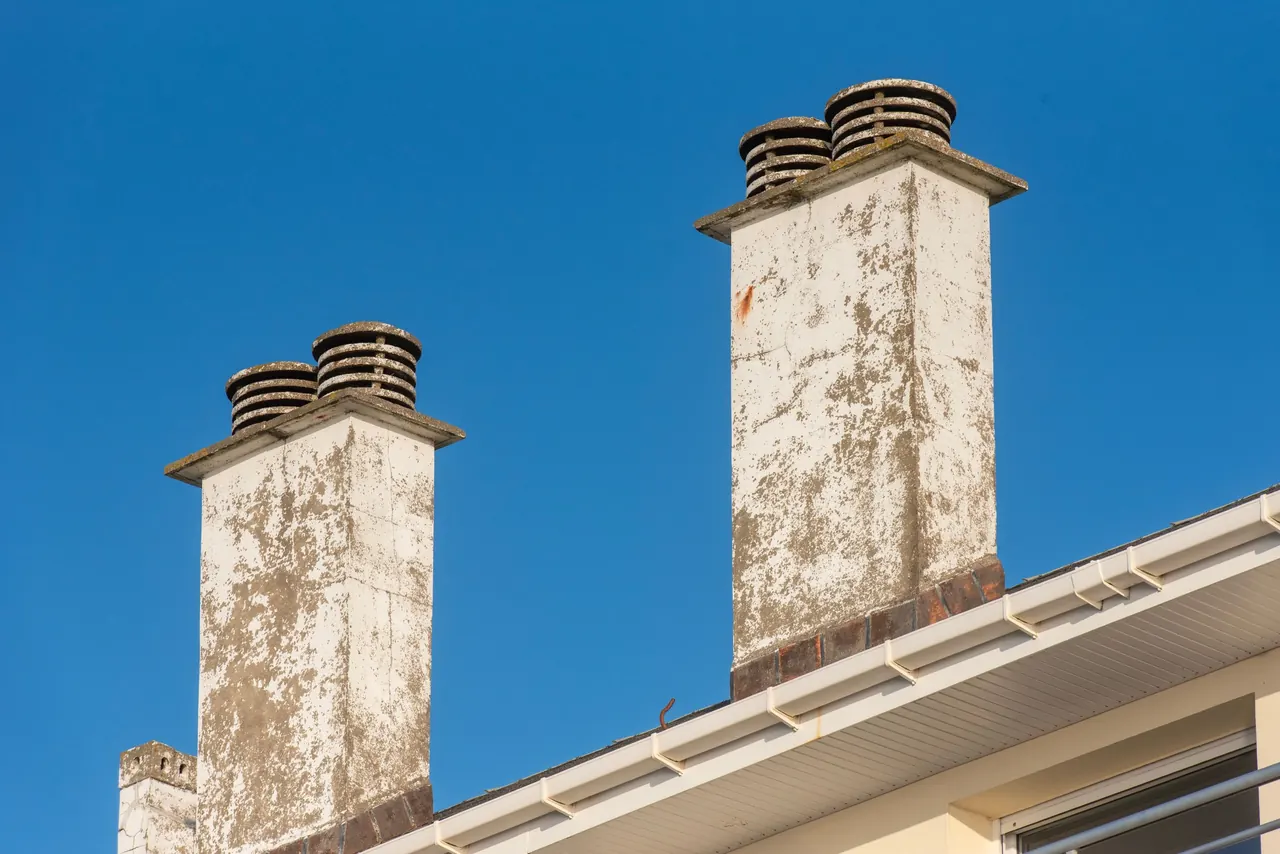
Whether or not a fire is lit, the stack still stands in the weather. A stack with no warmth rising through it dries out more slowly, so rain that gets past cracked flaunching or split lead tends to show as damp on a bedroom chimney breast or in the loft, often some way from the fault. An unused flue can be fitted with a ventilated cap or cowl so rain and birds stay out while the flue still breathes.
If you want a fire back in an older Carshalton house, the stack needs to be sound before anyone tests the flue. The outside of the stack can be repaired, pots reset or replaced and any cap removed. Sweeping, testing and lining the flue, and fitting a stove, are jobs for a sweep and a registered installer, using an appliance or fuel that is allowed.
Lead and flaunching on the interwar semis
The 1920s and 1930s semis across SM5 have simpler stacks, often on the party wall and shared between the two halves. Their faults are mostly at the top and the base: flaunching around the pots that has cracked, and lead flashing where the stack meets the tiles that has lifted or been sealed over with mastic. Lifted lead is renewed with the top edge cut into a mortar joint, and cracked flaunching is broken out and rebuilt so it sheds water.
A stack is looked at first by drone, which gives close photos of the pots, flaunching and lead without scaffold. Small flashing jobs can sometimes be done from roof ladders, while rebuilding the top courses of a tall stack normally needs a scaffold, included in the price from the start. As a rough national guide, MyJobQuote lists £150 to £250 for a patch repair to chimney flashing. Our chimney maintenance guide lists the warning signs you can see from the ground. If the leak turns out to be in the roof beside the stack, our Carshalton roof repair page covers that, and the main chimney repairs page explains each repair in more depth.
Frequently asked questions
Can I use the fireplace again in my 1890s house near Carshalton Park?
Possibly, but you will need an authorised fuel or an exempt appliance, because of Sutton's smoke control orders. Have the stack repaired and the flue swept and tested before you light anything.
The stack on my listed Park Hill house needs repointing. Does it have to be lime?
On an old stack, lime is usually the right mortar whether or not the house is listed, because it lets the brick dry out. On a listed building, work that goes beyond like-for-like repair needs clearing with the council first.
Someone repointed the stack on my Ruskin Road house in cement. Can that be undone?
Usually, yes. The cement is raked out by hand so the brick edges survive, and the joints are refilled in lime. Bricks that have already spalled badly may need replacing with a close match.





