



 Google reviews

Leaks on the old Carshalton Park estate
When the Carshalton Park estate was cut up into building plots in the early 1890s, what is left of the park today, about a tenth of the original estate, was kept, and the rest filled with Victorian and Edwardian houses. Those houses are now well over a hundred years old, and the leaks on them tend to come from a small number of places.
The first is the fixings. Slate and good clay tile can last far longer than the iron nails holding them. Once nails corrode, slates slide down one or two at a time, usually after a windy night, and leave a gap for rain. The second is the lead: valleys between slopes, the flashing around a stack and the small roofs over bays and porches. Lead of that age splits, and earlier repairs with mastic or flashing tape only hold for a season or two. The third is the bottom edge of the roof, where water from a blocked gutter backs up under the first course.
Slate on the park roads and Park Hill
Natural slate was a usual roof for a better-off Victorian house, and clay tile the other. Park Hill has both: the listed pair at 25 and 27 is slated, while No. 19 has a tiled roof. Houses of that age often have a slate main roof with tiled or lead bay roofs below it, so one house can need three kinds of repair.
A slate repair is careful work. A slipped slate is refixed with a copper or stainless tingle, or replaced, using a reclaimed or new slate of the same size and colour. If several have slipped from one area, the battens behind get looked at, because a soft batten will drop the next slate too. Where most of the roof has gone the same way, nail failure is general and we will say that re-slating is likely to be better value than visit after visit.
On a listed building, or a house in the Carshalton Park or Park Hill conservation areas, the repair is like for like: slate for slate, clay for clay. Done that way, a repair normally raises no consent question.
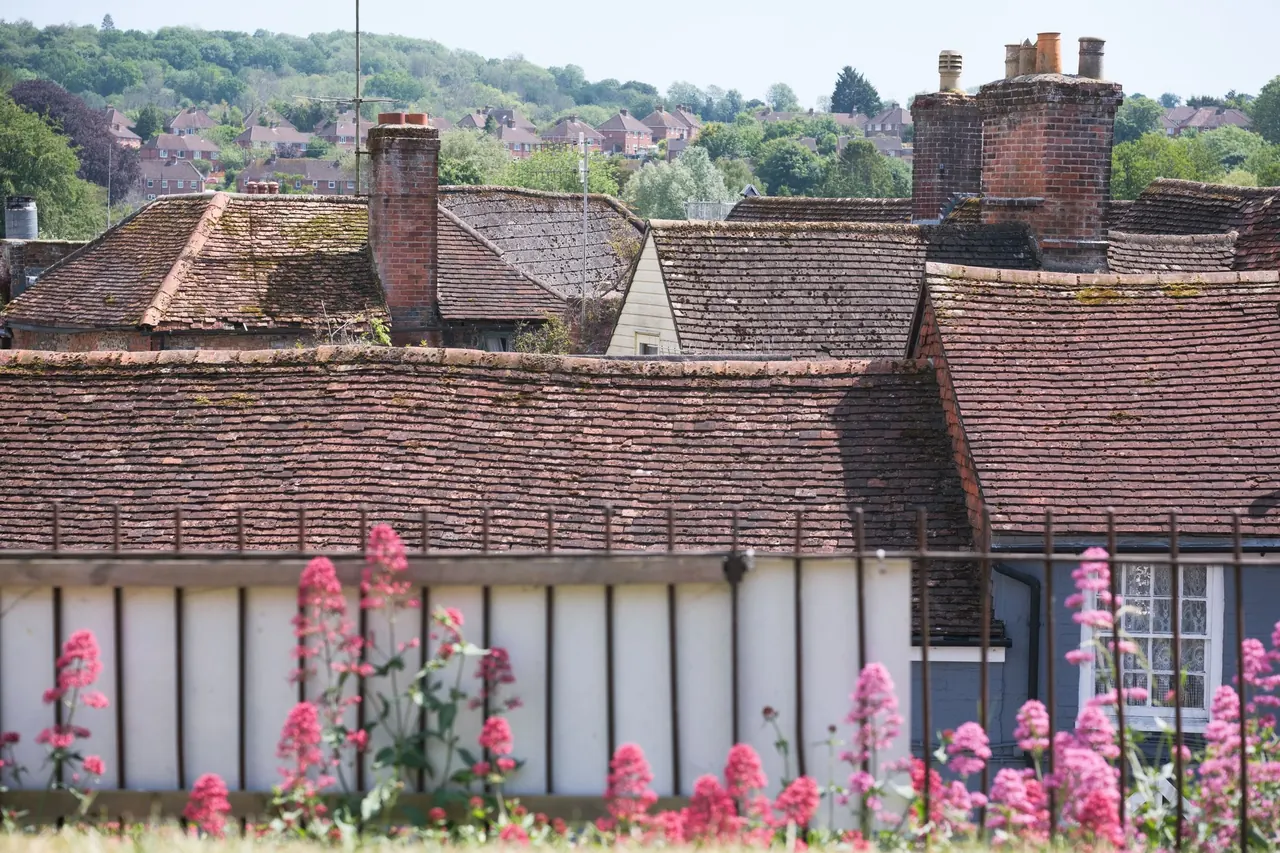
Interwar tiles across the rest of SM5
Most of Carshalton's houses outside the old centre are 1920s and 1930s semis and short terraces with plain or interlocking tiles on hipped roofs. Their typical faults are different:
- ridge and hip tiles bedded in mortar that has cracked and washed out, leaving them loose
- tile nibs that have snapped, so a tile slides out of its course
- valleys choked by leaves from garden trees, pushing water sideways under the tiles
- soakers and flashings at the stack that have been patched rather than renewed
Most of these are a single day's work if they are dealt with early. Left through a winter, a loose ridge often becomes a ceiling repair as well.
On either kind of house, water seldom comes through the ceiling directly under the hole. It runs along a rafter or the top of a wall first, so the loft is looked at where there is access, and the outside by drone or from roof ladders. A full roof inspection makes sense when there is more than one stain or the roof has never been looked at properly. If the stack is the source, our Carshalton chimney repairs page covers the flashing and pointing work.
The Which? roofer cost guide gives £75 to £400, before VAT, for replacing a handful of standard tiles, a national figure for a small repair. If you live near the ponds or on Mill Lane, our Carshalton Village roof repair page deals with those older cottages and terraces.
Frequently asked questions
My Victorian slate roof near Carshalton Park keeps dropping slates. Does it need replacing?
Not necessarily. A few slipped slates usually means nails have failed in one area. If slates are slipping all over the roof, the fixings have probably gone everywhere, and re-slating starts to make more sense than repeated repairs.
My 1890s house has a slate main roof and a lead roof over the front bay. Which one is leaking?
It can be either, or the joint between them. Water from a split in the bay lead often shows on the wall below the window, while a slipped slate higher up shows on a bedroom ceiling. Looking at both from the loft and the outside settles it.
Can you repair the slate on a listed house on Park Hill?
Yes, with matching slate and traditional fixings. Like-for-like repair rarely needs consent, but anything that changes materials or appearance on a listed building may, so that would be cleared with the council before work starts.





