


 Google reviews

Living beside Carshalton Park's chestnuts
The London Gardens Trust describes the sweet chestnuts in Carshalton Park as impressive trees, some planted in the early 1700s or before, and notes Tree Preservation Orders on several trees, including sweet chestnuts in Ashcombe Road and in the park itself. Houses on Ashcombe Road, Ruskin Road and Woodstock Road live under or beside them.
Sweet chestnut is one of the worst trees for a gutter. It drops in stages rather than all at once. Long catkins come down after flowering in early summer and form a stringy mat. In autumn, the spiny husks and the large leaves follow. Husks wedge in outlets and hoppers, leaves pack in behind them, and within a few weeks a gutter that was clear in September is holding water. Because the trees are protected, cutting them back is rarely an option, so the gutters have to be kept up with instead.
Catkins in June, husks in October
For most Carshalton houses, a clean once a year in late autumn is enough. For houses under or close to the park chestnuts, two visits make more sense:
- Late autumn, once most of the leaves and husks are down, so the gutters are clear for winter rain.
- Early to mid summer, after the catkins fall, before the heavy summer downpours that a mat of catkins can turn into an overflow.
Other trees have their own timing. Sycamore drops its flowers in late spring and its winged seeds in autumn, and moss on old north-facing slopes washes into the gutters through the wet months whatever trees are nearby. If you are unsure which pattern fits your house, our piece on gutter cleaning frequency sets out the signs to watch.
Further from the park, on the interwar streets, gutters on a hipped semi are lower and shorter, and a single autumn clean usually keeps them running. The exception is a semi with a big tree in its own garden or next door's, where the gutter on that side can need clearing as often as one by the park.
Tall gutters on the old park estate houses
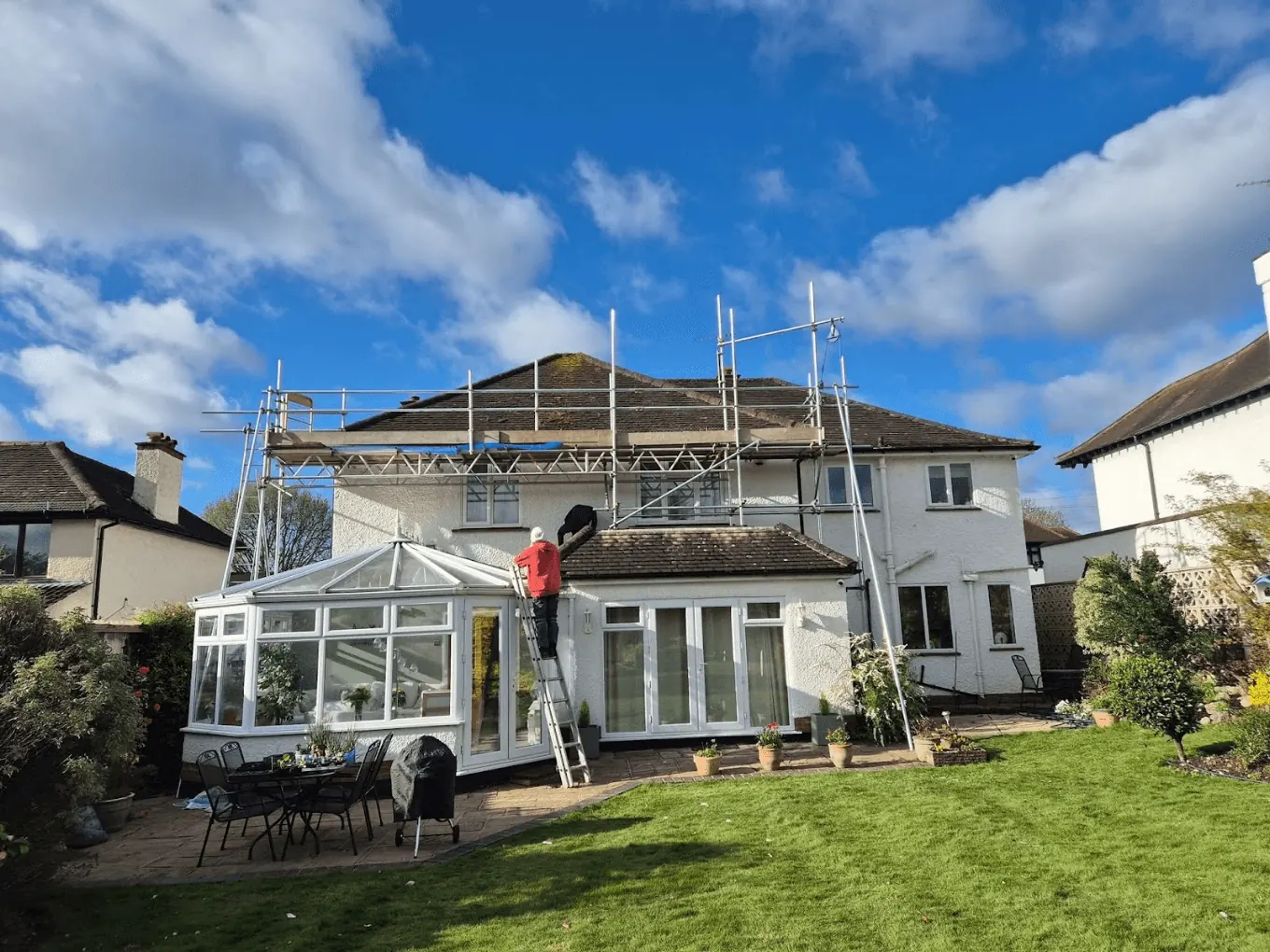
The houses on the old Carshalton Park estate plots are tall, and many have bays, rear wings and valleys that drain into short lengths of gutter. On houses like these the short gutters over bays and back additions block as readily as the main runs, and a husk in an outlet stops a downpipe that looks fine from below. We flush the system with water at the end to make sure it drains to each outlet, and take the debris away with us.
While we are at gutter height, we look at what we are working on. Loose brackets, leaking joints and soft fascia boards are much easier to spot close up than from the garden. If we find damage, we show you photos and you decide whether to go ahead with a gutter repair. Where the board behind the gutter has rotted, that goes to our Carshalton fascias and soffits work.
For a sense of national pricing, Which? puts clearing all the gutters on a house, front and back, at £75 to £350 before VAT. A tall house with several roofs sits towards the top of that range. The main gutter cleaning page explains more about how a clean works.
Frequently asked questions
Do the Ashcombe Road chestnut husks block the downpipes as well as the gutters?
They can. Husks are the right size to wedge in an outlet, and leaves then pack in behind them. We clear the outlets and flush water through each downpipe to check it runs freely before we leave.
The chestnut over my garden is protected. Can the gutters still be cleaned?
Yes. Cleaning gutters does not touch the tree. If branches are rubbing the roof and you want them cut back, the council needs to agree first, and a tree surgeon does the work.
The gutter over the bay on my Woodstock Road house always fills first. Why?
A bay roof is low and close to the trees, so leaves and husks land on it and wash straight into a short gutter with one small outlet. Clearing the bay gutter along with the main runs, rather than only the high ones, is what keeps the front of the house dry.





