



 Google reviews

Lead over the bays on the 1890s park houses
The Victorian and Edwardian houses on land sold off from Carshalton Park in the 1890s, and around Park Hill, have small flat roofs in awkward places: over bay windows, on the top of rear wings, around dormers and between roof slopes. On houses of that age these were often laid in lead, sometimes replaced later with felt.
Old lead fails at its joints and where it has been dressed too tightly, and patches of mastic or felt laid over it trap water against it. A split in the lead over a front bay tends to show as a damp patch on the wall below the window rather than on a ceiling, which makes it easy to blame on the window. On a house in the Carshalton Park or Park Hill conservation areas, or a listed one, it is usually best to renew a visible lead roof in lead, or at least in a finish that reads the same from the street. For roofs out of sight at the back, GRP is often the practical choice.
Garages and back extensions on the interwar semis
Most of suburban Carshalton was built in the 1920s and 1930s, and houses of that age have spent the decades since collecting flat roofs: a garage beside the house, a kitchen or breakfast room pushed out at the back, a porch over the front door. Many of these were covered in bitumen felt, and felt of that type has a working life measured in decades, not generations.
Side garages are the ones that tend to get forgotten. They are low, out of sight from the house, and used for storage, so a leak can run for a whole winter before anyone sees a stain or a soft patch in the ceiling board. By then the deck is often rotten.
That is why the deck gets tested before anyone talks about materials. A blister or a split lap on an otherwise sound roof can be repaired. If the roof leaks in more than one place, holds water for days, or gives underfoot, a re-cover is normally better value than chasing patches. The deck is walked where it is safe, looked at from below where the ceiling allows, and photographed by drone where it cannot safely be reached.
A re-cover strips the old layers, replaces any rotten boarding and corrects the fall where the deck allows, then lays GRP fibreglass, EPDM rubber or a modern torch-on felt. The main flat roofing page compares the three. The upstand against the house wall and the outlet into the gutter get as much attention as the main area, because that is where most flat roofs actually leak. If the fascia at the edge has gone, our fascia and soffit work can be done at the same visit.
As a national guide, Which? puts a new felt roof on a single garage at £1,400 to £3,500 before VAT, with other materials from about £1,950.
Leaves on the low roofs by the park
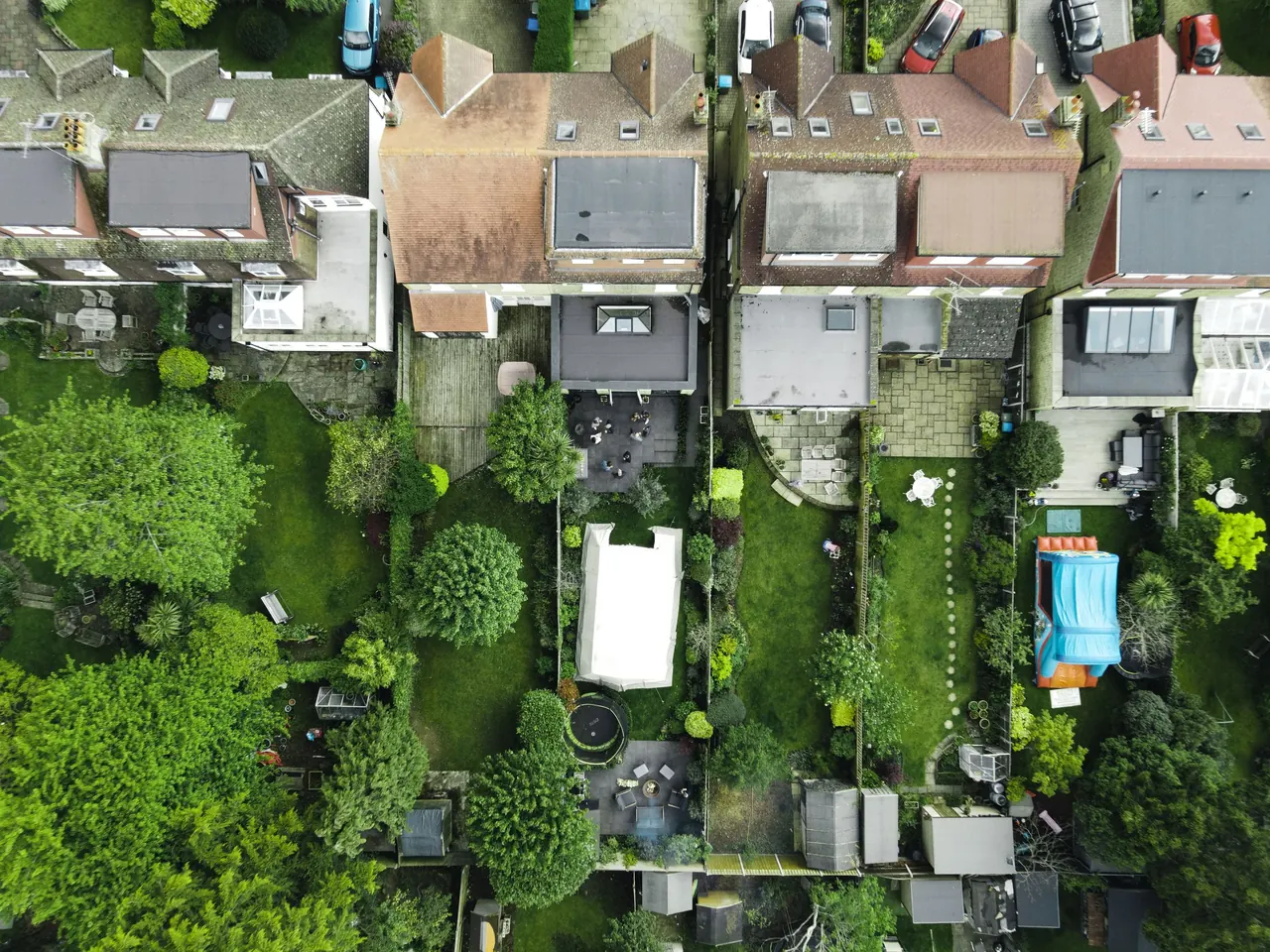
Garage and extension roofs sit at the height where leaves from garden trees settle and stay. Near Carshalton Park, and anywhere a big tree hangs over the garden, they bank up around the outlet, hold moisture against the surface and grow moss. Clearing a flat roof each autumn, along with the gutters, is one of the cheapest ways to make it last. Our page on water pooling on a flat roof explains when standing water matters. New flat roofs on extensions are covered on our roof installation page.
Frequently asked questions
The flat roof over the bay on my 1890s house near Carshalton Park is lead. Should it go back in lead?
If it is on the front of the house, and especially in a conservation area, lead usually looks right and lasts well when laid with proper joints. GRP can work on a bay too, but it is a visible change, so it is talked through first.
Does re-covering a garage roof in the Carshalton Park conservation area need permission?
Re-covering an existing flat roof in a similar finish is maintenance and generally does not. Raising the roof, changing its shape or adding a rooflight that is visible from the street is a different matter, so ask Sutton Council before altering it.
Leaves from the park trees sit on my Ruskin Road garage roof all winter. Does that shorten its life?
It can. Wet leaves keep the surface damp, feed moss and block the outlet so water ponds. Clearing them once or twice a year and keeping the outlet open will do more for the roof than any coating.





