



 Google reviews

Corners and outlets on Ruskin, Ashcombe and Woodstock Road
Where an older house near Carshalton Park is tall, with valleys, rear wings and bays, rain from a lot of roof often ends up in a few short lengths of gutter. The corners, where two runs meet, and the outlets, where all that water turns down into a pipe, take the most strain, and that is where joints open and brackets work loose.
Leaves from the park trees add to it. A gutter that holds wet leaves is heavier, and the extra weight on an old bracket is often what tips a run out of fall. Once a gutter dips, water collects in the low spot, the joint nearest to it starts to drip and the fascia behind begins to stay wet. Repairing the joint without resetting the fall usually means another drip in the same place next winter.
Before any bracket goes back, the board behind it gets looked at. A new bracket screwed into a soft fascia will not stay put, so if the timber has rotted you see it in the photos, and our fascia and soffit work can replace it.
Cast iron on Park Hill's older houses
Where an older house on Park Hill or near the park has kept its cast iron gutters and downpipes, they are worth looking after. Cast iron lasts a very long time if it is painted and kept clear. Neglected, it rusts at the joints and along the back of the gutter, against the wall, where you cannot see it from the ground.
Sound cast iron is repaired by resealing and rebolting the joints and replacing cracked lengths with matching sections. Hoppers on the wall, which collect from two or three pipes on houses of this age, can crack or rust through at the base and are replaced to match. When a run has rusted too far to be worth saving, you are told so. On a listed house, like-for-like repair keeps you clear of consent questions.
Dipping uPVC on the interwar semis
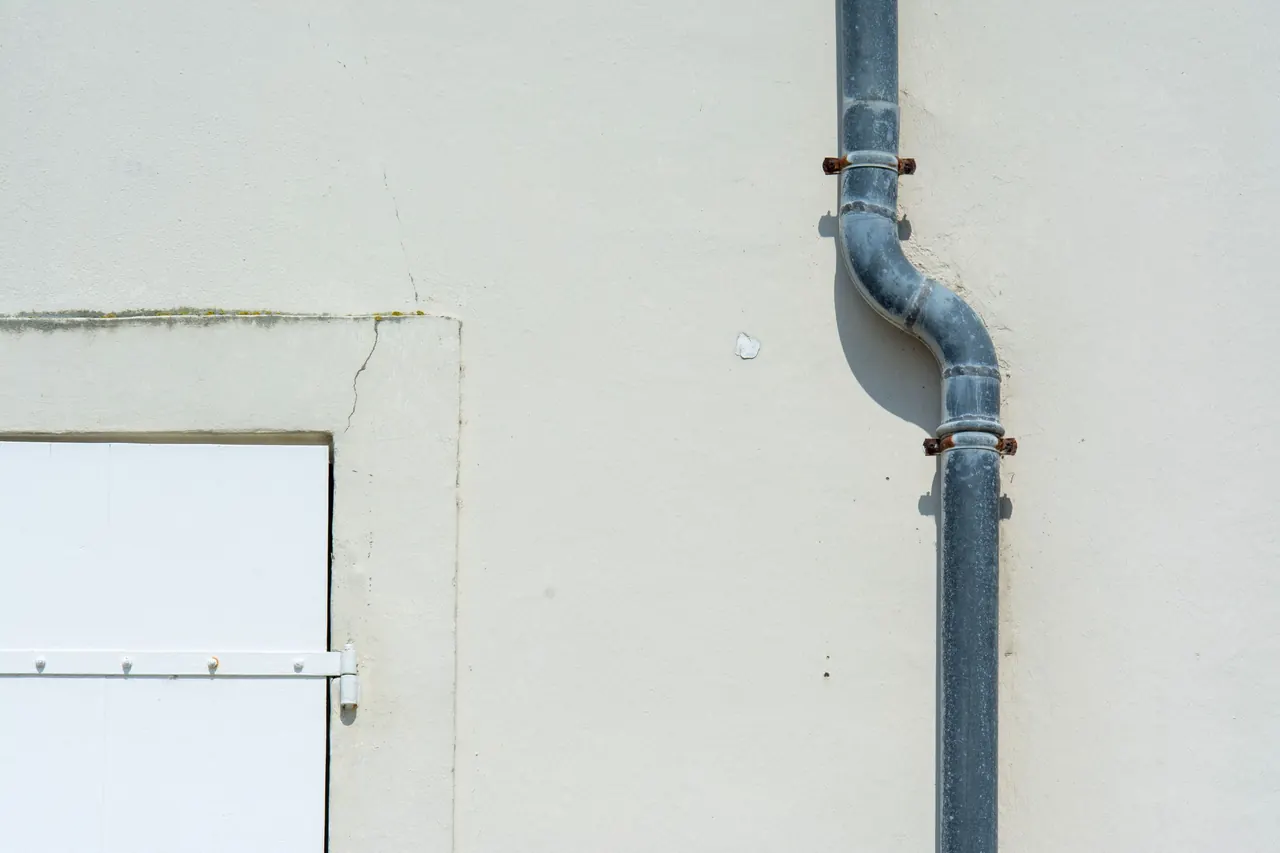
Across the 1920s and 1930s streets that make up most of SM5, gutters are mostly uPVC, and the common faults are simpler. Rubber seals in the unions dry out and crack. Brackets snap or pull out, so the run sags between them. Downpipe offsets around a bay pull apart, and the shoe at the bottom comes off. Most of these are short repairs from a ladder.
If a uPVC run is brittle and faded, cracked in several places or has been resealed again and again, a new system is usually better value than another repair. Our Carshalton gutter installation page covers the options. If the water is coming down the wall behind the gutter rather than over its front edge, our guide to water leaking behind a gutter explains why, and the main gutter repairs page has more on how a repair visit runs.
Frequently asked questions
The gutter at the back corner of my house on Ruskin Road drips in every storm. Is it the joint or the fall?
Often both. A corner joint that has opened lets water out, but if the run has also dropped towards that corner, more water reaches it than the outlet can take. Resealing the joint and resetting the fall together is what stops it.
A downpipe on my house near Carshalton Park has split behind a climbing plant. Can it be replaced on its own?
Yes. A split length is replaced on its own, in matching material and colour. If the plant has pulled the pipe off its clips, those are refixed too. It is worth cutting the plant back from the pipe first.
My Park Hill house still has cast iron gutters with flaking paint. Is it worth repairing them?
Usually, if the metal is sound under the paint. The joints are resealed and any cracked length is replaced to match. Keeping it painted afterwards is what makes cast iron last. If the backs have rusted through, replacing that length in cast iron is the next step.





