



 Google reviews

Fascias behind old gutters on the park estate houses
The Victorian and Edwardian houses built on the Carshalton Park estate plots from the 1890s often have deep eaves and more joinery than a modern house: moulded fascias, boarded soffits, and sometimes brackets or decorative bargeboards on the front gables. That woodwork is part of how the house looks, and in the Carshalton Park and Park Hill conservation areas, part of what the council wants kept.
The usual fault on these houses is a gutter that has leaked against the back of the fascia for a long time. The board rots from behind, the gutter brackets lose their grip and the run starts to tip. The front of the board can look sound for years while this happens, because the paint holds the surface together. So the gutter comes down first, the rafter feet behind are checked and repaired, and only then does a new board go on.
Soffits on these houses show a different sign. A soffit that sags, stains or has dropped at one end is usually telling you about water coming in at the corner above it, or a fascia that has moved. Replacing the soffit board alone, without finding where the water came from, means doing it again.
Westcroft Road's mock-Tudor semis
Sutton Council's Carshalton Village conservation area appraisal describes the middle part of Westcroft Road's south side, which is outside the conservation area, as a run of quintessentially suburban mock-Tudor semis with a low, sweeping gable, bulky chimney stacks and corner windows.
On a gable like that, where the bargeboards run low, their lower ends sit closer to the garden, in the splash from paths and beds and often in the shade of a hedge. Paint fails there first, water gets into the end grain, and the bottom of the board can rot while the top still looks fine. Where a bargeboard meets the eaves fascia, the joint can open and let water into the end of the fascia as well. Black-painted boards over pale render look sharp when new, but dark paint in full sun tends to crack sooner.
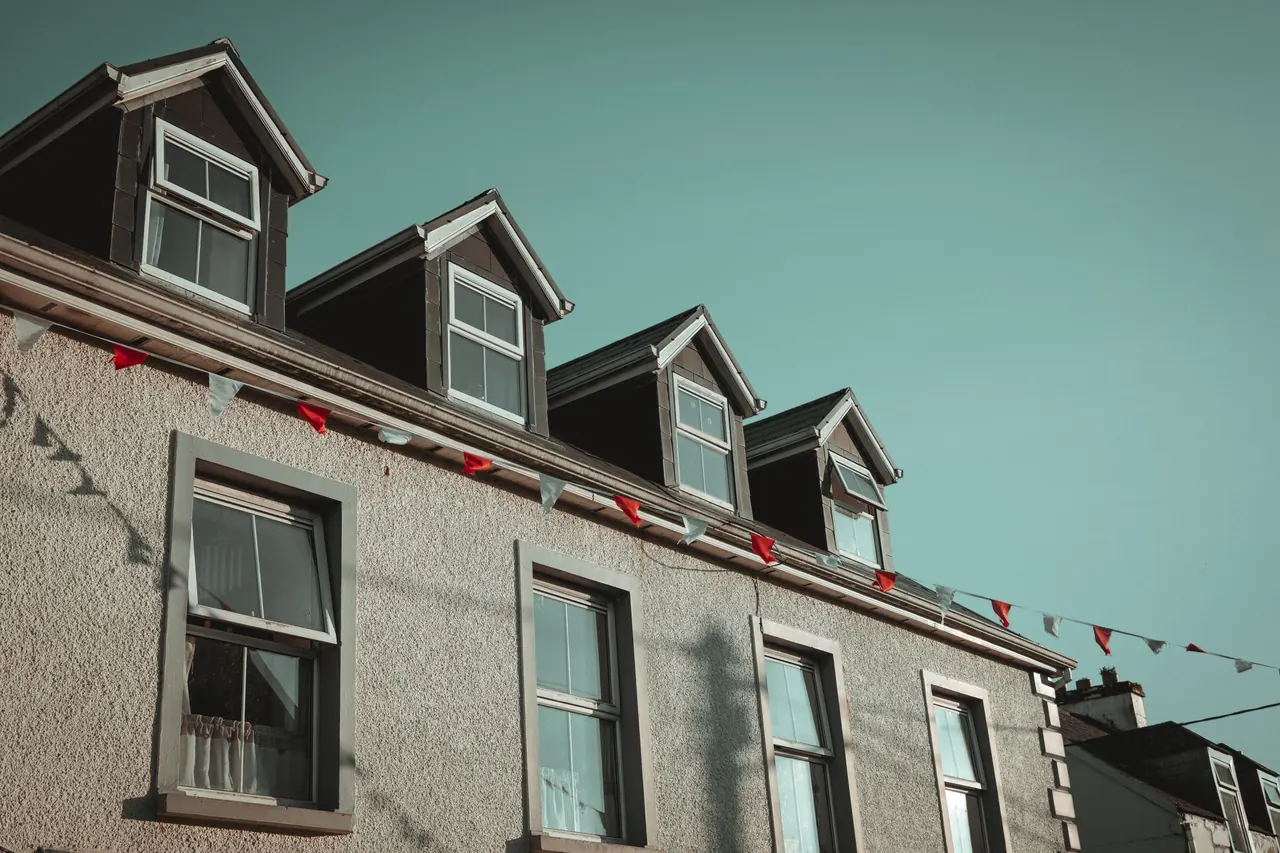
Timber or uPVC on a Carshalton roofline
On a semi outside the conservation areas, uPVC is the common choice. It comes in white, black and woodgrain finishes, needs no painting and, with ventilated soffits, helps air move through a roof space that has no other eaves ventilation. On a mock-Tudor pair, black or woodgrain boards keep the look of the gable, and matching the half next door keeps the two reading as one design.
Where the existing timber is completely sound, capping it with a uPVC cover board can be an option, but only after it has been checked. Capping over rot hides the problem rather than solving it.
On a period front, especially in a conservation area or on a listed house, new timber made to the same profile and painted is often the better answer, with uPVC kept to the back. The gutter hangs on the fascia, so new boards and new gutters are usually best done together; our Carshalton gutter installation page explains the gutter options. If you are having the whole roof replaced, the roofline is cheapest to do while that scaffold is up, as our roof replacement page explains, and the main fascias and soffits page has more detail.
Frequently asked questions
Can the bargeboards on my mock-Tudor semi on Westcroft Road be replaced in uPVC?
Yes. Replacing bargeboards on a house outside a conservation area is normally treated as like-for-like maintenance and needs no permission. Black or woodgrain boards keep the mock-Tudor look, and matching next door keeps the pair consistent.
The soffit on my 1890s house near Carshalton Park has decorative brackets. Can they be kept?
Yes. Sound brackets can be taken down, repaired and refitted, or copied in new timber, while the boards behind them are renewed. On a house in a conservation area, that is usually the approach to take.
The gutter on my Ruskin Road house keeps pulling away even after new brackets. Is it the fascia?
Very likely. If the screws have nothing sound to bite into, new brackets work loose again within a season. Pressing the board with a screwdriver near the bracket usually shows whether it is soft, and if it is, the board needs replacing before the gutter goes back.





