



 Google reviews

West Street's weatherboarded eaves
Walk the southern end of West Street and the houses are white weatherboard, timber-framed, under red tile. Sutton Council's conservation area appraisal describes them that way, and the same tradition turns up elsewhere in the village, including the 18th century weatherboarded wing of the Greyhound. On buildings like these the roofline and the walls are both painted timber, and the eaves is where they meet.
That makes the eaves more important than on a brick house. A gutter that overflows, or a fascia that has gone soft behind its paint, lets water run down into the top of the wall boarding. The boarding then rots from its top edge, often behind a paint finish that still looks sound from the street. Catching it at the eaves saves the wall below.
The signs are the same as anywhere: flaking paint and dark staining behind the gutter, boards that give when pressed, a gutter that has started to drop, and gaps under the eaves. On a weatherboarded house, add a soft or swollen top board on the wall just under the eaves.
Beechwood Court and the 1930s roofline
Not every roofline in the village is old timber. Beechwood Court, on the corner of North Street and West Street Lane, is a 1930s development in red brick with red tiles, tile hanging on the second storey and dormer windows above. The appraisal calls it impressive. On a building like that the roofline is busier than on a plain semi: the main eaves, the dormers and the edge of the tile hanging all have boards that need to stay sound and sealed.
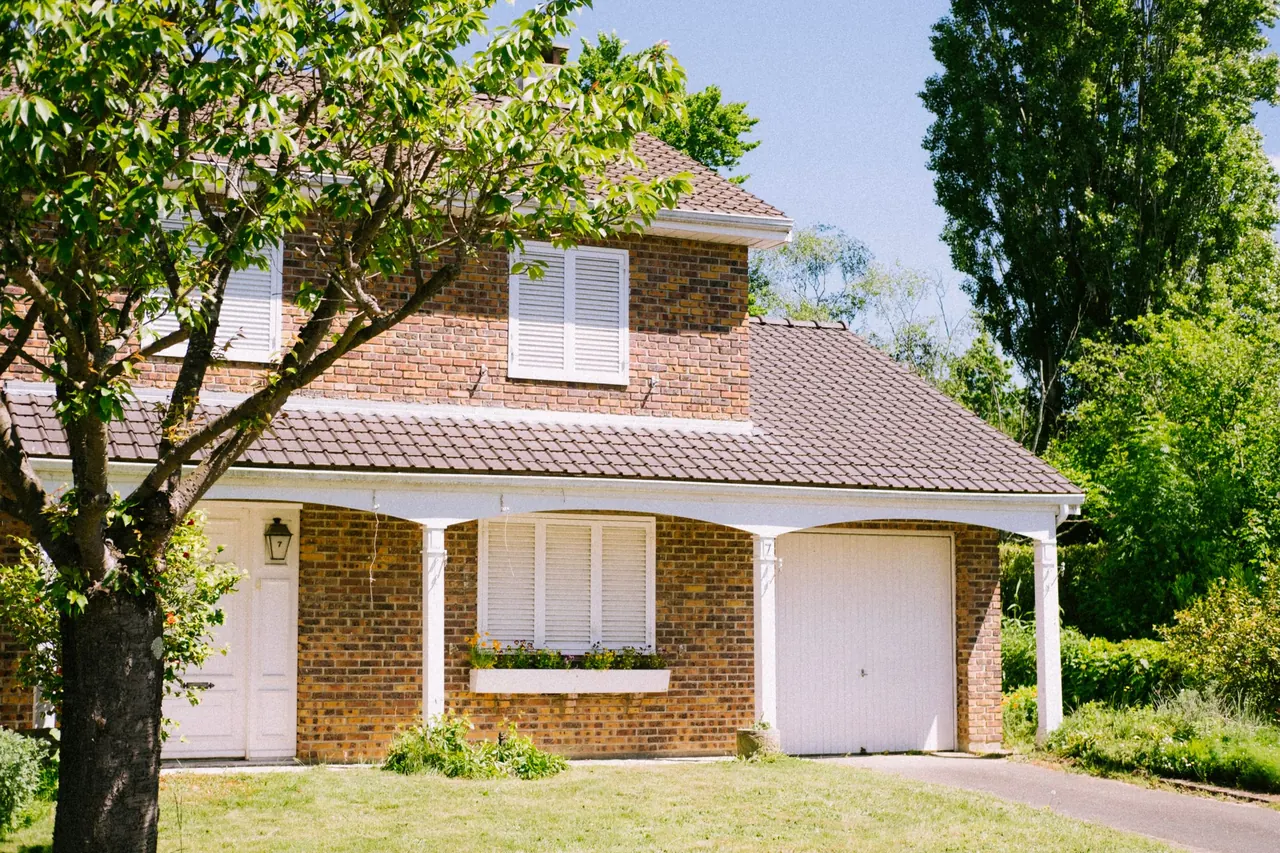
The 20th century semis in The Square and Talbot Road are simpler, with straightforward eaves and gables where uPVC boards are a common and practical replacement.
Timber or uPVC in the conservation area
Sutton's appraisal counts lost original detail as a weakness on West Street, Mill Lane and Westcroft Road, and timber eaves are part of that detail. On a listed building, swapping painted timber eaves for uPVC may need listed building consent, and on many of the older houses timber is simply what looks right. A short rotten length can sometimes be cut out and replaced on its own, keeping the rest.
Where the boards are rotten along most of their length, or new gutters are going up anyway, replacing the full run is usually better. uPVC comes in white, black, grey and woodgrain, which suits the 20th century semis better than the listed fronts. A uPVC cover fitted over old boards hides whatever is underneath, so it is only worth doing over timber that is still sound.
As a rough figure, MyJobQuote's capping guide puts capping the fascias and soffits of a three-bed semi at around £800. Full replacement costs more. Because fascias carry the gutters, renewing both together often makes sense; see gutter installation in Carshalton Village. If you live up the hill in the Beeches, see fascias and soffits in Carshalton Beeches. Board materials are covered on the fascias and soffits service page.
Frequently asked questions
The top board of the weatherboarding on my West Street house is soft. Is that the fascia?
Often the two are linked. Water from a leaking gutter or a rotten fascia runs into the top of the boarding. We repair the eaves and gutter first, then you can have the wall boarding repaired knowing the water has stopped.
Can I fit uPVC fascias on a semi in The Square?
Often, yes. The Square's 20th century semis are unlisted, but they sit inside the conservation area, where the appraisal counts lost original detail as a weakness. Keep the profile and colour close to the neighbours, and if the change would alter how the eaves look from the street, ask Sutton Council before ordering.
Is it worth repairing timber fascias rather than replacing them?
Where the rot is limited to a short length, yes, and on a period house it keeps the original look. Where the board is soft along most of its length, a repair will not last.





