



 Google reviews

Rear fascias behind overfilled Beeches gutters
The first sign is rarely the board itself. A gutter bracket starts to pull away at the back of the house, a downpipe outlet drops, or a length of soffit sags away from the wall. Look up and the fascia face may still hold its paint, because the rot has come from behind, where water from an overfilled gutter runs down the back of the board every time it rains.
On a big Beeches plot that tends to happen at the rear first. Many back gardens here have mature trees, so the back gutters fill and overflow far more often than the front. Rot from overflow spreads from the corners and the outlets, so we test the timber along its whole length rather than judging it from one end. Where the boards are sound, we leave them and deal with the cause, which usually means the gutter. Where they have softened, the old timber comes off, the rafter ends behind are checked and repaired if needed, and new boards go on. Our article on water running down behind a gutter explains how that overflow starts.
Keeping the new gutters clear is what protects the new boards, so a regular gutter clean in Carshalton Beeches is worth planning once the work is done. If the gutters themselves are tired, new ones can go up in the same visit through our gutter installation work here, so boards and gutters line up.
Soffit gaps, birds and squirrels near the big gardens
With large gardens, mature trees and parkland such as Oaks Park not far to the south, a gap at a soffit corner is an easy way in for birds and squirrels. Once inside, they nest in the roof space and can pull at insulation and wiring, and the gap widens each season.
Wild birds and their active nests are protected under the Wildlife and Countryside Act 1981, so if birds are nesting in the eaves we wait until the young have fledged before closing the gap. Spring and early-summer jobs are planned around that. Once the nest is empty, the new soffit closes the opening for good. Where the roof space has no other eaves ventilation, ventilated soffits help keep air moving through it.
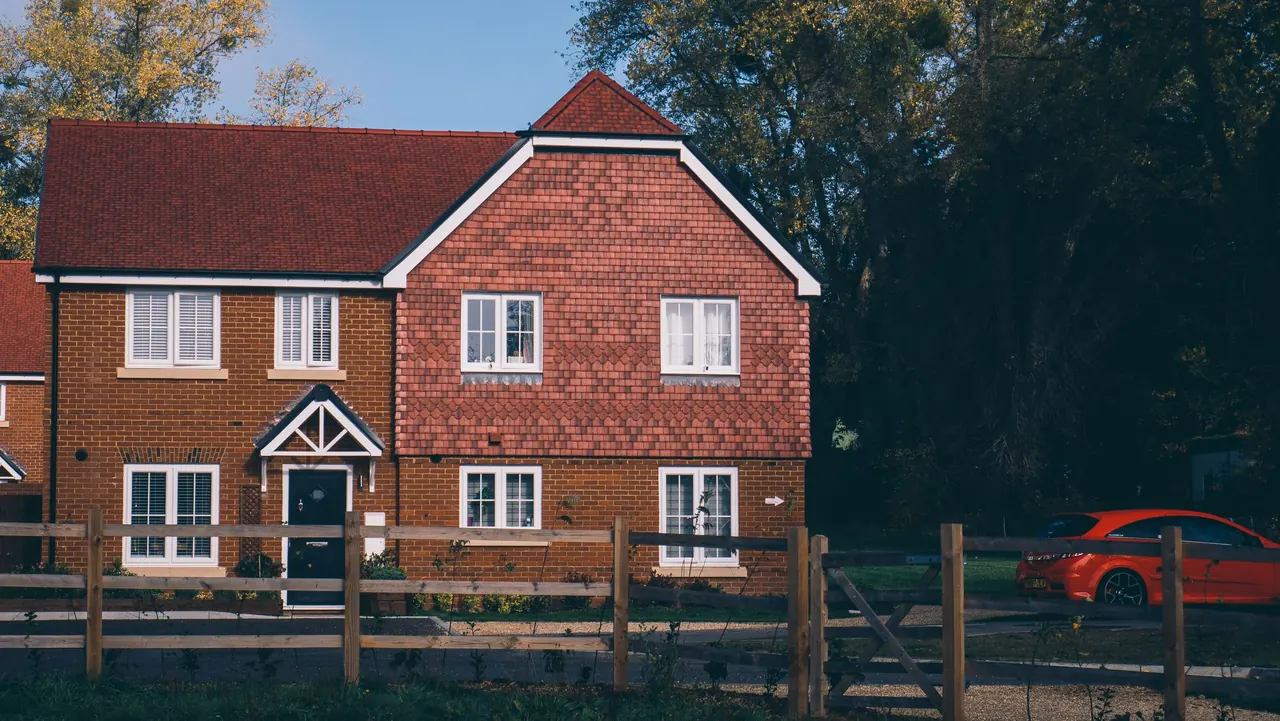
Gabled front bays and their bargeboards
Many Edwardian and interwar houses here have a front bay under its own gable. The bargeboards on that gable run from the eaves to the apex, fully exposed, and the joints at the foot and the top open first on painted timber. A split bargeboard can be replaced on its own, or alongside the fascias, keeping the profile close to the original so the front still reads as it did.
Materials and cost
New boards are uPVC in white, black, grey or a woodgrain finish. Capping over old timber is only fair when every length underneath is sound, which after years of overflow under trees is not usually the case. As a published guide, Checkatrade gives £90 to £170 per linear metre for fascia and soffit work. Replacement boards are covered by our 10 year guarantee, and measuring up for the quote costs nothing. The main fascias and soffits page covers the materials in more depth.
Frequently asked questions
Only the back of our Carshalton Beeches house looks rotten. Do you have to do the front as well?
No. If the front boards test sound, we replace the rear and side runs on their own and tell you how the front is holding up.
Birds are nesting behind a soffit gap on our Beeches house. When can it be closed?
Once the nest is no longer in use. Active nests are protected by law, so in spring and early summer we usually book the work for after the young have left, then close the gap with new soffit.
Can the bargeboard on our gabled front bay be replaced without touching the rest?
Yes. It can be done on its own, or with the fascias in the same visit if they are also soft. Gable bargeboards take the weather at full height, so they often wear faster than the eaves boards.





