



 Google reviews

Houses that followed Beeches Halt
The station at the north end of Beeches Avenue opened in 1906 as a simple halt, and it was rebuilt and renamed Carshalton Beeches in 1925 when the line was electrified. Houses followed it south along Beeches Avenue and Banstead Road: some Edwardian, a great many from between the wars, and later homes filling the gaps after 1945.
That timeline is the reason to look closely. A pre-war roof that has never been re-covered is now somewhere around 90 to 120 years old in its fixings, even if the tiles still look tidy. Clay plain tiles often outlast the iron nails and timber battens holding them, so the first sign of trouble tends to be a tile that slides, a hip that rocks, or a brown mark on a bedroom ceiling. A post-war house has a different set of questions: concrete tiles, an early felt underlay and, often, a flat roof that has already been patched more than once.
The slopes Banstead Road never sees
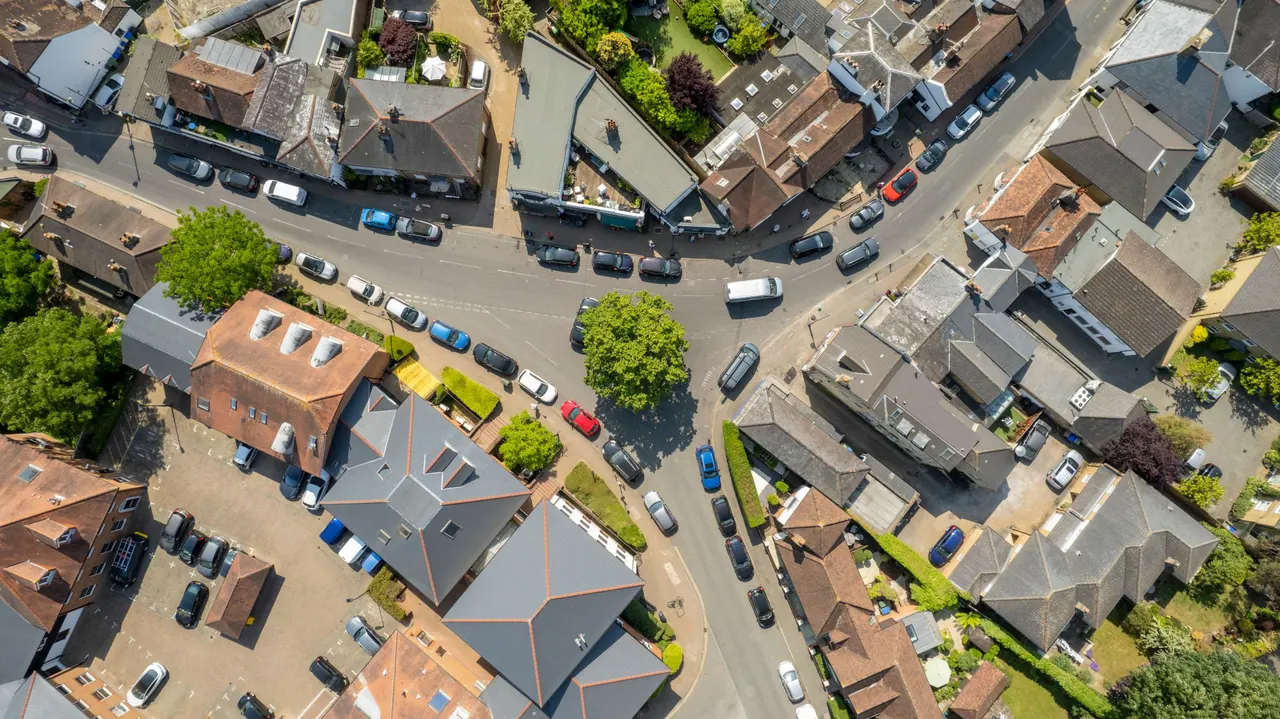
From the pavement you see one face of a hipped roof, and on a detached house set back on a wide plot you may not see much of that. The rear slopes, the back of the stack and any flat roof over a garage or kitchen are out of view from the road, and from much of the garden too. Those are the parts that go longest without anyone looking.
This is where the drone helps. Josh, who flies it for us, takes close photographs of the parts you cannot reach, without anyone walking on old tiles or putting up a scaffold. Street trees and overhead cables are common around here, so the flight is planned around them, and it is moved to another day if the wind is wrong. Where there is a hatch, we also go into the roof space, because daylight, damp rafters or wet insulation say more about a leak than the tiles do.
On these houses we pay particular attention to the hips and ridge, where the tiles sit on a mortar bed that dries out with age; the lead and pointing on stacks; the felt or rubber on side-drive garages; and the timber at the eaves, which years of overflow from tree-filled gutters can soften without showing on the face. Our main roof inspection page sets out the full checklist.
What it costs to know
Published guides give a basic visual roof inspection at £100 to £200 and a drone survey at £200 to £350, according to MyJobQuote's 2026 figures. Those are national guide numbers. Set against that, one scaffold put up just to see a back slope can cost more than the repair it reveals.
If the findings are a few slipped tiles and a loose hip, our roof repair page for Carshalton Beeches covers how those are put right. If the felt and battens have gone across the whole roof, we say so plainly and explain what a full re-roof here would involve. Quoting for any work that follows costs you nothing. Buyers may also find our article on roof checks when buying in Sutton useful.
Frequently asked questions
Our house is post-war infill in Carshalton Beeches, newer than its neighbours. Is an inspection still worth it?
Yes, though the questions are different. Post-war roofs here are more likely to have concrete tiles and an early bitumen felt, which can become brittle and tear at the eaves. A flat-roofed garage or extension of the same age is often the first thing to need work.
There is a big street tree outside our Beeches Avenue house. Can you still inspect the roof?
Usually, yes. The tree affects where the drone can fly rather than whether it can. We plan the flight to keep clear of branches and cables, and where a slope is hidden by the canopy we look at it from the loft and the garden instead.
The front slope was re-tiled a few years ago. Does that mean the back was done too?
Not necessarily. Owners sometimes re-cover the side that shows first and leave the rear on its original tiles. Close photographs of the back slopes show quickly whether the two match.
What does a roof inspection add to a mortgage valuation on a Carshalton Beeches house?
A valuation or general survey usually looks at the roof from the ground. On a large hipped house that leaves the rear slopes, the top of the stack and any garage roof unseen. An inspection gets close to those parts, so you can weigh the likely cost before you commit.





