



 Google reviews

Catslides, bays and stacks in the Garden Suburb
The houses Frederick Cavendish Pearson designed for the Sutton Garden Suburb between 1912 and 1915 carry a lot of roof for their size. The council's character appraisal lists catslide roofs over recessed entrances, half-hipped front gables, canted bays hung with red tiles under deep eaves, and chimneystacks set on or just below the ridgeline. On the Greenhill and Woodend terraces the ridgeline drops for a section to give the gables more emphasis.
Each of those features adds a joint. A catslide meets the main slope in a valley, a bay roof meets the wall above it at a flashing, and a stack on the ridge has lead on four sides. Many of them face the back gardens or sit behind a gable.
The appraisal also notes that the roof materials appear to be original. That is good news for the look of the closes, but tiles, battens and lead of that age deserve a close look rather than a guess.
Villas off Cheam Road, and the Vale Road re-roofs
In the Landseer Road Conservation Area, the villas on Landseer Road, York Road, Derby Road and Bridgefield Road are detached and semi-detached houses finished by 1913 and set among mature trees. The valleys behind the front gables and the gutters under those trees are where trouble usually starts, and a ladder does not reach far on a house that tall.
Closer to the centre the question changes. Historic England's 2018 assessment of Sutton town centre records that most of the late Victorian terraces on Vale Road, and the villas on Cedar Road, have been re-covered in concrete tile. Concrete interlocking tile is heavier than the slate many late Victorian terraces were first roofed in, so where a slate roof went over to concrete, the timbers now carry more than they were sized for. In the loft we look for rafters that have spread or a ridge that has started to dip, and we check whether the re-roof's own battens and underlay are near the end of their life.
Further south, the roofs of the 1970s and 1980s court blocks of South Sutton cannot be seen from the ground at all. Photos of the covering, the outlets and the edge trims give a freeholder or managing agent something definite to act on.
Looking before anyone prices a scaffold
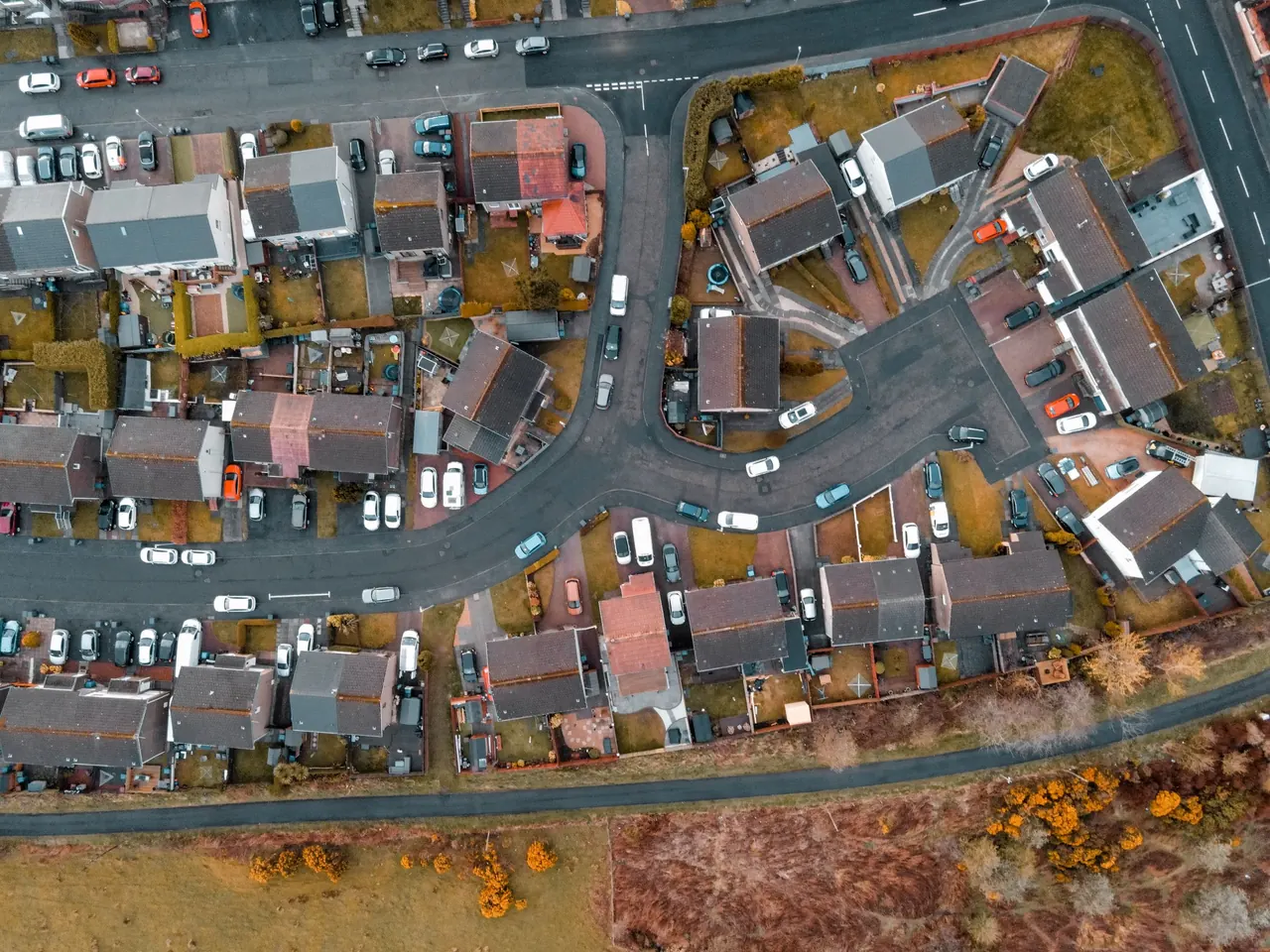
On a three-storey villa or a block, putting up a scaffold just to find out what is wrong can cost more than the repair itself. So Josh flies the drone round the roof first, taking close-up photos and video of each slope, the ridge and hips, valleys, stacks, flashings and gutters. Nobody walks on the tiles. If wind or overhanging branches make it unsafe to fly, we rebook rather than take chances. Once the photos show what has failed, any scaffold that is needed is priced once, for the right job.
Where there is a loft hatch we go inside too, looking for damp staining, daylight, wet insulation, poor ventilation and rot in the rafters and battens. Then we go through the photos with you and sort what needs doing now from what can wait. Faults on the tiles and ridges go to our roof repair team, and stack problems to our chimney team.
Buying in the town? Our guide to roof checks when buying a house in Sutton lists what to ask the seller. As an outside yardstick, MyJobQuote gives £200 to £350 as a typical national range for a drone roof survey. The checks themselves are the same ones set out on our roof inspection page; what changes in Sutton is where we look hardest.
Frequently asked questions
Will a survey pick up problems where the ridge steps down on my Greenhill terrace?
Yes. Where the ridgeline drops for a section, the higher roof meets the lower one at a short upright joint that needs lead or sound bedding to stay dry. The drone photographs it close up, which is the only practical way to see it without a scaffold.
My Vale Road terrace was re-roofed in concrete tile. What will you look for in the loft?
Whether the timbers have coped with the change. If the house was first roofed in slate, concrete tile is a heavier load, so we look for rafters that have bowed, a ridge that is no longer straight, or purlins that have moved. We also look at the underlay under the re-roof, because torn or brittle felt lets wind-driven rain onto the battens.
Can you survey a whole Grove Avenue maisonette block?
Yes. Each block is four maisonettes under one roof, so we photograph the whole roof and every owner can see the same pictures. Because Grove Avenue is a conservation area, any repair we suggest will match the existing covering and details.





