



 Google reviews

A street built a few buildings at a time
Sutton High Street was not put up in one go. Dates in the council's conservation appraisal put the parade at 202 to 214 to between 1839 and 1866, the red brick Italianate terraces at 19 to 29 to around 1843 to 1847, the slate-roofed run at 60 to 76 to the 1880s, and the flat-roofed corner building at 211 to somewhere between 1934 and 1956. Each builder used whatever roof was usual at the time, so a single block can go from hipped slate to a tiled gable to a flat roof behind a parapet within a few shopfronts.
For anyone responsible for one of these buildings, that matters. The weak points are rarely in the middle of a slope. They sit where one building's roof meets the next: a lead valley, a hidden gutter between two parapets, a flashing tucked into a neighbour's wall, or a chimney stack that both buildings share. A useful inspection in the town centre spends most of its time at those joins, and our main roof inspection service page explains the general approach.
The parapets along the High Street
The appraisal records parapets of almost every kind along the street. The row of six 1870s terraces at 51 to 61 has decorative stepped brick parapets with red brick chequerboard detail. The 1894 bank on the corner of the crossroads at 43 High Street ends in a balustraded parapet with two dormers behind it. Mitre House at 9 to 15, built in the early 1930s, wraps a hipped roof around the Grove Road corner above a pronounced cornice, and the 1930s to 1950s blocks further north hide flat roofs behind plain brick parapets.
A parapet hides the roof, and it also creates a gutter behind itself that has to drain through an outlet in the wall. On an inspection we look at the coping stones on top, the flashing on the inside face, the state of that gutter, and whether the outlet and the hopper below it are clear. On the older brick parapets we also look for open joints near the top, since water that gets into a parapet wall can show up as damp a floor or two lower down.
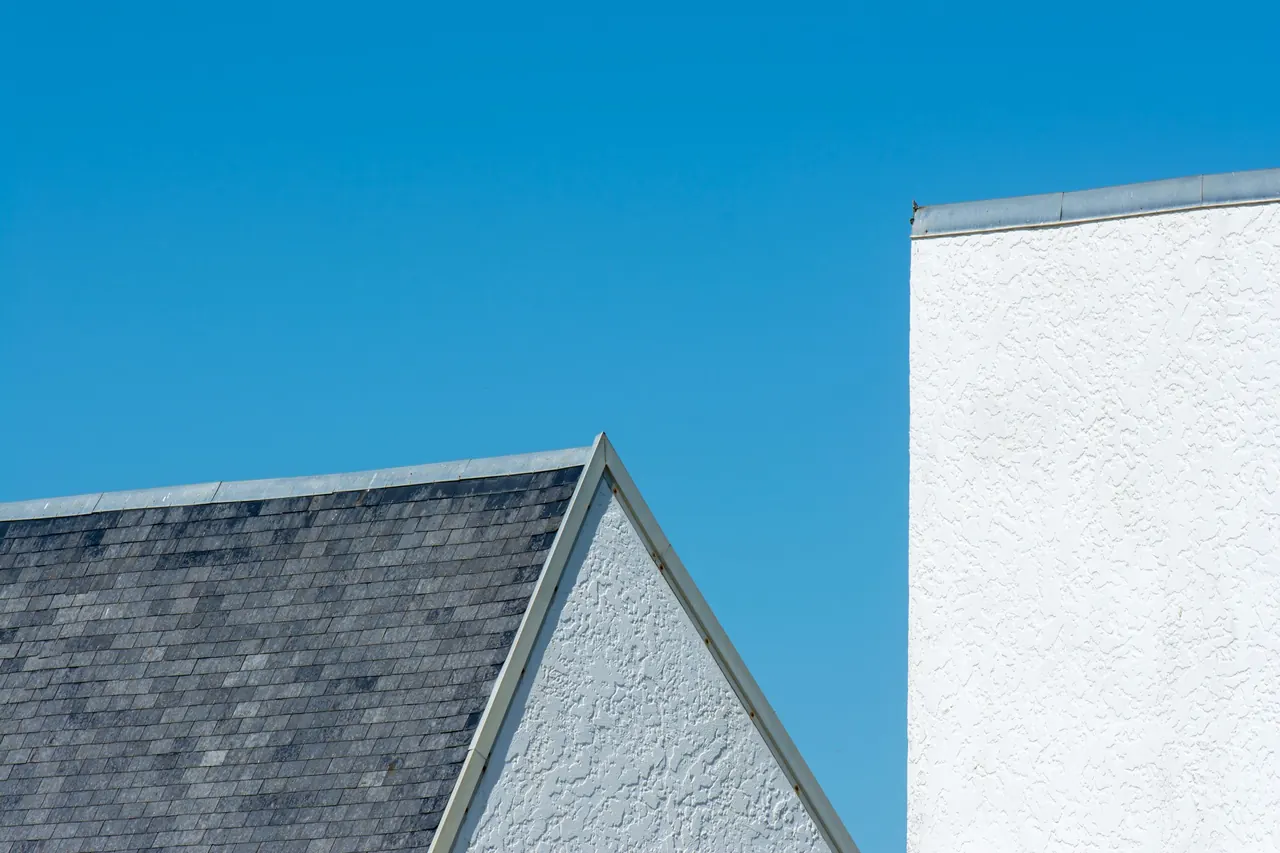
Looking at a roof three storeys above the pavement
Most of what needs checking here is three or four storeys up, over a pedestrianised street. Scaffolding just to look is costly and gets in the way of the shop below, so where the site allows it we start with the drone, after checking the wind, the neighbouring buildings and anything overhead. It gives close photographs of each slope, the valleys, the parapet gutters, the chimneys and the flashings.
Where there is a loft or roof void we can reach, usually through the top flat, we look from inside as well. Staining on the rafters, daylight at a slipped slate or damp insulation beside a valley often says more than the outside does. We then go through the photographs with you and separate what needs doing soon from what can be watched for another winter.
If something needs fixing, our roof repairs for town centre buildings can be priced from the same photographs, and a choked parapet outlet can go straight to blocked gutter clearance without a second survey.
Freeholders, agents and owners planning work
Many upper floors on the High Street, Grove Road and Cheam Road are flats or offices, with the roof held by a freeholder who may live elsewhere. For a freeholder or managing agent, a photographed survey of a whole block is a record of every roof and gutter before setting a maintenance plan or a service charge budget. For a leaseholder, clear photographs of the actual fault make it far easier to raise with whoever is responsible.
For an owner thinking about a dormer, a roof terrace or a rear addition, the inspection shows what you would be building onto. Changes to how a roof looks in the conservation area are controlled, so it is worth asking the council early; like-for-like repairs are normally maintenance. If you are buying a flat over a shop, our guide to roof checks when buying in Sutton lists the questions to ask before you exchange.
Frequently asked questions
Can you check the valley between my building and the parade next door?
Yes. On the High Street that join is often the first thing we look at. The drone photographs the valley or hidden gutter from above, and if the fault is on the neighbouring side we can share the photographs so both owners are looking at the same evidence.
Will an inspection show what is behind a parapet like the one at 211 High Street?
Yes. From above we can see the flat roof, the gutter behind the parapet, the coping and the outlet, none of which you can see from the pavement or from the flat windows.
Can a freeholder book one survey for a whole High Street parade?
Yes. Covering several buildings in one visit is usually more efficient than doing them one at a time, and you get a photo record of each roof to plan the next few years of work around.
Is it worth inspecting a 1930s parade that already has a newer flat roof?
Often, yes. A flat roof can look fine and still have a failed upstand against the parapet or an outlet that is half blocked. Both are cheap to put right early and much dearer once water has reached the flat below.





