



 Google reviews

Who owns the roof over a High Street flat
On the High Street, one roof can sit over a shop, two flats and a freeholder who lives somewhere else entirely, and the person with the leak is rarely the person who owns the slates. That shapes how a repair gets done here. Before anything else, someone has to see the fault, and someone has to agree to pay for it.
We can deal with either side. A leaseholder can call us to find the cause, and we will send the photographs and the price to the freeholder or managing agent so the decision is made on the same evidence.
Slate, crested ridges and the 1880s terraces
A lot of the older High Street is slate. The council's conservation appraisal for the street records hipped slate roofs on 2 to 8 at the station end, slate gables on the 1880s terrace at 60 to 76, and a pair of Gothic revival buildings at 119 to 121 that still carry slate with three-hole crested ridge tiles. Next door, 123 to 125 has a hipped slate roof finished with terracotta ridges.
On roofs of this age the slates are often still sound but the nails holding them have rusted through. Slates let go one at a time, usually after a windy night, and leave a gap where rain reaches the battens. We refix slipped slates, replace broken ones with matching slate, and check whether the problem is a few slates or the whole slope. Decorative ridges are bedded back or replaced with a matching pattern, because on a parade front a plain ridge where a crested one used to be stands out.
Several parades also have dormers added over the years, and their cheeks and aprons are a common source of leaks. Our roof installation page goes through the dormers recorded on the High Street; on a repair visit we check the leadwork around any dormer on the same slope.
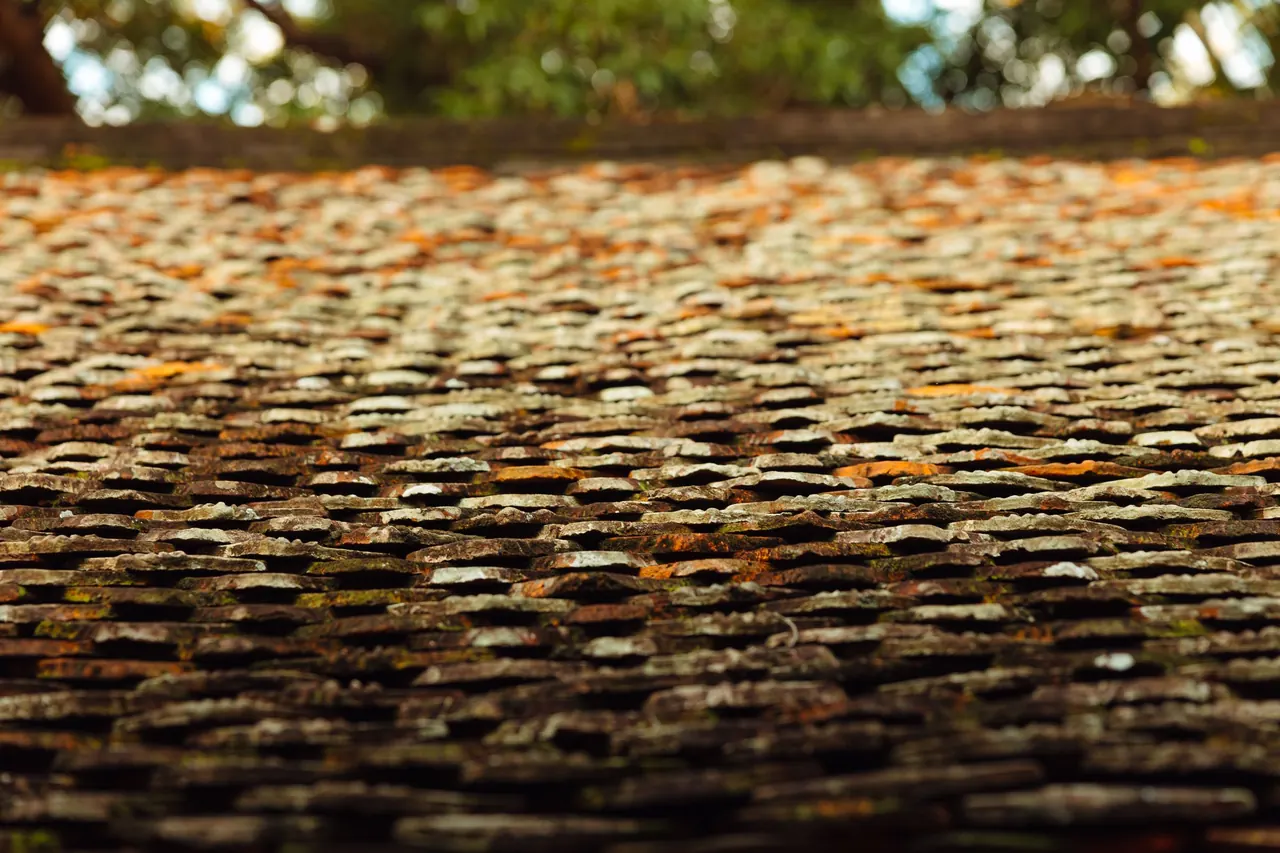
Tiled gables further up the street
Further north, the Tudor Revival parade at 151 to 159 has tiled gable roofs facing the street, and the inter-war Neoclassical former bank at 216 to 220 also has a tiled gable roof. Here the weak points are different. Ridge and verge mortar cracks and washes out, ridge tiles loosen, and the verge at the gable end, which takes the weather side-on, starts to drop pieces. On a three-storey building above a busy pavement, a loose ridge tile needs dealing with promptly.
Where two of these buildings meet, or where a front roof meets a rear outrigger, there is usually a valley or a hidden gutter. Lead valleys split, mortared ones crack, and both collect silt. Water from a failed valley often appears some distance from the fault, because it runs along a rafter before it drips.
Reaching a roof above a pedestrianised street
Much of the High Street is pedestrianised, and many flats are reached through a side door or a rear yard. Small repairs can often be done from roof ladders once safe access is set up from the back. Bigger jobs on three and four-storey fronts may need a tower or scaffold, and those are planned around the shop below. We look first, usually by drone, so the access is chosen for the job rather than guessed. If a whole slope turns out to be failing, we will explain why a re-roof of the parade may be better value than repeated visits.
Repairs to the front of a building in the conservation area should match what is there: natural slate with natural slate, crested ridges kept. Our guide to looking after older roofs in Sutton has more on the materials.
What a slate or ridge repair costs
The quote is free, and often the same day. As a published national guide, Which?'s survey of Trusted Traders puts replacing one to six standard tiles at £75 to £400 and a single ridge tile at £80 to £300, excluding VAT, with London at the upper end. On a three-storey parade front, a tower or scaffold over the footway adds to that, which is why we look first and work from the back wherever the roof allows.
Frequently asked questions
My lease says the freeholder repairs the roof. Can I still get you to find the leak?
Yes. Finding the cause is useful whoever ends up paying. We send the photographs and the quote to you and to the freeholder or managing agent, so the repair is not held up by arguments about where the water is coming from.
One crested ridge tile on our Gothic revival building has cracked. Is it worth repairing on its own?
Usually, yes. A single cracked ridge tile can be replaced and rebedded without touching the rest, provided the bedding under its neighbours is still sound. We check the whole ridge while we are on it.
Water is coming through the shop ceiling, not the flat above. Can the roof still be the cause?
Yes. On these buildings water from a failed valley or parapet gutter can run down inside a party wall or along a floor void and show up a storey lower. We start at the roof and work down.
Our building has a parapet on the High Street side. Could the leak be behind it?
Quite possibly. A parapet roof drains into a gutter behind the wall, and that gutter, its outlet and the flashing on the inside face are common leak points. We check all three.





