



 Google reviews

The Park Lane cottages and their handmade tiles
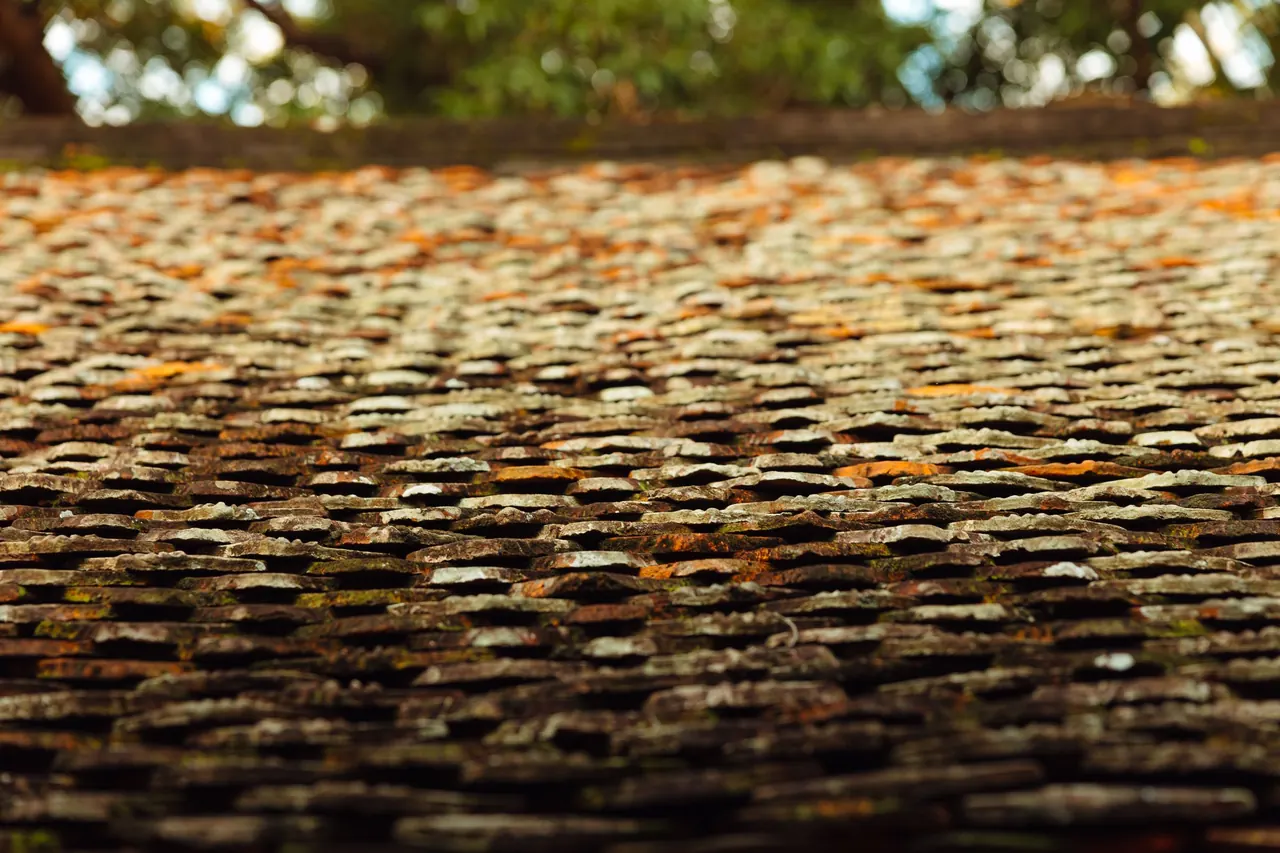
Look west along Park Lane from The Broadway and the ground drops away towards Cheam Park, giving a view down a line of white cottages. Sutton Council's appraisal describes the Grade II cottages on the south side as mostly white weatherboard from the 17th to early 19th century, with steeply pitched roofs covered in handmade tiles. A few break the pattern: Nos 13 and 15 are colour-washed brick and Nos 21 to 25 roughcast.
On roofs like these the clay tiles often outlast everything holding them up. What fails first is the fixing: a peg that has rotted, a nail that has rusted through or a batten that has gone soft. One tile slides, the tile above loses its lap, and water gets in. Because the pitch is steep, the roof sheds most of the rain anyway, so a slipped tile can sit there for months before a stain shows on a bedroom ceiling.
Not every old roof on the lane is tiled. The list entry for 3 Park Lane records tarred weatherboarding under a hipped Welsh slate roof. We confirm what is on the roof before ordering a single tile or slate.
Typical repairs on these cottages are slipped and cracked tiles, worn mortar at verges and ridges, failed flashings where a lean-to or rear wing joins the old roof, and leaks around the stack. On a weatherboarded wall, a leak at the eaves also soaks the boards and the frame behind them, so we look at both.
Gables and dormers on the Ewell Road parade
The early 1930s shops on Ewell Road were built with dormers and gables breaking the roof line. Every gable that breaks out of the main slope creates two valleys, and every dormer needs side flashings, so these are where most leaks on the parade start. A valley lined in lead or tile that has never been touched since the 1930s is a likely culprit when water arrives after heavy rain.
On a parade with flats above shops, the leak you see may have started some way along the roof. Water can run along a valley or behind a gutter before it finds a way down. We trace it from the outside before cutting into a ceiling.
The same logic applies to the Parkside villas, where each bay roof meets the main wall at a junction that is a common source of leaks.
Matching what is already there
On a listed cottage, a repair should leave the roof looking as if nothing happened. We keep every sound tile, set aside any that come off, and source new or reclaimed handmade tiles of similar size, colour and camber for the gaps. The closest matches go on the slopes you see from the lane. Ridge and hip tiles are rebedded and repointed, and flashings are renewed in lead.
A repair visit starts with drone photos of the whole roof and a look in the loft where there is access, so you can see the fault for yourself. If the stack is part of the problem, our chimney repairs in the village can be done at the same time.
Rebedding one to three ridge tiles is a common small job, and MyJobQuote's ridge tile guide gives £225 to £275 for it as a UK figure. Sourcing handmade ridges and carrying materials down Park Lane add to that.
If tiles are slipping on every slope and the battens are soft right across the roof, patching becomes poor value. Our guide on repair or full replacement explains how to tell, and our page on re-roofing in the village covers the bigger job. How we diagnose a leak in general is covered under roof repair.
Frequently asked questions
Can a few handmade tiles on our listed Park Lane cottage be replaced without consent?
Replacing a handful of broken tiles with close matches is normally a like-for-like repair. Changing the covering, the roof shape or the way it is detailed is where listed building consent comes in, so if a repair starts to look like an alteration, check with Sutton Council first.
Why does the roof over our Ewell Road shop only leak in driving rain?
Wind-driven rain gets into places ordinary rain does not: the edge of a valley, the side flashing of a dormer or the top of a gable wall. These are the details on the 1930s parade most likely to have worn. We check each one from above before deciding what to repair.
Can the tile-hanging on a Parkside villa be repaired on its own?
Yes. Hanging tiles lose nails over the years and slip one at a time. We refix or replace the missing ones in a matching tile and check the flashings above the tiled area at the same time.





